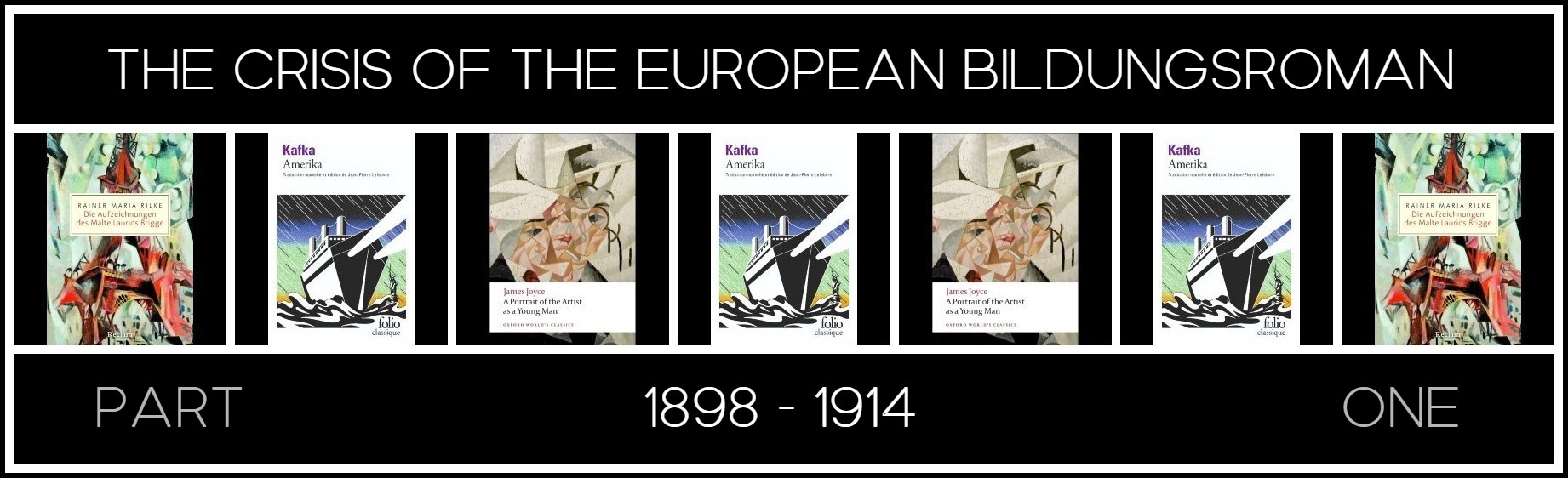
‘A Useless Longing for Myself’
THE CRISIS OF THE EUROPEAN BILDUNGSROMAN, 1898-1914 – PART 1
Franco Moretti
Posted by kind permission of Franco Moretti, Professor Emeritus of English and Comparative Literature, Stanford University
From Franco Moretti, The Way of the World: The Bildungsroman in European Culture, New Edition. Translated by Albert Sbragia.
(London: Verso, 2000) pp. 229-236
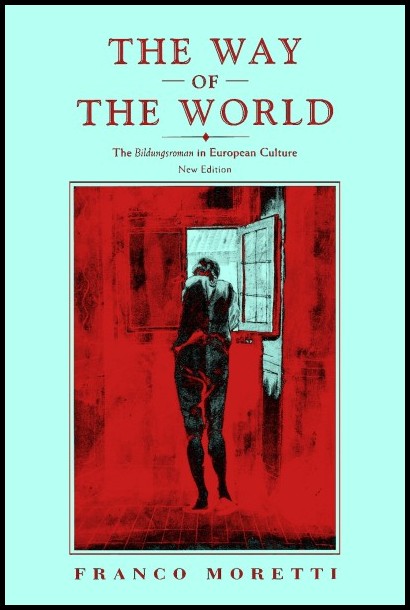
FRANCO MORETTI
The Way of the World:
The Bildungsroman in European Culture
Youth, by Joseph Conrad, in 1898. Tonio Kröger, by Thomas Mann, in 1903. The Perplexities of Young Törless, by Robert Musil, in 1906. Jakob von Gunten, by Robert Walser, in 1909.
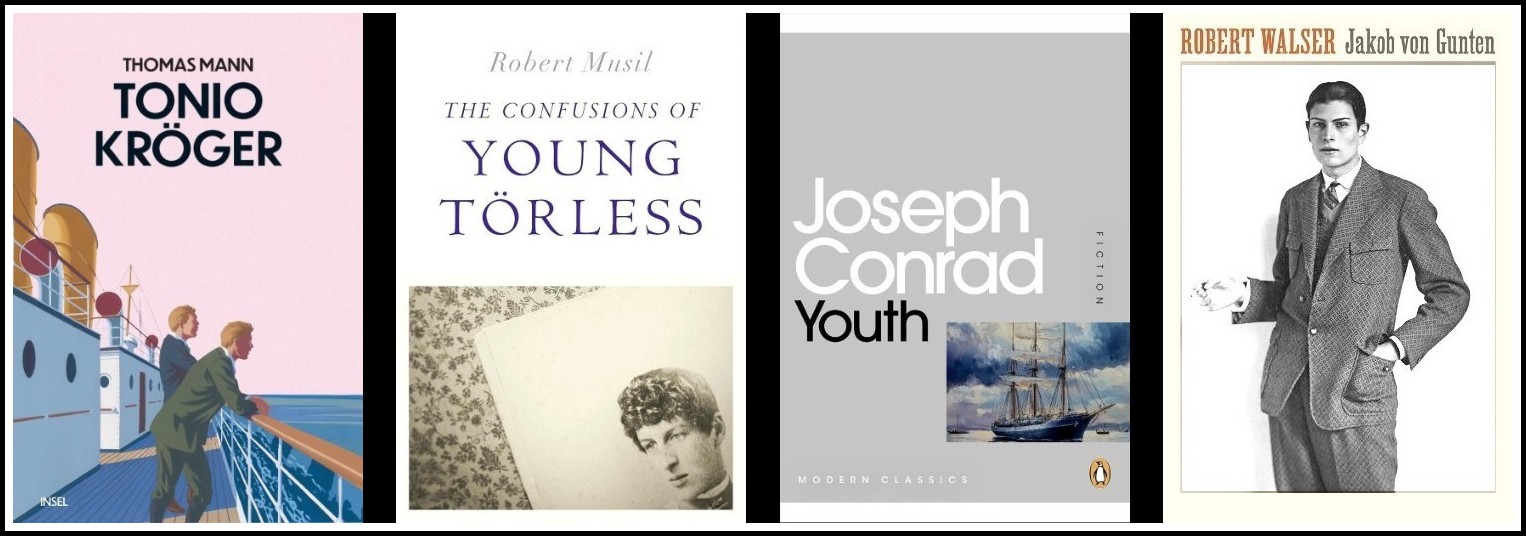
Thomas Mann, Tonio Kröger | Robert Musil, The Confusions of Young Törless | Joseph Conrad, Youth | Robert Walser, Jakob von Gunten
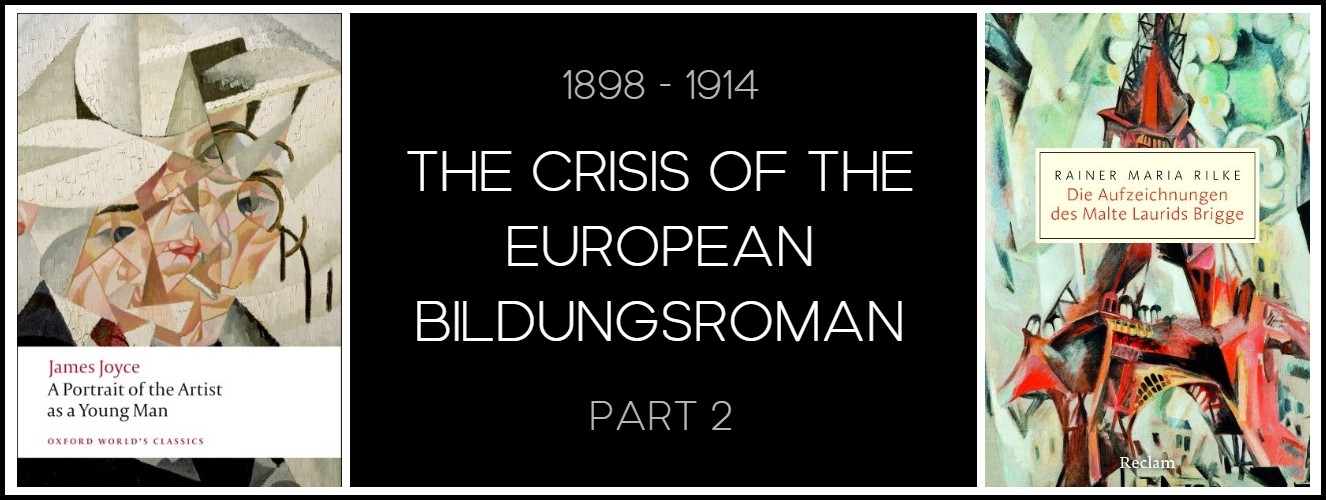
The Notebooks of Malte Laurids Brigge, by Rainer Maria Rilke, in 1910. A Portrait of the Artist as a Young Man, by James Joyce, written between 1904 and 1914. Amerika (or The Lost One), by Franz Kafka, written between 1911 and 1914.
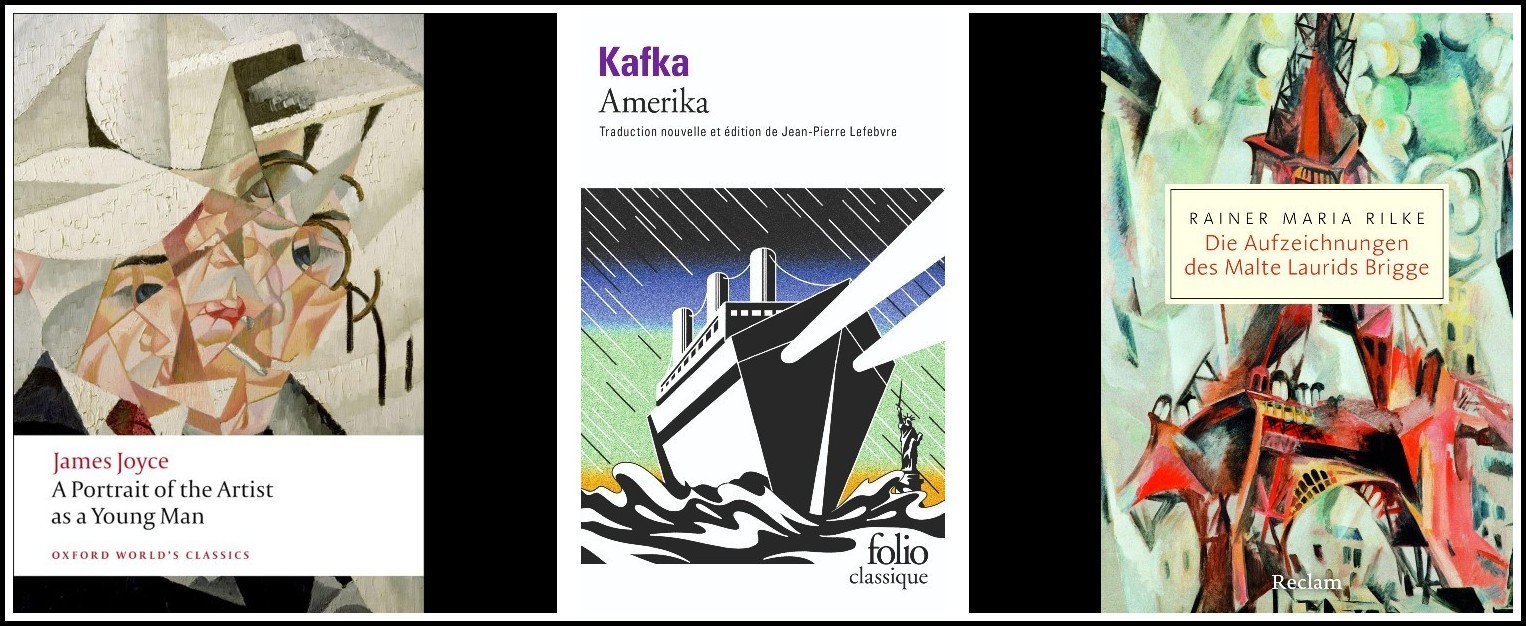
Joyce, A Portrait of the Artist as a Young Man | Kafka, Amerika | Rilke, The Notebooks of Malte Laurids Brigge
That such an unusual concentration of wonders should not open a new phase in the history of the European Bildungsroman, but bring it to a sudden close, is at first glance an enigma. Then one notices the year Joyce completed, and Kafka abandoned, their novels: 1914. ‘No one shall come out of this war’, wrote a German volunteer, ‘if not as a different person.’ And indeed, as Fussell and Leed have shown, the initial feeling of European youth was that of being on the verge of a collective, immense initiation ritual. Rather than fulfilling the archetype, though, the war was to shatter it, because, unlike rites of passage, the war killed—and its only mystery didn’t decree the renewal of individual existence, but its insignificance. If one wonders about the disappearance of the novel of youth, then, the youth of 1919—maimed, shocked, speechless, decimated—provide quite a clear answer. We tend to see social and political history as a creative influence on literary evolution, yet its destructive role may be just as relevant. If history can make cultural forms necessary, it can make them impossible as well, and this is what the war did to the Bildungsroman. More precisely, perhaps, the war was the final act in a longer process—the cosmic coup de grâce to a genre that, at the turn of the century, was already doomed. Before discussing the interrelated tendencies that had undermined the form of the Bildungsroman, however, I will briefly recapitulate the reasons for its previous significance.
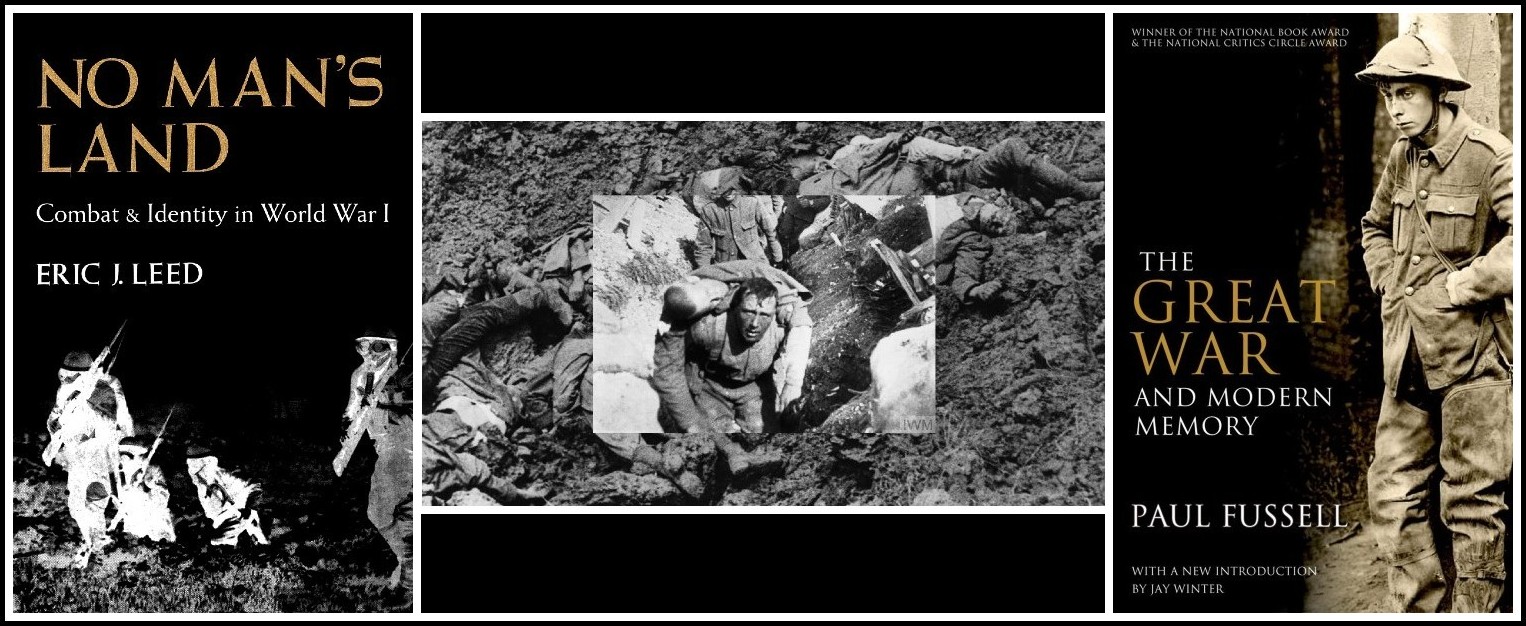
Eric Leed, No Man’s Land: Combat & Identity in WWI | Death in Trench, WWI | Paul Fussell, The Great War & Modern Memory
In the course of the nineteenth century, the Bildungsroman had performed three great symbolic tasks. It had contained the unpredictability of social change, representing it through the fiction of youth: a turbulent segment of life, no doubt, but with a clear beginning and an unmistakable end. At a micro-narrative level, furthermore, the structure of the novelistic episode had established the flexible, anti-tragic modality of modern experience. Finally, the novel’s many-sided, unheroic hero had embodied a new kind of subjectivity: everyday, worldly, pliant—‘normal’. A smaller, more peaceful history; within it, a fuller experience; and a weaker, but more versatile Ego: a perfect compound for the Great Socialization of the European middle classes. But problems change, and old solutions stop working. Let us then turn to our group of novels—which, for lack of anything better, I shall call the late Bildungsroman—and see what the new problems were.
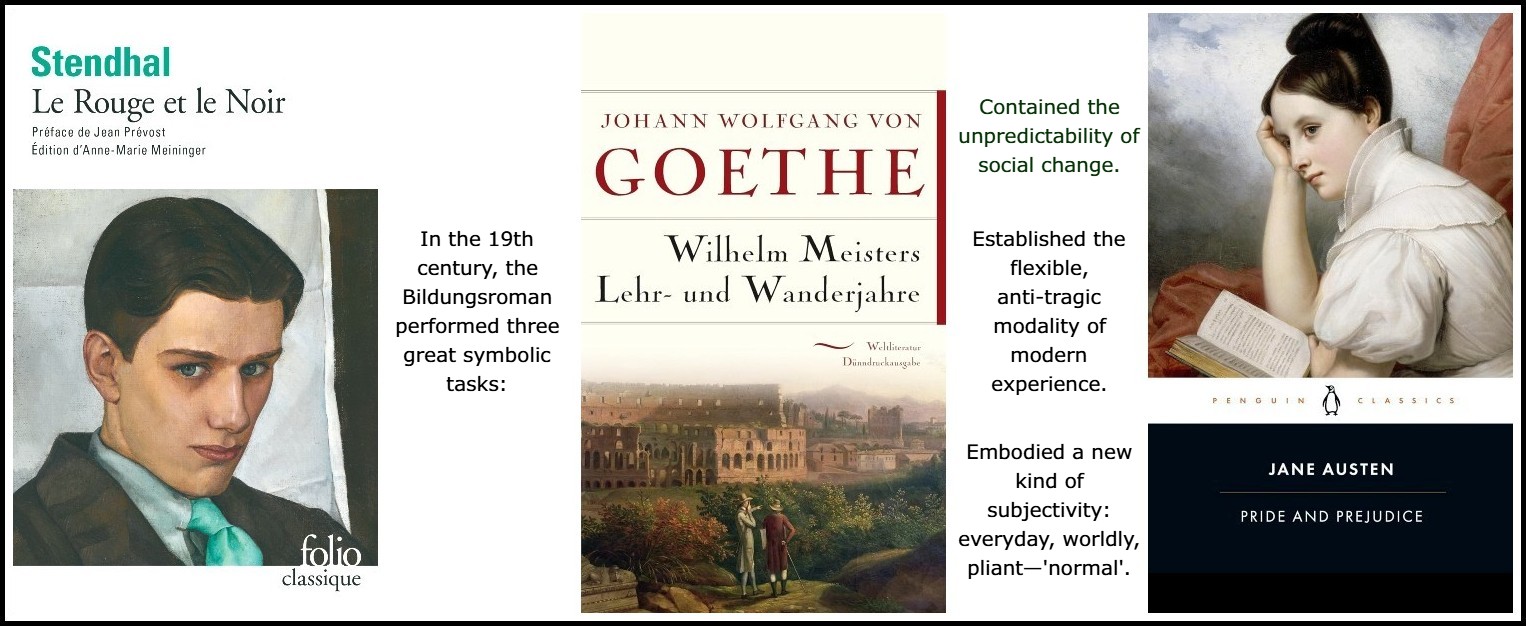
Stendhal, Le Rouge et le Noir | Goethe, Wilhelm Meisters Lehr- und Wanderjahre | Jane Austen, Pride and Prejudice
Whereas previous novels tended to personalize social relations, presenting them as relations among individuals, in the late Bildungsroman social institutions began to appear as such: the business bureaucracy of Amerika, the Church of Portrait, and above all the School of Mann and Musil, of Walser and Joyce. The growth of institutions was a massive historical fact, of course, which a realistic narrative could hardly ignore: acknowledging it, though, proved just as difficult. ‘One is not supposed to say so,’ complains Törless, ‘but of all we are doing all day long here at school, what does have a meaning? What do we get out of it? For ourselves, I mean. We know we have learned this and that, but inside, we are as empty as before.’ But inside… this is the trouble with the school: it teaches this and that, stressing the objective side of socialization—functional integration of individuals in the social system. But in so doing it neglects the subjective side of the process: the legitimation of the social system inside the mind of individuals, which had been a great achievement of the Bildungsroman. What the school deals with are means, not ends; techniques, not values. A pupil must know his lesson, but he doesn’t have to believe in its truth. Convincing the subject that what he must do is also symbolically right is, however, exactly what modern socialization is all about. If this does not happen, and shared values are replaced by sheer coercion (how many arbitrary and unfair punishments in these novels!), the individual will hardly feel at home in his world, and socialization will not be fully accomplished.
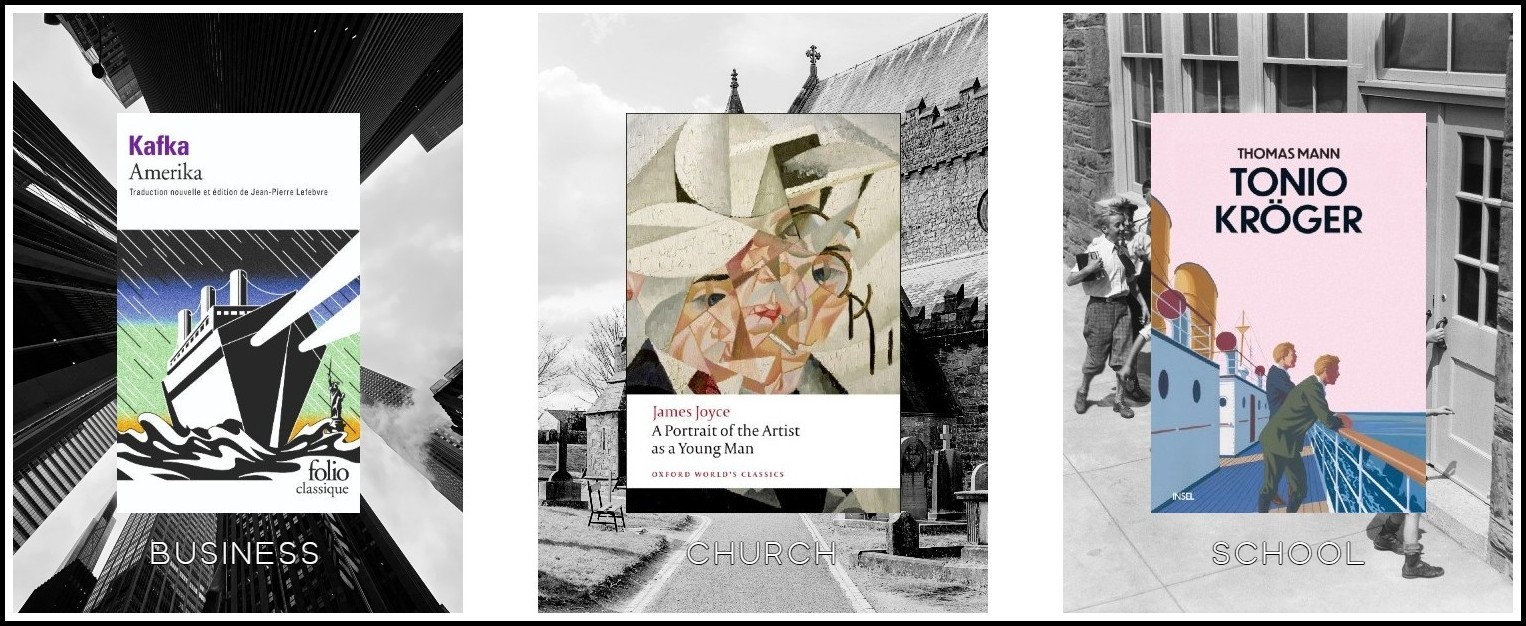
Franz Kafka, Amerika | James Joyce, A Portrait of the Artist as a Young Man | Thomas Mann, Tonio Kröger
When Tonio Kröger returns to the home of his childhood, he finds in its place a public library; and think of Karl Rossmann, the lost one, banished by his parents across the ocean; of Törless’s enforced exile (‘A small station on the line to Russia. Four parallel rails run straight, out of sight, in opposite directions’), and of Stephen’s deliberate one. ‘The time has come’, writes Malte Laurids Brigge, ‘when all things are leaving the houses.’ No wonder that in 1916, writing The Theory of the Novel, Lukács should define the novel as the genre of ‘transcendental homelessness’: a questionable statement for the nineteenth century—but quite true for the late Bildungsroman, with its rootless heroes and inhospitable environments. Malte’s anxious loneliness, Jakob’s abject submission, Karl’s blank passivity, Stephen’s contemptuous isolation: here are some versions of Lukács’s homelessness. But the most uncanny result of a merely functional socialization, and of its disregard for a shared symbolic universe, is Törless’s nonchalant violence, which flatly rejects all notion of a common humanity: ‘One last question. What do you feel now? Pain? Mere pain, which you would wish to stop? Just this, with no complications?’ And that the best pupil of a ‘renowned boarding school’ should announce the brown shirts—what a setback for the civilizing machinery of liberal Europe!
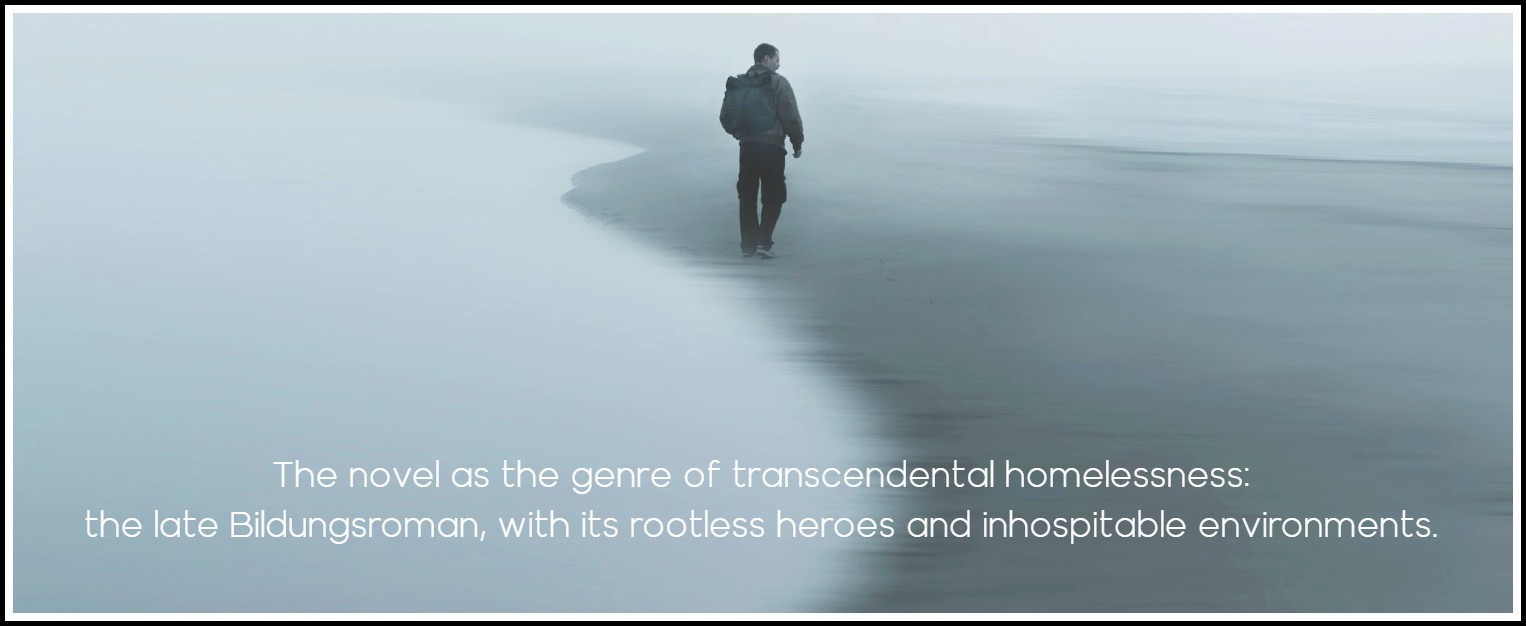
Photo: Joshua Earle, Unsplash
Lothar and Jarno in Meister, de la Mole and Mosca in Stendhal, Jacques Collin in the Comédie Humaine, Austen’s and Eliot’s narrator: in the nineteenth century, the wisdom of adults had been a constant, critical counterpoint to the hero’s adventures. But from Mann onwards countless stolid professors will suggest that, as soon as they become professional teachers, adults have nothing left to teach. Youth begins to despise maturity, and to define itself in revulsion from it. Encouraged by the internal logic of the school—where the outside world disappears, while grades overdevelop the sense of the slightest age difference—youth looks now for its meaning within itself: gravitating further and further away from adult age, and more and more toward adolescence, or preadolescence, or beyond. If twentieth-century heroes are as a rule younger than their predecessors, this is so because, historically, the relevant symbolic process is no longer growth but regression. The adult world refuses to be a hospitable home for the subject? Then let childhood be it—the Lost Kingdom, the ‘Domaine mystérieux’ of Alain-Fournier’s Meaulnes.
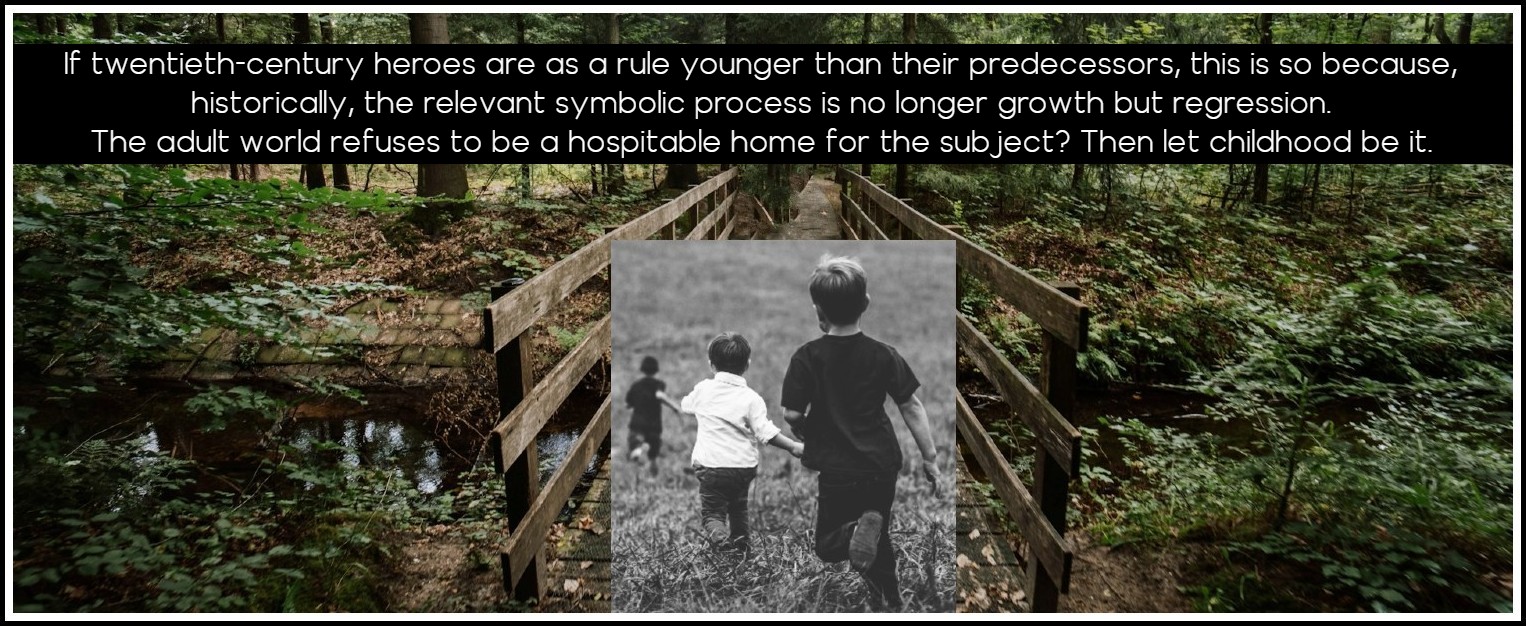
Photo: Frank Van Hulst, Unsplash | Inset photo: Jordan Whitt, Unsplash
Hence Malte’s longing for his mother, or Jakob’s anguished final cry (‘Ah, to be a small child—to be that only, and forever!’); or, in a more militant vein, Törless’s devastating sense of omnipotence: that most regressive of features, out of which will arise—through Le grand Meaulnes (1913), Le Diable au corps (1923), and Lord of the Flies (1954)—a veritable tradition of counter-Bildungsroman. ‘What is the matter,’ asks the hero of Meaulnes, ‘are children in charge here?’ They are, and readers of Golding know the end of this story, where childhood may well be the biological trope for the new phenomenon of mass behaviour. The regression from youth to adolescence and childhood would thus be the narrative form for what liberal Europe saw as an anthropological reversal from the individual as an autonomous entity to the individual as mere member of a mass. Given this framework, the postwar political scenario could hardly encourage a rebirth of the Bildungsroman: that mass movements may be constitutive of individual identity—and not just destructive of it—was to remain an unexplored possibility of Western narrative.
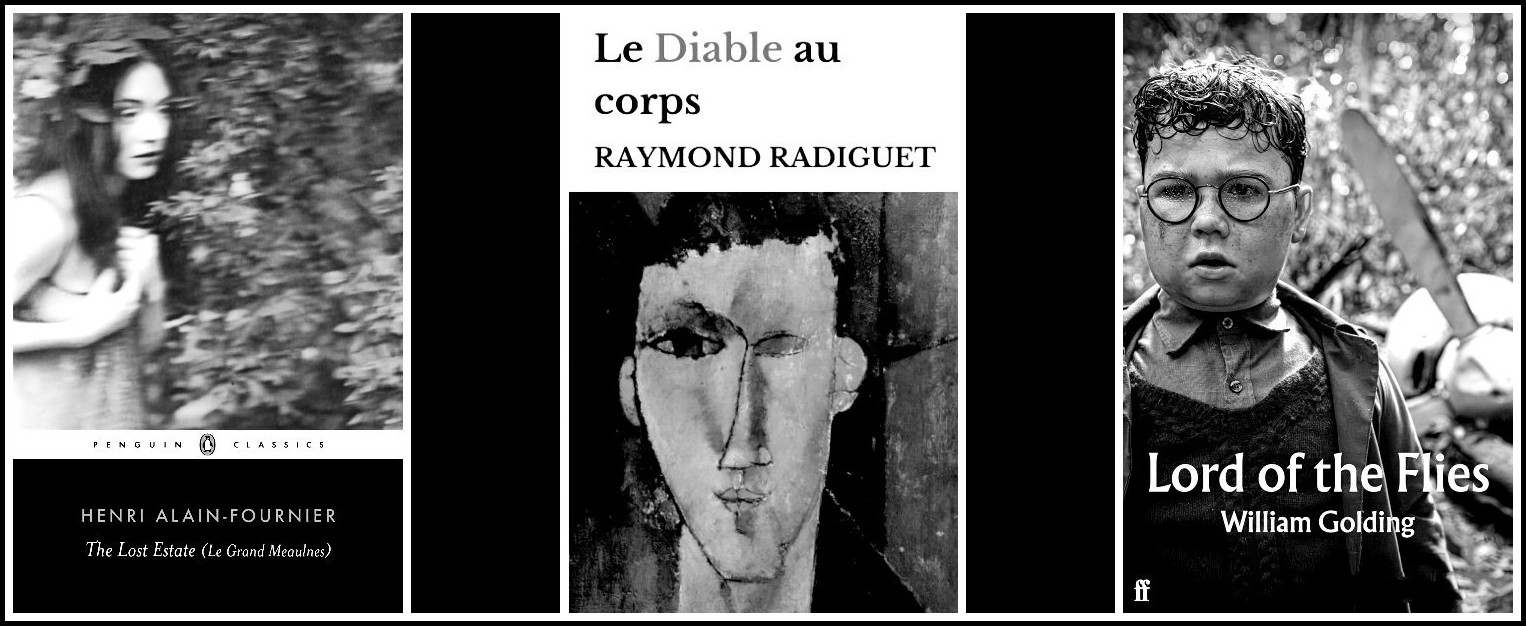
Henri Alain-Fournier, Le grand Meaulnes | Raymond Radiguet, Le Diable au corps | William Golding Lord of the Flies
Homeless, narcissistic, regressive: the metamorphosis of the image of youth in our century is by now a familiar fact. Less familiar is its rapidity: only fifteen years before the war, Marlow’s and Kröger’s destiny had been quite a different one. However problematical, their subjectivity had been free to unfold in a world not yet enclosed and dominated by institutions. ‘The school was over,’ reads the first page of Tonio Kröger, in perfect contrast to Törless: ‘Through the paved courtyard, and out of the iron gate, flowed the liberated troops.’ In Youth, for its part, Marlow’s ship—this British Trinity of School, Army, and Factory all in one—is conveniently burned and sunk so that the young second mate may enjoy the independence of ‘seeing the East first as a commander of a small boat’. Yes, institutions still have limited power here, and Marlow and Kröger will be among the last novelistic heroes to grow up and achieve maturity. Which is to say that Conrad’s and Mann’s Bildungsromane are morphologically closer to Goethe’s than, say, to Kafka’s or Joyce’s: or also, turning the matter around, that there were more structural novelties in a decade than in an entire century. Surprising? Maybe—if one sees literature as a restless, self-questioning discourse engaged in a sort of permanent revolution. Not really, if one accepts the idea that inertia rules literature just as many other things, and that the rhythm of literary evolution is thus necessarily uneven: long periods of stability ‘punctuated’, as Gould and Eldredge would say, by bursts of sudden change like the one I am trying to describe. Why change should occur at all, and how, is something I shall return to after a short technical parenthesis.
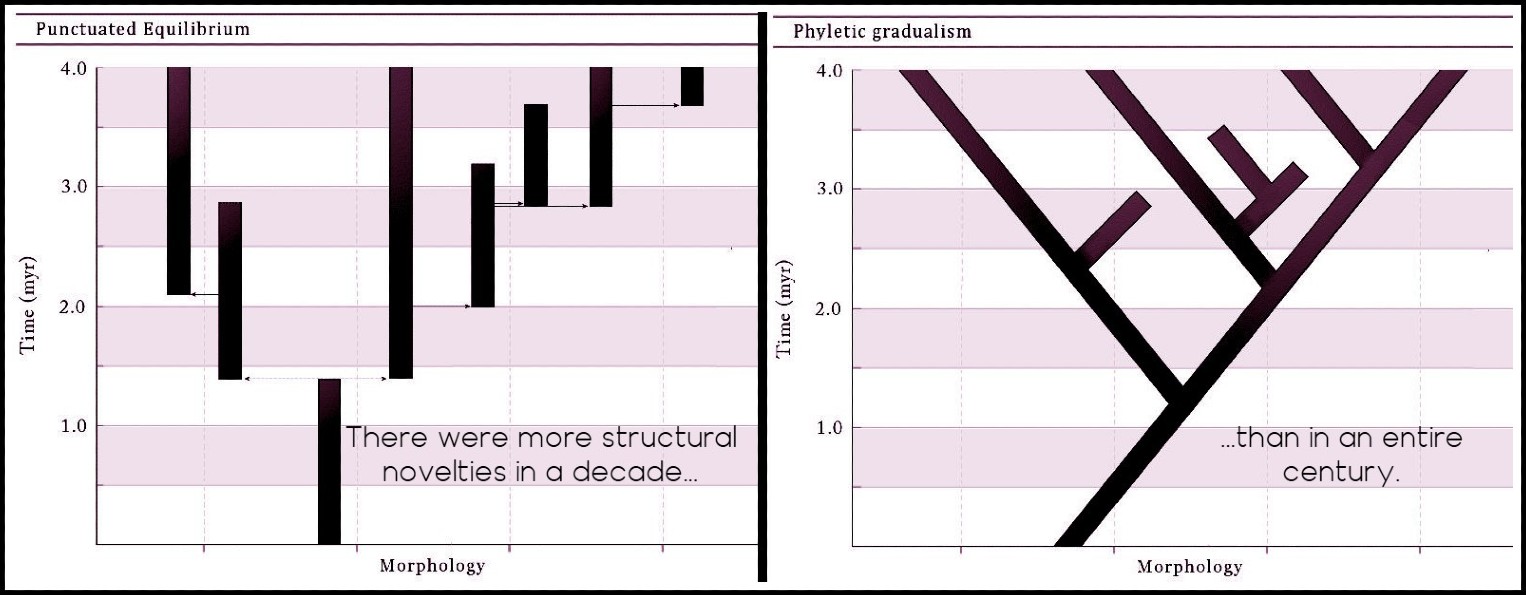
Niles Eldredge & Stephen Jay Gould, Punctuated Equilibrium vs. Phylectic Gradualism | Diagrams: Miguel Chavez
Following Barthes and Chatman, contemporary narratology usually groups narrative episodes in two basic classes: ‘kernels’, abrupt, irreversible choices among widely different options, and ‘satellites’, slower, subordinate events that qualify and enrich the chosen course. In tune with their respective functions, satellites belong to the narrative ‘background’ (to use Harald Weinrich’s terms), embodying social regularity, whereas the ‘foreground’ is occupied by kernels, which are typically the hero’s doing, and have therefore enjoyed a structural centrality in most narrative forms, from epos to tragedies and short stories. From the eighteenth century onwards, though, at one with the growing regularity and interdependence of social life, novels started to bridge the gap between background and foreground, and in the narrative slowdown that followed, the role of kernels started to decline, and that of satellites to grow. The Bildungsroman happened to come into being at the very moment when the new trend and the old conventions were balancing each other, and out of this unique historical conjuncture arose a narrative episode of unprecedented flexibility. An episode organized as an opportunity: as a satellite, hence with nothing frightening about it—yet a satellite so rich in potentialities that the hero may well want to transform it into a kernel. An opportunity in which the social background offers a choice to the hero: the ideal medium for a story of socialization and growth—of socialization as subjective growth. And also a beautiful way to rescue one of the key words of modernity—‘experience’—from its metaphysical captivity, offering a visible form to its sense of discovery free from danger, of renewal without revolution, of homogeneity between the individual and his world. Would experience be such an important word for us, had not the novelistic episode taught us to recognize its features?

Russian Formalist Criticism | L’analyse structurale du récit | Story and Discourse: Narrative Structure in Fiction & Film
Growth, then, and experience. But the world of the late Bildungsroman has solidified into impersonal institutions, while youth has become more vulnerable, and reluctant to grow. With a shift in narrative agency, opportunities turn into accidents: kernels are no longer produced by the hero as turning points of his free growth—but against him, by a world that is thoroughly indifferent to his personal development. In the abstract and often uselessly painful tests enforced by the school, the individualized socialization of Western modernity seems to collapse back into archaic initiation rituals; more informally, seemingly harmless episodes turn out to be, most strikingly in Kafka, all-encompassing trials. Or, as we also say, ‘traumas’: a metaphor which, according to the OED, crystallized in 1916. At the polar opposite from experience, in a trauma the external world proves too strong for the subject—too violent: and institutions (whether run by Irish Jesuits, Austro-Hungarian bureaucrats, or American managers) tend of course to be careless and shattering in their violence. And as the whole process of socialization becomes more violent, regression inevitably acquires its symbolic prominence: faced with an increasing probability of being wounded, it is quite reasonable for the subject to try and make himself, so to speak, smaller and smaller. Under artillery fire, the favourite position of World War I infantrymen was the fetal one.
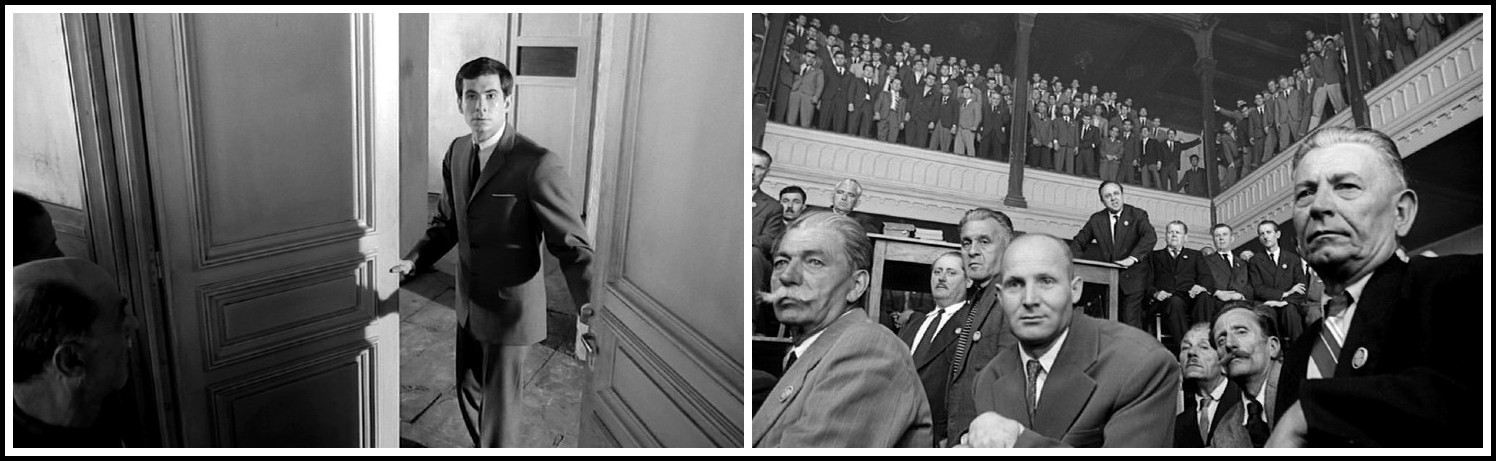
Anthony Perkins as K. in Orson Welles’ film of Kafka’s The Trial
This centrality of traumas—and hence of kernels, which are their narrative equivalents—helps to throw some light on a feature of literary evolution that is often misunderstood. In most historical accounts, literature is taken to change not only at a constant rhythm, rather than in punctuated fashion, but also along a sort of straight line: one step after another, one genre after another. At first sight, the early twentieth century seems to support this view, suggesting a continuity between the Bildungsroman, its ‘late’ version, and modernism. After all, don’t we have the biographical evidence of Musil and Rilke and Kafka and Joyce, who all inherited the Bildungsroman, developed it, and then proceeded ‘from’ it ‘to’ modernism? Well, not quite. If the internal structure of the novelistic episode is a good test for literary evolution, and I think it is, then we have three data with which to work: first, the nineteenth-century episode, where the functions of a kernel and those of a satellite balance each other; second, the late Bildungsroman episode, which is undoubtedly closer to a kernel; third, the modernist episode, best exemplified by Ulysses, which is an overgrown satellite and nothing else. Do these three forms constitute a continuum, with the late Bildungsroman acting as the transitional form between the nineteenth century and modernism? Obviously not.
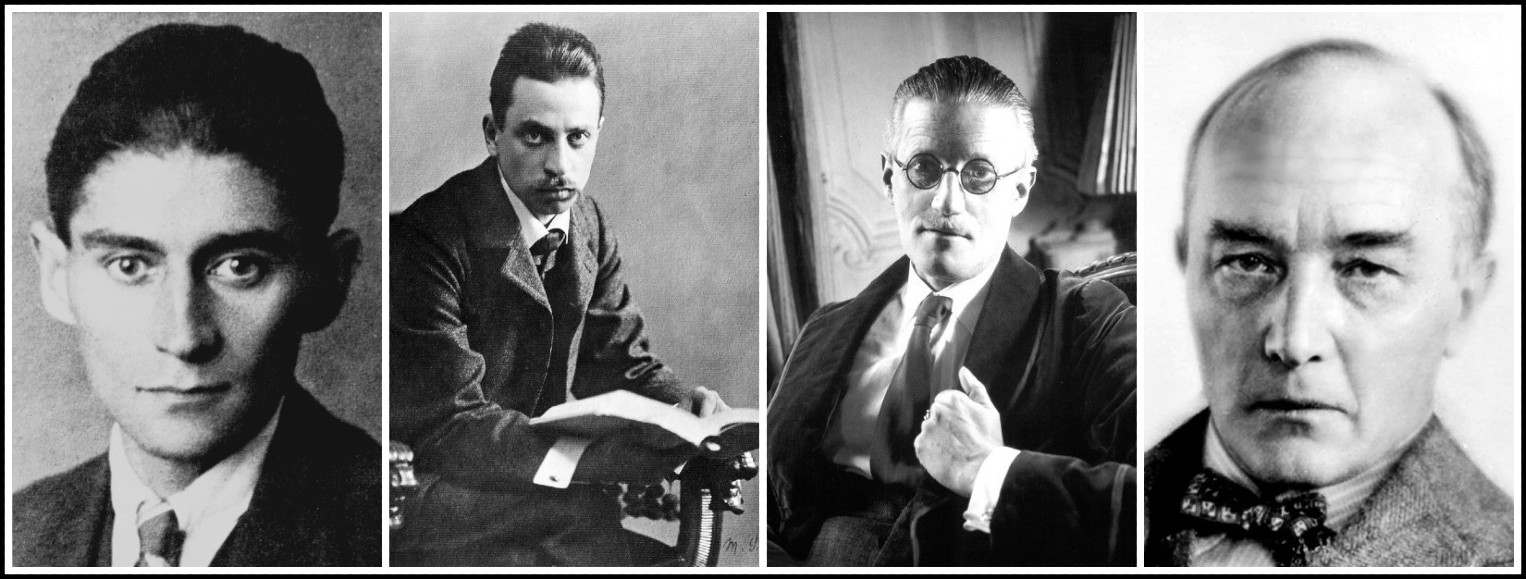
Franz Kafka, Rainer Maria Rilke, James Joyce, Robert Musil
We need a different geometrical pattern here—not a straight line but a tree, with plenty of bifurcations for genres to branch off from each other. What really happened when the nineteenth-century episode fell apart, then, was that narratives could concentrate either on kernels or on satellites: the late Bildungsroman chose the former, and modernism the latter. From their common starting point they proceeded in opposite directions: there isn’t the least morphological continuity here, biographical data notwithstanding. In fact, one is tempted to claim that—in its commitment to traumatic narratives—the late Bildungsroman, far from preparing modernism, did, if anything, delay it. But of this, more at the end.
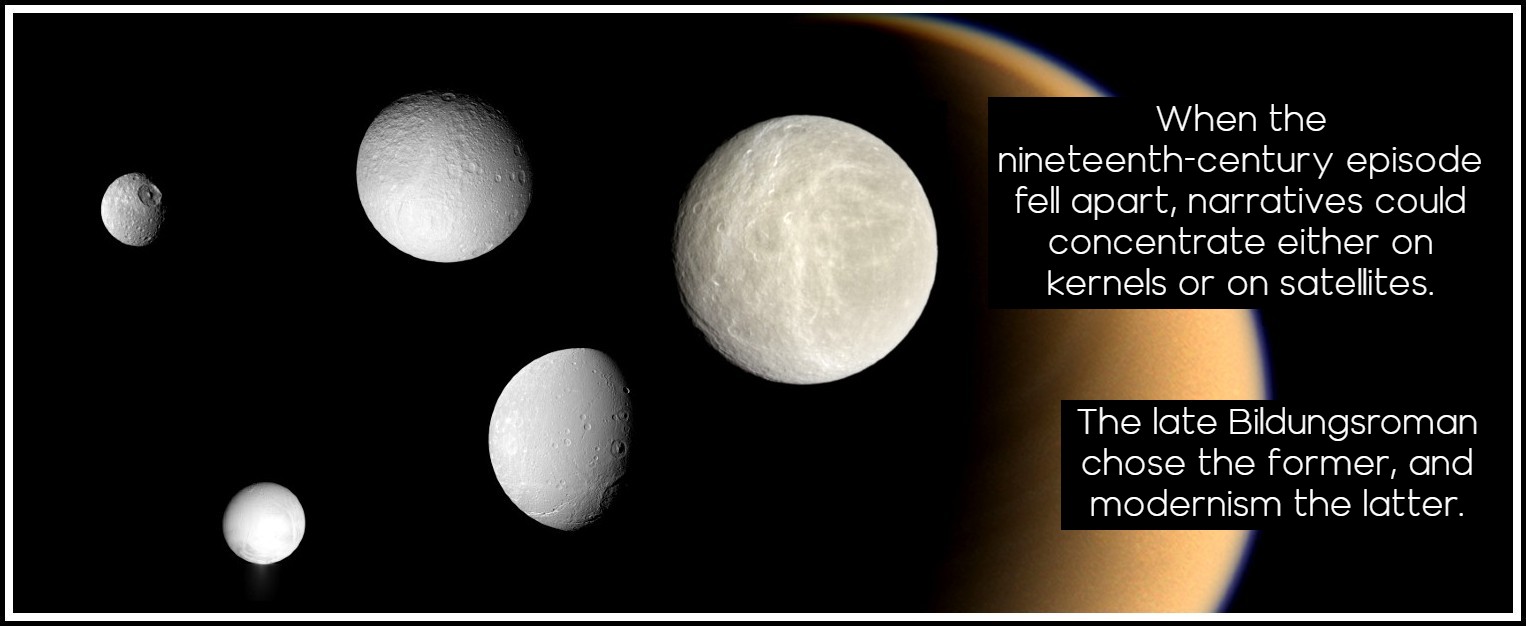
Kernels – Satellites | Late Bildungsroman – Modernism (Photo: Moons of Saturn, Wiki Media Commons – Begoon)
The prevalence of traumas and kernels also created a taxonomic paradox, since they were making it difficult for the late Bildungsroman to be a novel at all. To use the terms of Soul and Form, which Lukács was writing in those very years, ‘isolated events’ and ‘fateful moments’ characterize the short story, or the novella, making it a more ‘rigorous’ form than the novel, but also preventing it from representing ‘the evolution of an entire life’—the Bildung—that is the novel’s prerogative. But the Zeitgeist must have been on the side of the short story, and in stark contrast to Goethe and Austen, to Stendhal and Eliot, and even to Balzac and Flaubert, who had shown little or no interest for short narratives, all the authors of the late Bildungsroman were superb writers of short stories. So much so, in fact, that they even attempted an alchemic experiment—the ‘Bildungsnovelle’, so to speak, best represented by Youth and Tonio Kröger (and, in a less consistent way, by Jakob von Gunten and Törless).
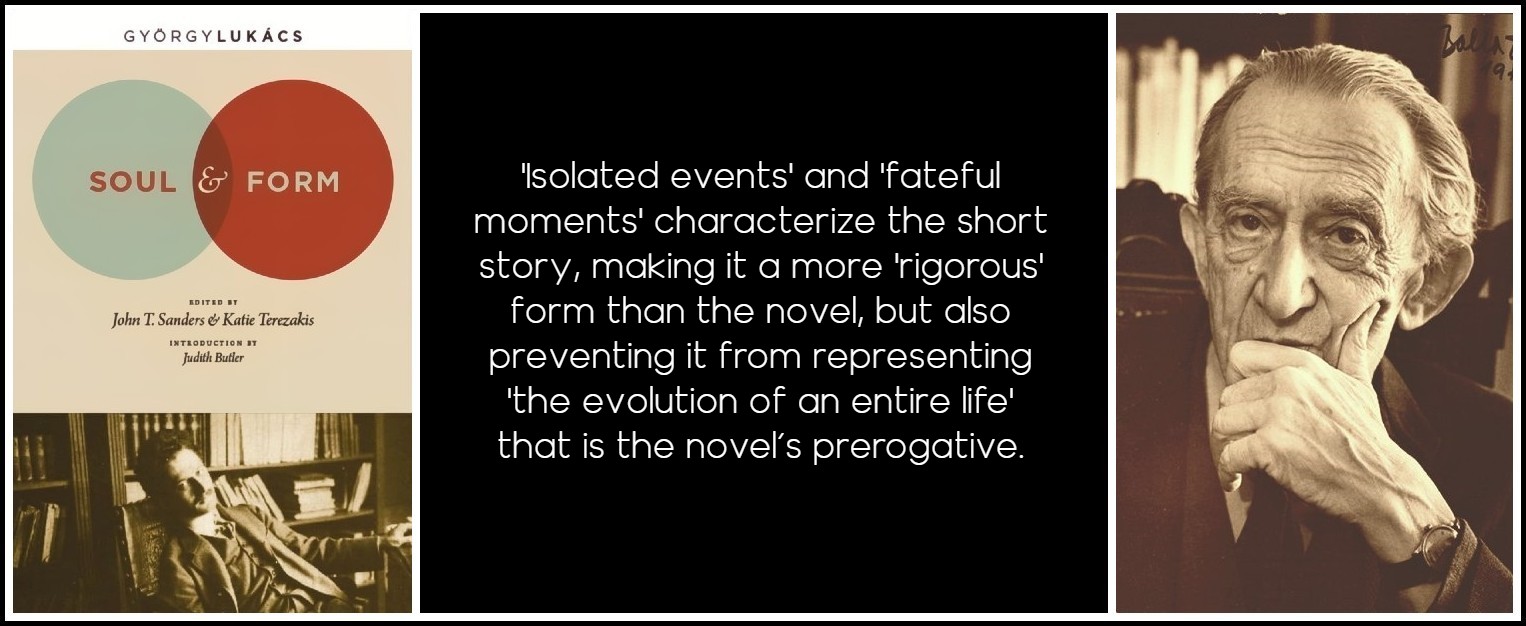
György Lukács, Soul and Form, 1910
Interestingly enough, in order to blend novella and novel together, Conrad and Mann both had recourse to the same device of ‘variation’: the repeated shipwrecks of Youth or the emotional frustrations of Tonio Kröger. Combining the symbolic clarity of the short story’s ‘fateful moment’ and the empirical variety of the novel’s ‘entire life’, a story constructed on the principle of variation seems indeed to embody the best of both forms: except that it isn’t really a story, as its parts are not held together by chronological relations, but only by the semantic affinity perceived by the unifying gaze of conscious memory—by the adult wisdom of Conrad’s ‘strong bond of the sea’, or Mann’s haut-bourgeois composure. And here, of course, was the rub: because this retrospective maturity, so close to the spirit of the classical Bildungsroman, was unappealing, and even incomprehensible, to the younger generation of writers. As early as 1904 Joyce had rejected precisely the all-encompassing voice that had made Youth and Tonio Kröger possible: ‘So capricious are we,’ he wrote in the very first sketch for Portrait, ‘that we cannot or will not conceive the past in any other than its iron memorial aspect. Yet the past assuredly implies a fluid succession of presents.’
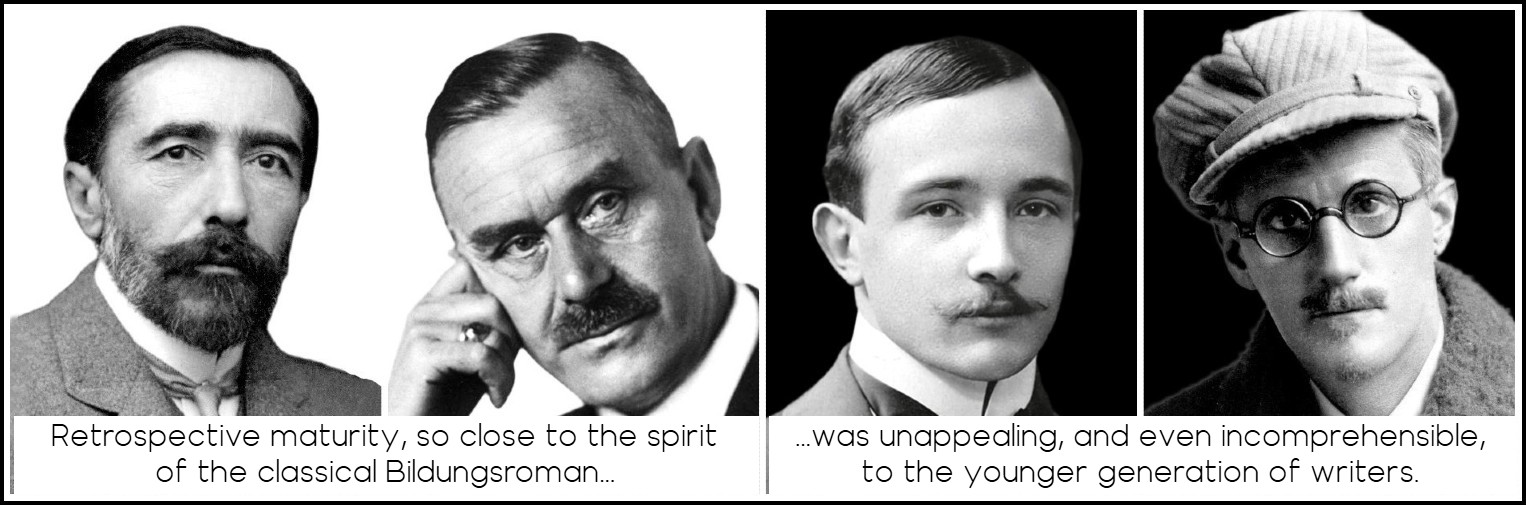
Joseph Conrad | Thomas Mann | Robert Musil | James Joyce
A fluid succession of presents: ‘Yesterday Basini was still the same, just as Törless himself; but a trapdoor had opened, and Basini had precipitated.’ Törless is a veritable collection of such traumatic discoveries—imaginary numbers and moral duplicity, the infinity of the universe, homosexuality, the hero’s ‘second sight’. The novel’s meaning is thus no longer to be found in the narrative, diachronic relation between events, but rather within each single ‘present’, taken as a self-contained, discontinuous entity. Törless’s adolescence is less a story than a string of lyrical moments; after all, his keenest perplexity has to do with finding the right words—better, the right tropes for his discoveries. After the Bildungsnovelle, then, the crisis of the novelistic episode was generating another hybrid: the lyric novel.
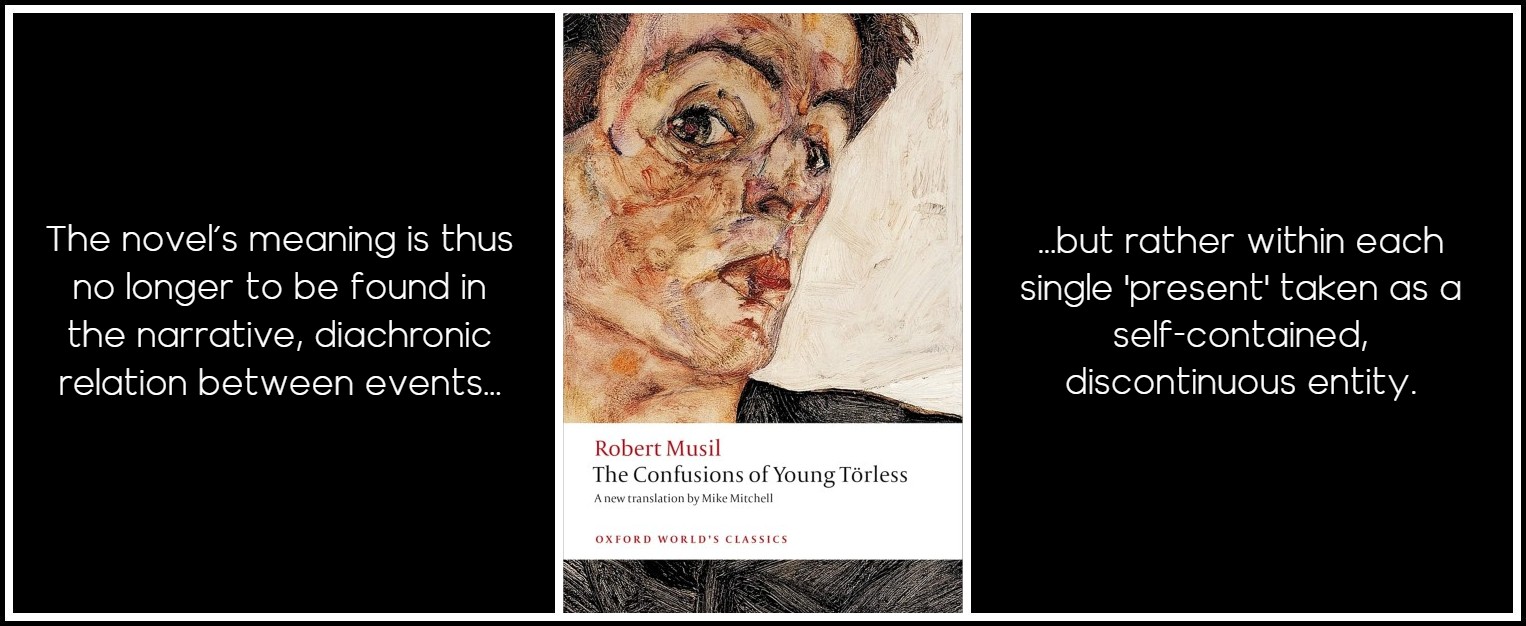
Robert Musil, The Confusions of Young Törless, Oxford World Classics
FRANCO MORETTI: THREE BOOKS
CLICK ON THE IMAGE TO GO TO A DESCRIPTION OF THE BOOK
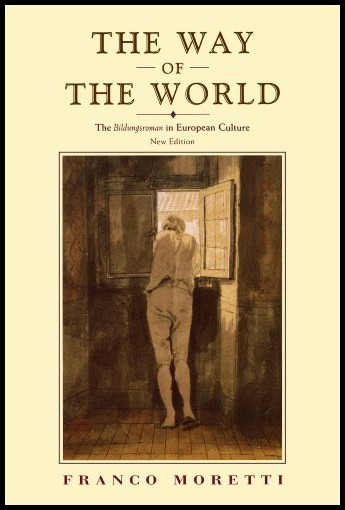
The Way of the World
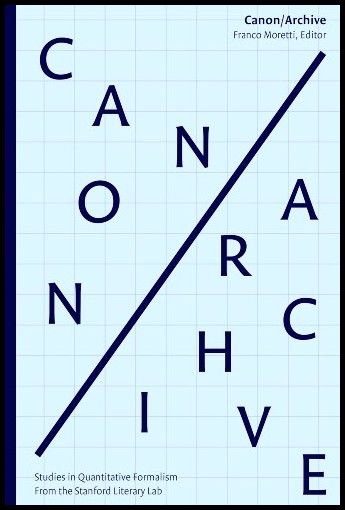
Canon/Archive
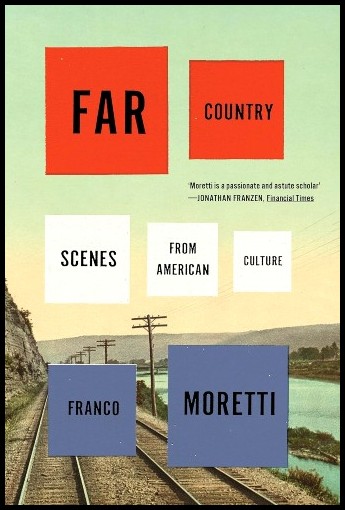
Far Country
MARA, MARIETTA: A LOVE STORY IN 77 BEDROOMS – READ THE FIRST CHAPTER
A literary novel by Richard Jonathan

RICHARD JONATHAN, ‘MARA, MARIETTA: A LOVE STORY IN 77 BEDROOMS’ — READ THE FIRST CHAPTER
AMAZON & APPLE BOOKS

RICHARD JONATHAN, ‘MARA, MARIETTA: A LOVE STORY IN 77 BEDROOMS’ | AMAZON PAPERBACK OR KINDLE

RICHARD JONATHAN, ‘MARA, MARIETTA: A LOVE STORY IN 77 BEDROOMS’ | APPLE iBOOK
MARA, MARIETTA: A LOVE STORY IN 77 BEDROOMS
A literary novel by Richard Jonathan

Available from AMAZON (paper | ebook) & iBOOKS, GOOGLE PLAY, KOBO & NOOK (see LINKS below)
RELATED POSTS IN THE MARA MARIETTA CULTURE BLOG
CLICK ON THE IMAGE TO GO TO THE POST
By Richard Jonathan | © Mara Marietta Culture Blog, 2026 | All rights reserved
Comments