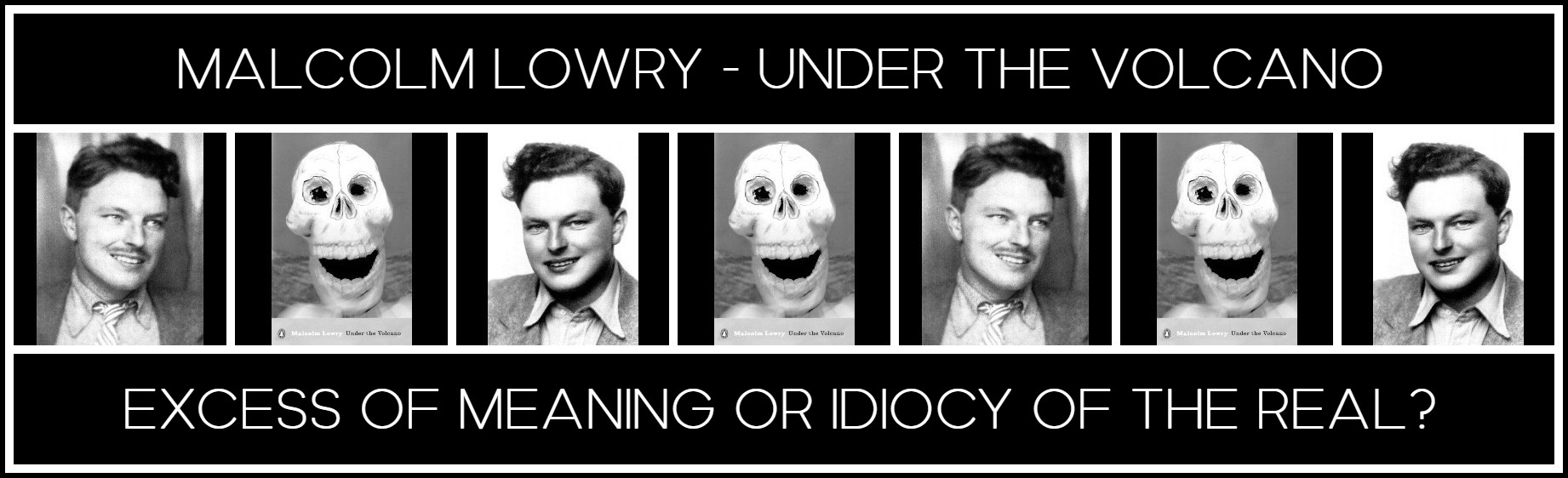
Malcolm Lowry
UNDER THE VOLCANO: EXCESS OF MEANING OR ‘IDIOCY OF THE REAL’?
Judith Sarfati Lanter
Posted by kind permission of Judith Sarfati Lanter, Professor of Comparative Literature, Sorbonne Université
TRANSLATED FROM THE FRENCH BY RICHARD JONATHAN
From Judith Sarfati Lanter, « Under the Volcano : excès de sens ou « idiotie du réel » ? » in TRANS – Revue de littérature générale et comparée [online]
Séminaires, mis en ligne le 04 février 2007 | https://doi.org/10.4000/trans.495
All citations from Under the Volcano are from the Penguin Classics edition, 2000.
Photo: Engin Akyurt, Unsplash
When Malcolm Lowry sent the final manuscript of Under the Volcano, which had taken him so many years to write, to his publisher Jonathan Cape, the latter replied that he could not publish the text as is because its structure is too complex and the literary references it draws upon are too numerous and sometimes obscure. Certain critics would go on to describe the narrative as a ‘maelstrom’, a ‘forest of symbols’, in which the reader loses his way quite often. There are, in fact, many sources of disorientation, the most obvious being chronological disruption: besides the flashbacks, often very long, inserted into each of the twelve chapters, the order of the chapters does not respect the linear progression of time. Indeed, the opening chapter is chronologically the last, and the eleven ones that follow serve as a lengthy flashback that narrates the last day in the life of Geoffrey Firmin, ex-Consul in exile in Mexico, and his ex-wife Yvonne, who left him a year earlier. On the day of her return, he, consumed by his passion for alcohol, proves unable to reconnect with her and flees towards Parián’s fascist hideout, where both will meet their deaths.
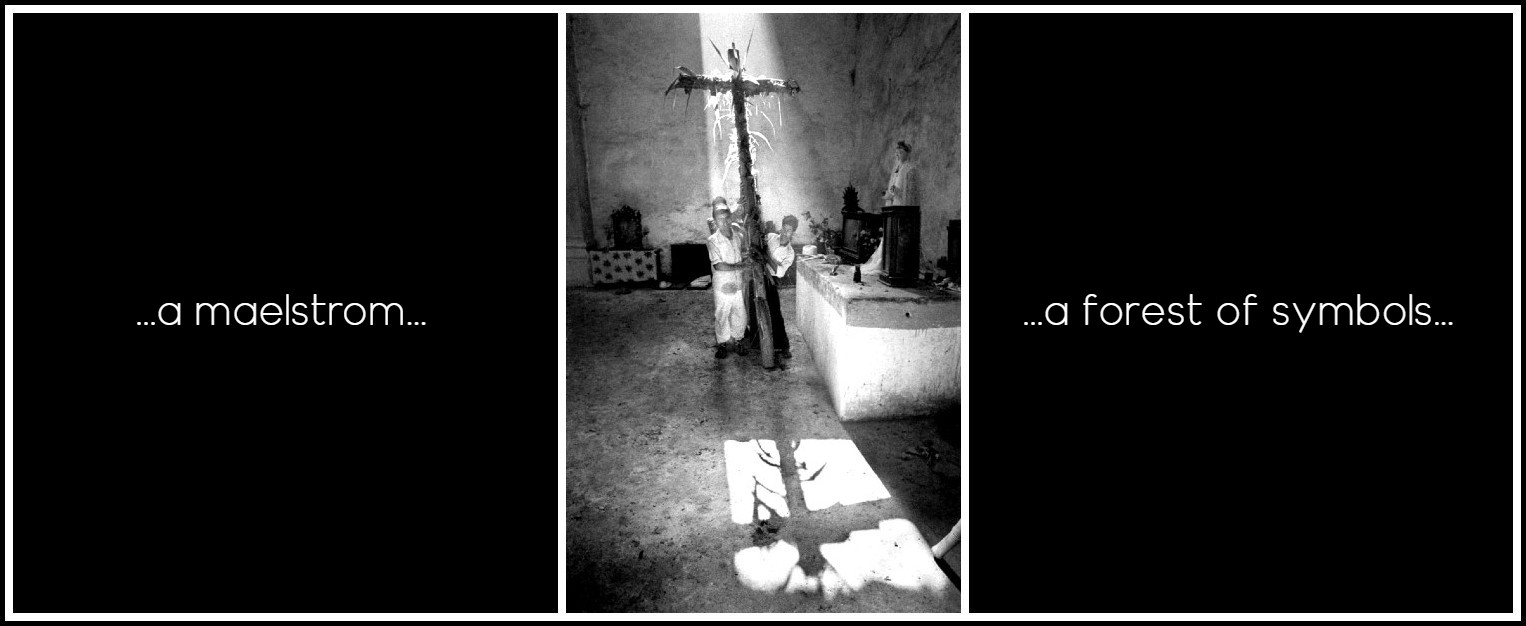
Pablo Ortiz Monasterio, Mexico 1984
Each of the twelve chapters focuses on one of the main characters in turn—Geoffrey and Yvonne, but also Hugh, Geoffrey’s half-brother, and Jacques Laruelle, Geoffrey’s erstwhile friend. The narration shifts between third-person point of view and narrated monologue, often creating a sense of ambiguity as regards the attribution of the feelings or perceptions being described. In addition to this enunciative blurring, we find an interpolation of recurring motifs that creates an effect of visual heterogeneity (through typographical differentiation) as well as of generic heterogeneity (through the insertion of quotations and poems). Even though they are a source of confusion, these interpolations also have heuristic value and, in fact, strongly influence the interpretation of the text—even if that interpretation is deferred and devolved to the attentive reader.
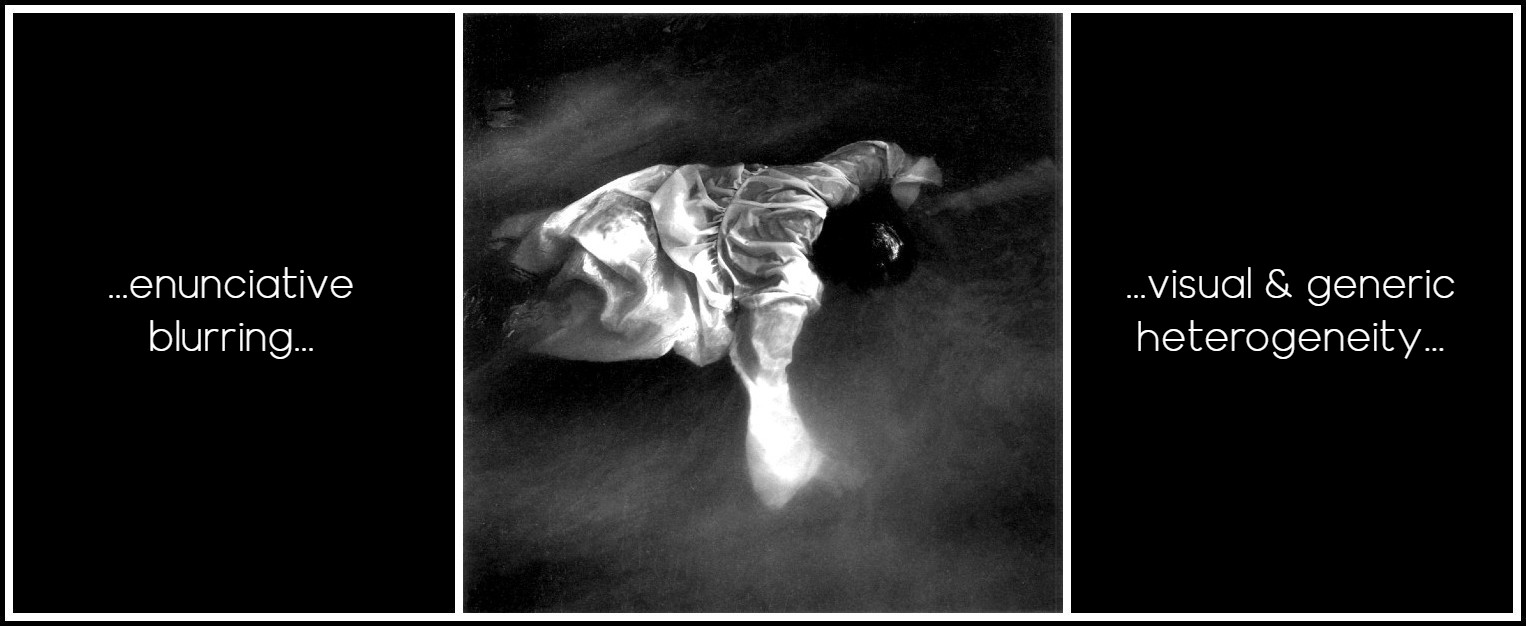
Graciela Iturbide, Ritual: Fiestas de Niño Fidencio, Mexico 2000
I will first briefly discuss the role played by these interpolations, which generally derive from a ‘system of assembly’,1 and then I will examine the effects of narrative disengagement—those enunciative shifts in the text that blur the boundaries between, on one hand, perception and hallucination, and on the other, between an understanding that validates the Consul’s visions and one that might demystify them. For while the text’s composite nature suggests several possible levels of interpretation, these should not be understood as a stratified accumulation ranging from the most superficial to the deepest: these different readings are not superimposable but contradictory, and it is this hermeneutic rupture that has caught my attention here. To borrow the image of plate tectonics dear to Gabriel Tarde, what we have here is not a Neptunian model, in which different levels of meaning accumulate through slippage and sedimentation, but a Vulcanian model, producing collisions and dislocations—and, of course, volcanic eruptions.
1 – Translator’s note: In French, dispositif de montage. For a comprehensive definition of montage, see Jean-Pierre Morel, ‘Cinq difficultés—au moins—pour parler du montage en littérature’, in Robert Kahn (ed.), A travers les modes, Publications de l’Université de Rouen, 2004, pp. 35-48. For an online summary, see the thesis by Philippe Plante-Gonthier, ‘Montage et déconstruction chez Jacques Derrida: Lire (enfin) Glas’, pp. 22-24.
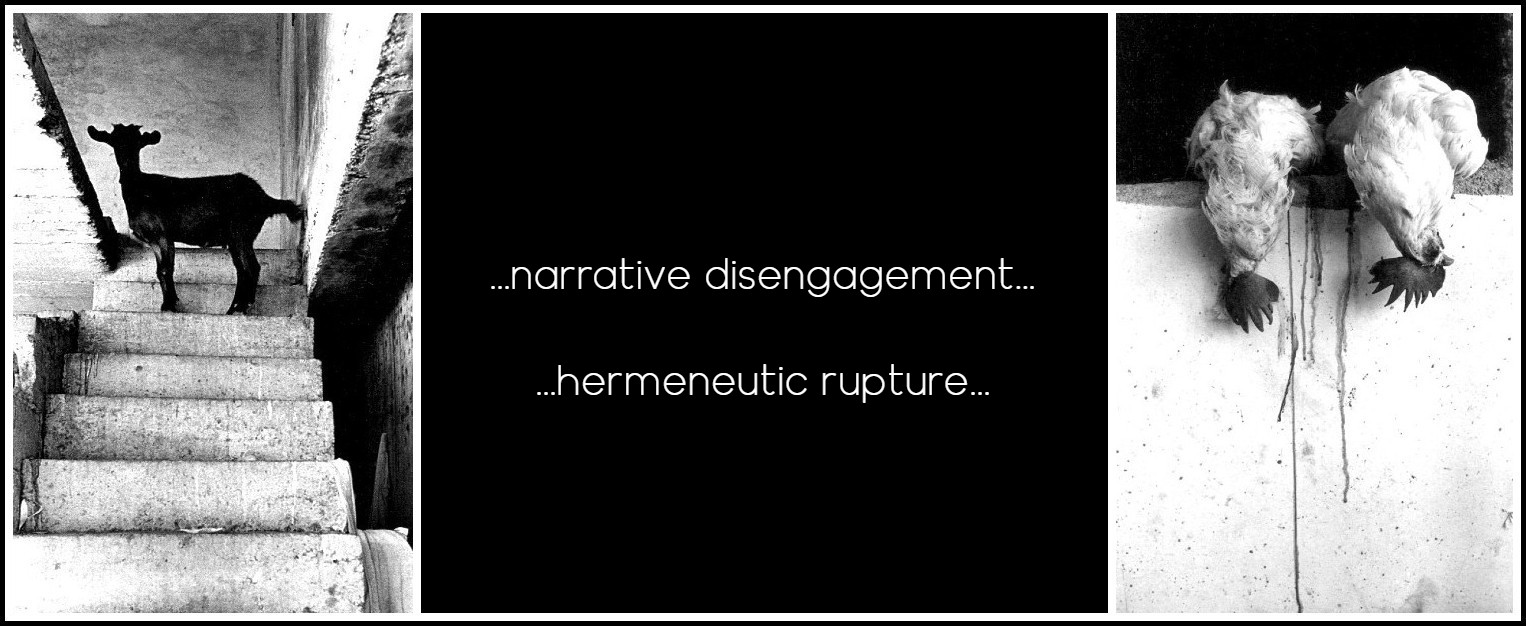
GRACIELA ITURBIDE
Cabrito, Mexico, 1979 | Los Gallos, Mexico 1987
The narrative, as we know, features numerous breaks in continuity, particularly in the chapters centered on the Consul, who, on this day of exceptional drunkenness, has little need to justify the erratic course of his thoughts. Elements are constantly interpolated, interrupting the narrative thread or the flow of dialogue to shift their meaning and reveal their hidden undercurrents. These inserts take various forms: snippets of a nearby conversation with unidentified participants; advertisements, excerpts from postcards, newspaper headlines, warning signs, and, of course, literary quotations—in light of which the Consul is quick to interpret his own destiny. Moreover, these interpolations are usually recurring motifs that circulate from character to character—that is, they appear both in the chapters where the narrative focus is on the Consul and in those where the focus is on Yvonne (the Consul’s ex-wife who has come to join him), Hugh Firmin, the Consul’s half-brother, or Laruelle, the one-time friend with whom Yvonne once had an adulterous affair. Their first occurrence in the narrative order (which is not necessarily the chronological order) is always prompted by a narrative cue, before reappearing without any such principle: thus the Strauss song, mentioned in the letter Geoffrey wrote to Yvonne but never sent, and which Laruelle discovers in the first chapter—that is, one year after the former husband’s death: ‘Do you remember the Strauss song we used to sing? Once a year the dead live for one day. Oh come to me again as once in May’. [p. 45] The verses reappear truncated and recognizable only to the attentive reader at the end of the fifth chapter, during the delirium tremens episode, in which the Consul—and the reader along with him—is overwhelmed by polyphonic reminiscences.
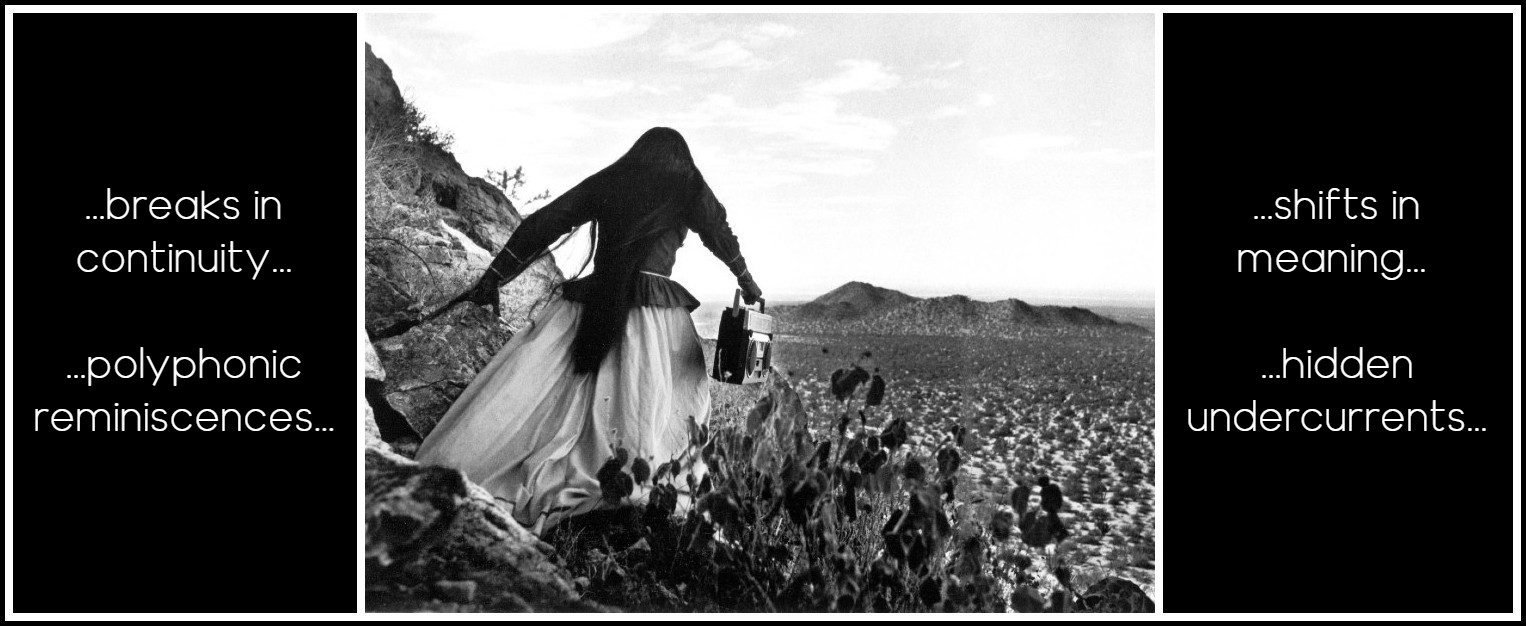
Graciela Iturbide, Mujer ángel, Mexico 1979
The first occurrence of a leitmotif is often an opportunity to explain the meaning attributed to it by the character on whom the narrative is then focused. For example, the poster for Robert Wiene’s film, Las Manos de Orlac, is commented on by Laruelle thus: An artist with a murderer’s hands; that was the ticket, the hieroglyphic of the times. For really it was Germany itself that, in the gruesome degradation of a bad cartoon, stood over him. – Or was it, by some uncomfortable stretch of the imagination, M. Laruelle himself? [p. 31] The bloodstained hands of Orlac, the murderer and protagonist of the film, thus symbolize the guilt that grips Laruelle a year after the deaths of Yvonne and Geoffrey—guilt for having failed to save the friend he betrayed, and the woman he loved. Yet this feeling is shared by all the protagonists of the story—Hugh has left his Spanish Republican friends, who are on the verge of losing to fascist troops in the Battle of the Ebro; Yvonne has cheated on and left the Consul, who is tormented by his inner demons and consumed by alcohol; and finally, the Consul himself, unable to return the love from Yvonne that his soul has nevertheless ceaselessly demanded. The reappearance of the poster for the film, through the simple mention of the title in the form of a collage, takes on the same symbolic meaning each time, regardless of which character the narrative is currently focused on. For example, when Yvonne reunites with the Consul after several months of separation, their conversation is constantly interrupted by accounts of violent scenes reaching them in incoherent fragments, while images of an advertisement for a boxing match in Tomalín, as well as the poster for Robert Wiene’s film, appear in their field of vision.
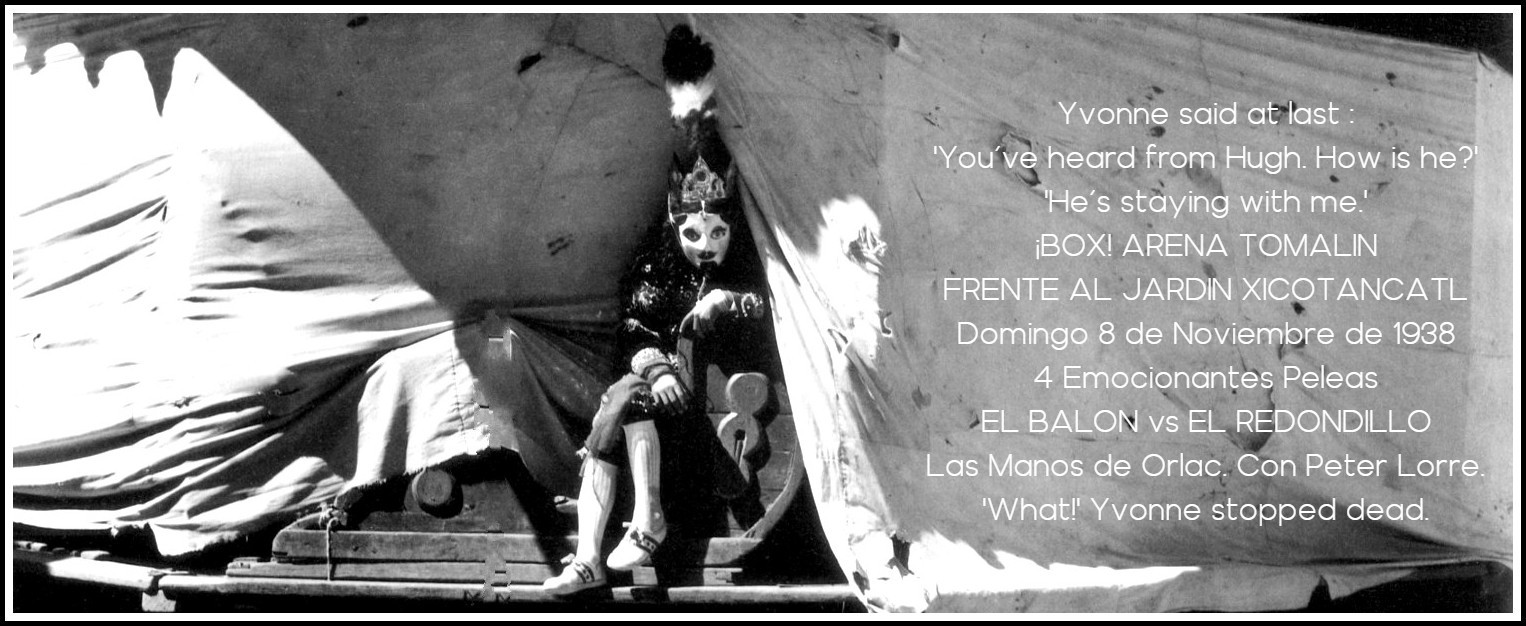
Graciela Iturbide, Volantín, Mexico 1976 | Malcolm Lowry, Under the Volcano, p. 65
Yvonne is well aware that Geoffrey suspects her of having had an affair with Hugh, which explains the shock she feels when she learns that he has moved to Quauhnahuac. The abrupt change in typography—the shift from English to Spanish—echoes the design of the posters. The advertisement for the boxing match serves as a counterpoint of violence that seems to confirm the divorce between the ex-spouses, while the reader now spontaneously associates the phrase Las Manos de Orlac with a sense of guilt. This device allows for a suspension of explanation in favor of the visual, the image serving as the spatial translation of emotion; the interpolation reconfigures the mundane scene, digging beneath the surface of the visible to reveal a subjective and emotional dimension. Moreover, the absence of any narratorial orchestration here creates a strong indeterminacy, insofar as the source of the cited words is not made explicit. In other words, it is impossible to know whether the posters actually appear within the character’s field of vision, or whether they are a sudden reminiscence that replaces the verbalization of affect, in a manner akin to the processes of displacement and condensation at work in the Freudian dream. The device thus blurs the boundaries between actualized perception and imagined perception.
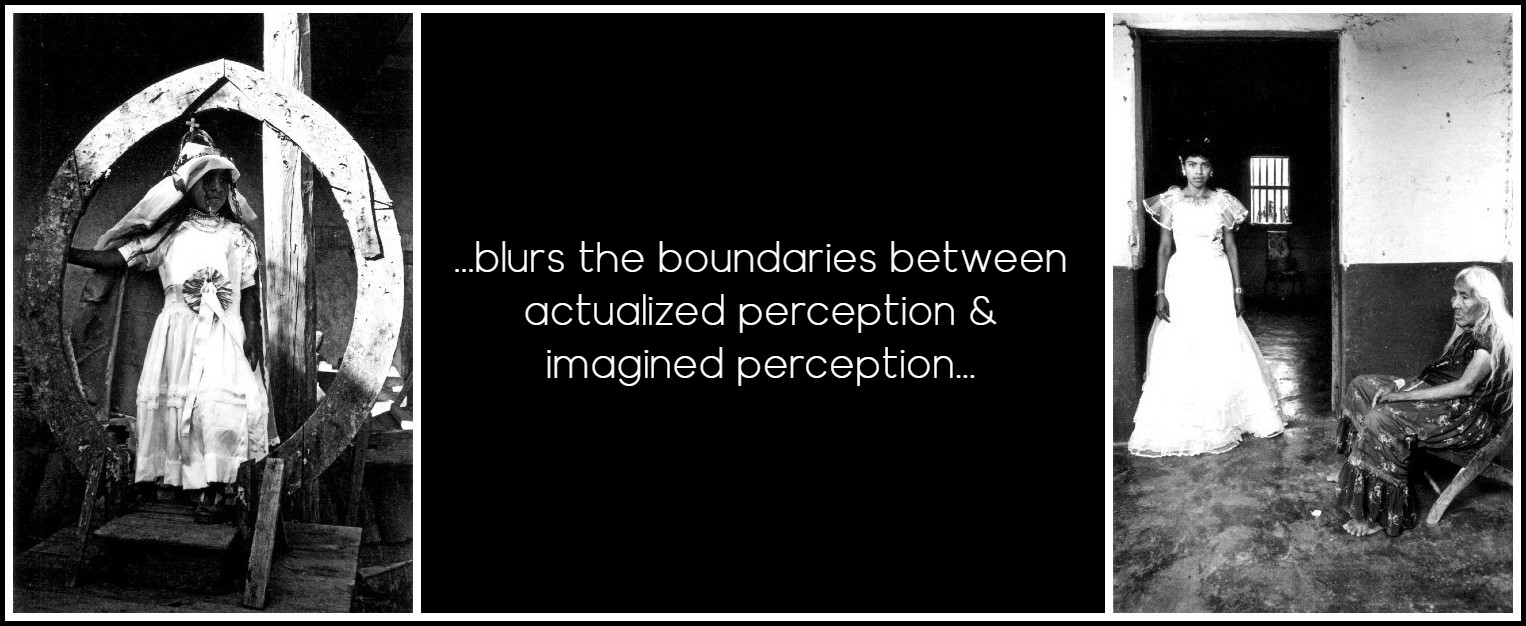
GRACIELA ITURBIDE
Virgen niña, Mexico 1981 | Quince años, Mexico 1986
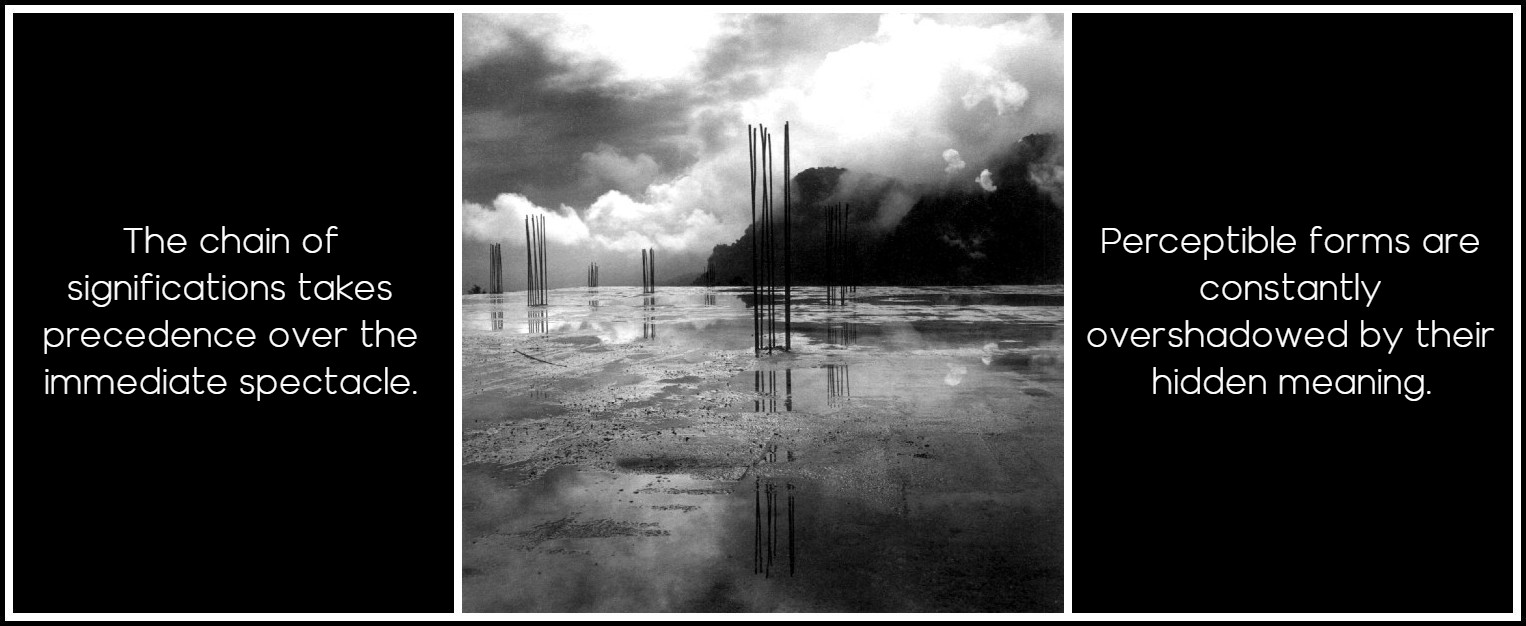
Two effects thus occur simultaneously: on the one hand, the ‘visual’ motifs are perceived—by the character and by the reader—as having heuristic value; on the other hand, the process of interpolation tends to transform the visual into visions, shifting perception toward hallucination. While these effects are observable throughout the narrative, the chapters centered on the Consul are unique in that they generalize the process—all the more so as Geoffrey’s blood alcohol level rises continually up to the final chapter. The repetition of certain motifs becomes more frequent, and the external world becomes ostensibly a space for decipherment. The raw presence of things is constantly reduced in favor of their possible signification. Most of the time, this hermeneutics of the perceptible does not translate into extensive commentary, but rather into the simple juxtaposition of objects from the visible world and intertextual quotations. These multiply throughout the narrative, allowing for a succinct and elliptical commentary on the visual motifs (real or imagined), which are then established as signs. The Consul posits the total legibility of the perceptible world, which he endows with an essentially spiritual dimension. In this sense, the references to the Bible, Milton, Dante, William Blake, and Swedenborg, to name but a few, constitute a relatively coherent network of quotations. Through skillfully chosen biblical or literary references, the theme of the Fall emerges, along with identification with the traitor Judas, with the sacrificed Christ, and with an Adam responsible for his own expulsion from the Garden of Eden. The chain of significations takes precedence over the immediate spectacle; perceptible forms are constantly overshadowed by their hidden meaning—an eschatological meaning, where the one who will be judged is both guilty and a martyr.
Graciela Iturbide, Chalma, Mexico 2008
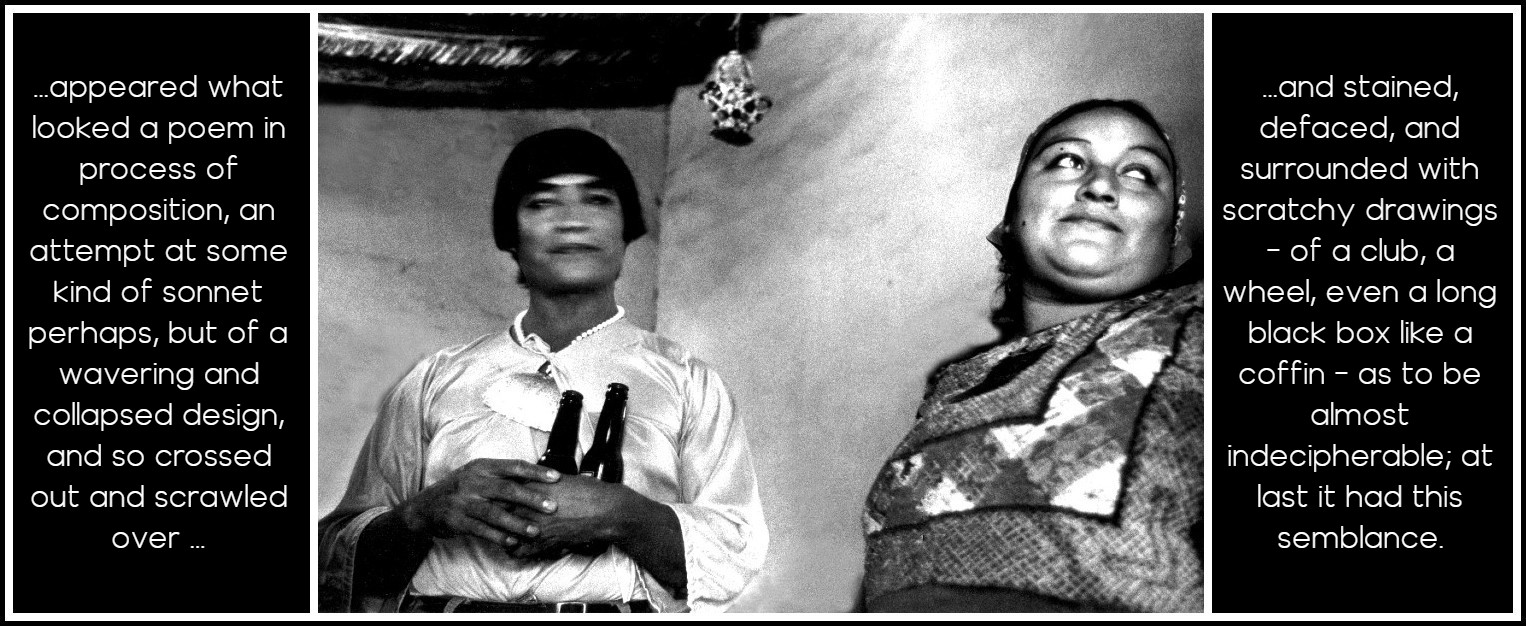
We find a sort of mise en abyme of this propensity for the overdetermination of the perceptible world in the words the Consul has scribbled on a cantina bill. Yvonne, searching for Geoffrey, finds the bill and attempts to decipher the Consul’s scribbling.
Graciela Iturbide, La cantina, Mexico 1986 | Malcolm Lowry, Under the Volcano, p. 331
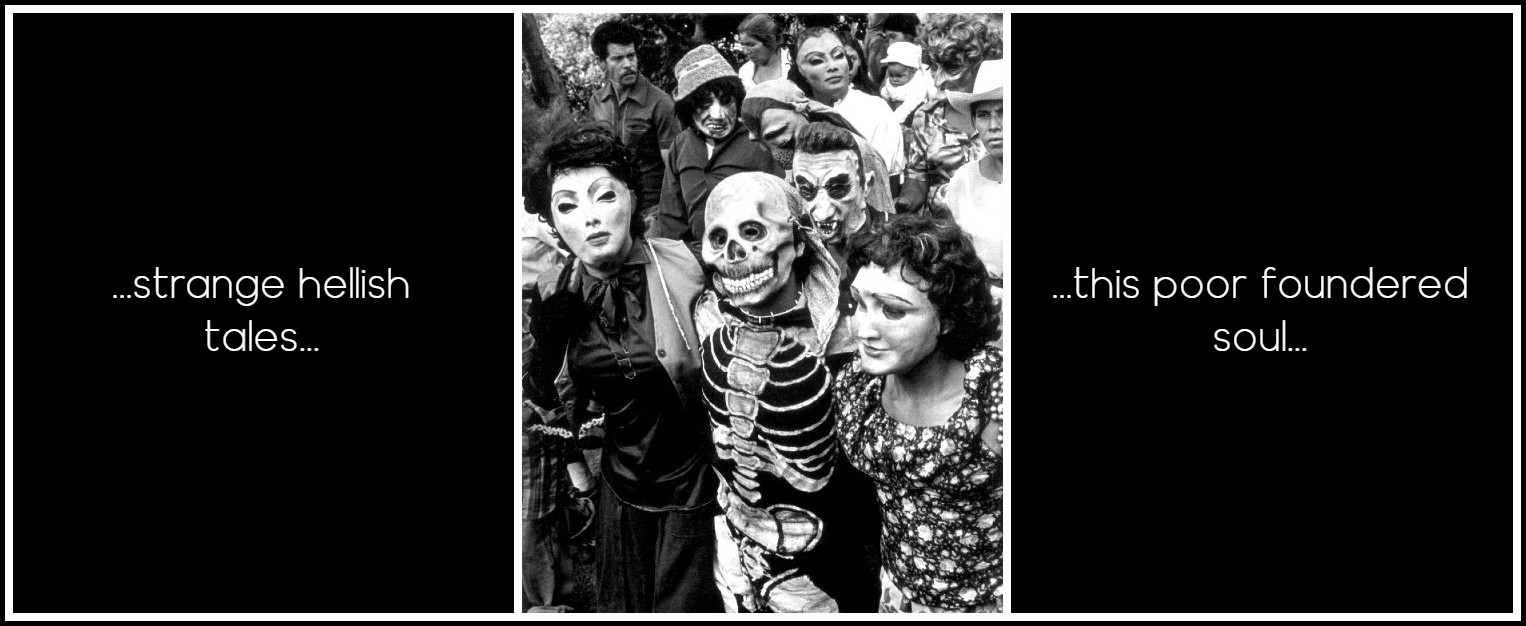
What eventually comes into view for Yvonne is a poem that evokes ‘[the] glaring world’ and ‘[some] strange hellish tales of this poor foundered soul.’ The Consul’s drawings refer to other passages in the novel: the golf club evokes a traumatic episode from adolescence, experienced with Jacques Laruelle, which the latter recalls in the first chapter: the episode of the Hell Bunker, which was located near a golf course. The wheel inevitably refers to the Ferris wheel at the fair, which constantly appears in the characters’ field of vision throughout the narrative, and which Geoffrey interprets as a fatal sign. Finally, the coffin recalls the funeral procession that Yvonne and the Consul encounter shortly after their reunion.
Graciela Iturbide, Processión, Mexico 1984
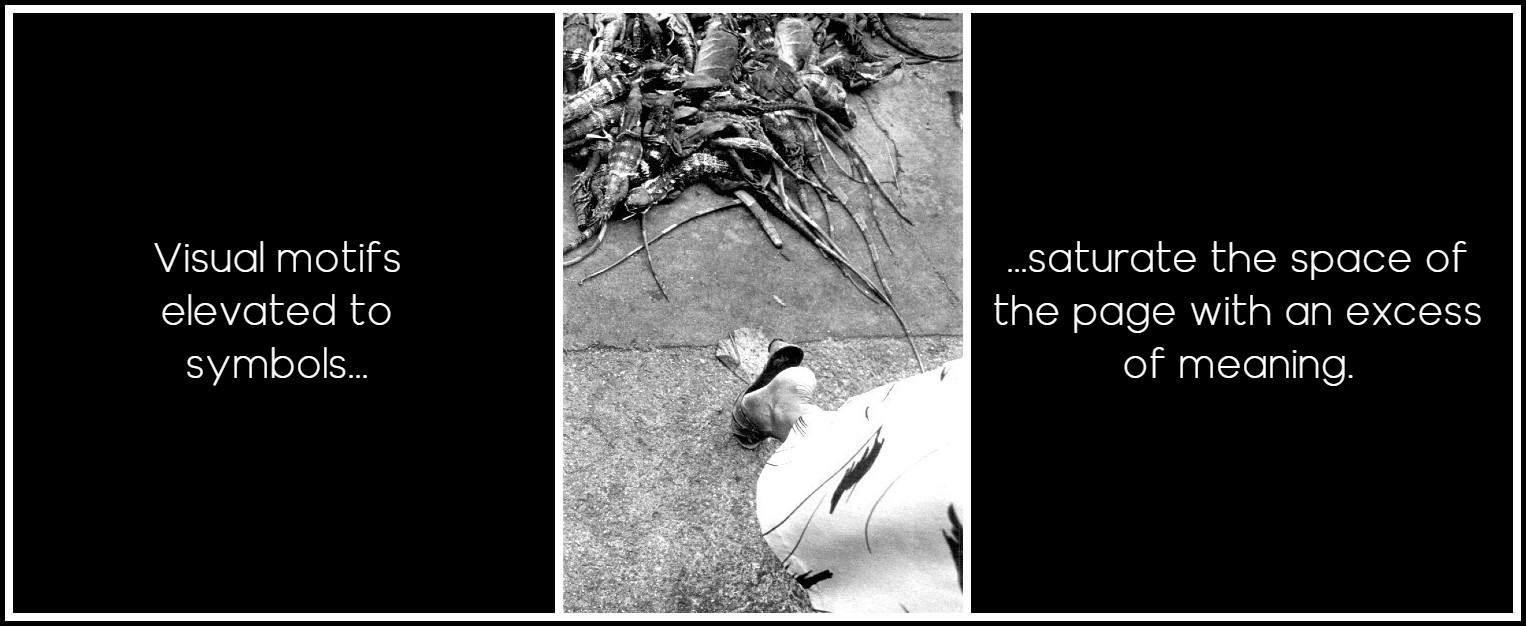
The three drawings thus tell a story: that of the Consul, of the event that occurred in Hell Bunker when he was still a young man, and of the premature death that the Ferris wheel—the wheel of Time—seems to herald everywhere. The sketches, which must be abstracted in order to unearth the poem, are therefore not insignificant doodles; on the contrary, they constitute an excess of meaning, and pictorially represent what the Consul’s underlying words represent poetically, for the poem is one more narrative instance of the Consul’s destiny. Through the use of the deictic (‘this semblance’), which suggests a gesture of pointing—and we do not know, moreover, whether to attribute it to the narrator or to Yvonne—the poem appears as an image revealed to the eye—like a photographic print becoming increasingly clear in the developing bath. But what initially blurs perception—the elements from which one must clear one’s gaze to access the poem itself—are visual motifs (the drawings) elevated to symbols, which saturate the space of the page with an excess of meaning.
Graciela Iturbide, Mercado (1), Mexico 1984
This image of the drawings that at once unsettle perception and carry great symbolic weight aptly captures the reader’s uneasy experience in the face of Lowry’s text. On one hand, the disruptive effects are manifold. I will briefly recap them. The chronology is thrown out of order, and above all, the text, saturated with symbols, quotations, and seamlessly integrated intertexts, demands an exegetical effort as inexhaustible as that undertaken by the Consul who, as a skilled reader of the Kabbalah and William Blake, attempts to decipher the spiritual nature of the universe. But, on the other hand, the reader is then entirely influenced by the symbolic interpretations revealed to him. As we have seen, the elaboration of Laruelle’s reading of the Las Manos de Orlac poster in the first chapter conditions the interpretation that the reader himself will inevitably produce when the motif reappears later in the narrative. Yet, throughout the narration, the most pervasive and constraining hermeneutics of the perceptible for the reader is that of Geoffrey, simply because his eschatological vision unsettles and fascinates the other characters, and ceaselessly contaminates the enunciative voice.
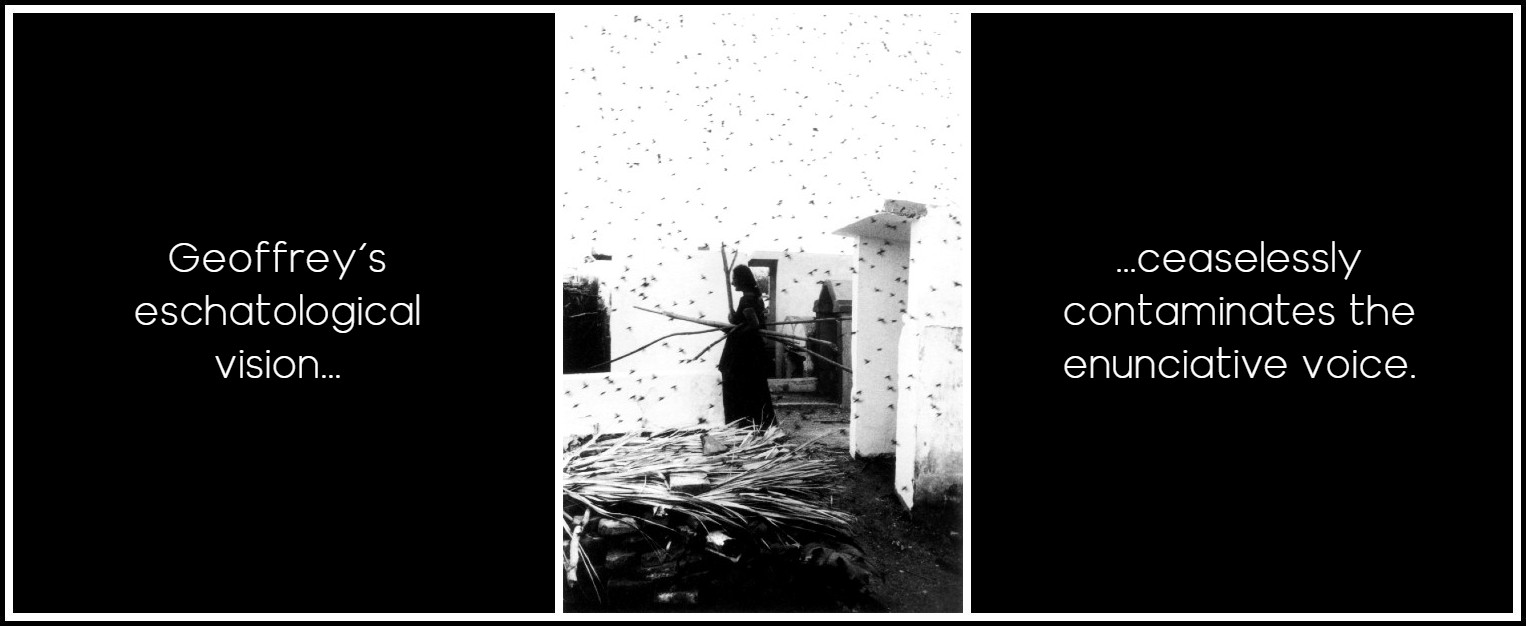
Graciela Iturbide, Cementerio, Mexico 1988
This phenomenon finds expression in an obvious stylistic mimicry—we know, for example, that Lowry took great care to differentiate the style he adopts in the passages specific to Hugh—a somewhat superficial journalist for whom a rather flat style is appropriate—and the passages specific to the Consul, in which the twists and turns of the syntax take on an oracular, alcohol-induced grandiloquence that sometimes borders on agrammaticality. This is one of the masterstrokes of the narrative monologue, which I will not revisit here. What interests me more particularly in this phenomenon of stylistic permeation is that it gives the impression that the narrative voice tends to validate the spiritual dimension of Geoffrey’s hallucinations, steering them not toward illusion but toward illumination. This is borne out by the story’s dual dénouement: the death of Yvonne at the end of the eleventh chapter, and that of the Consul in the last.
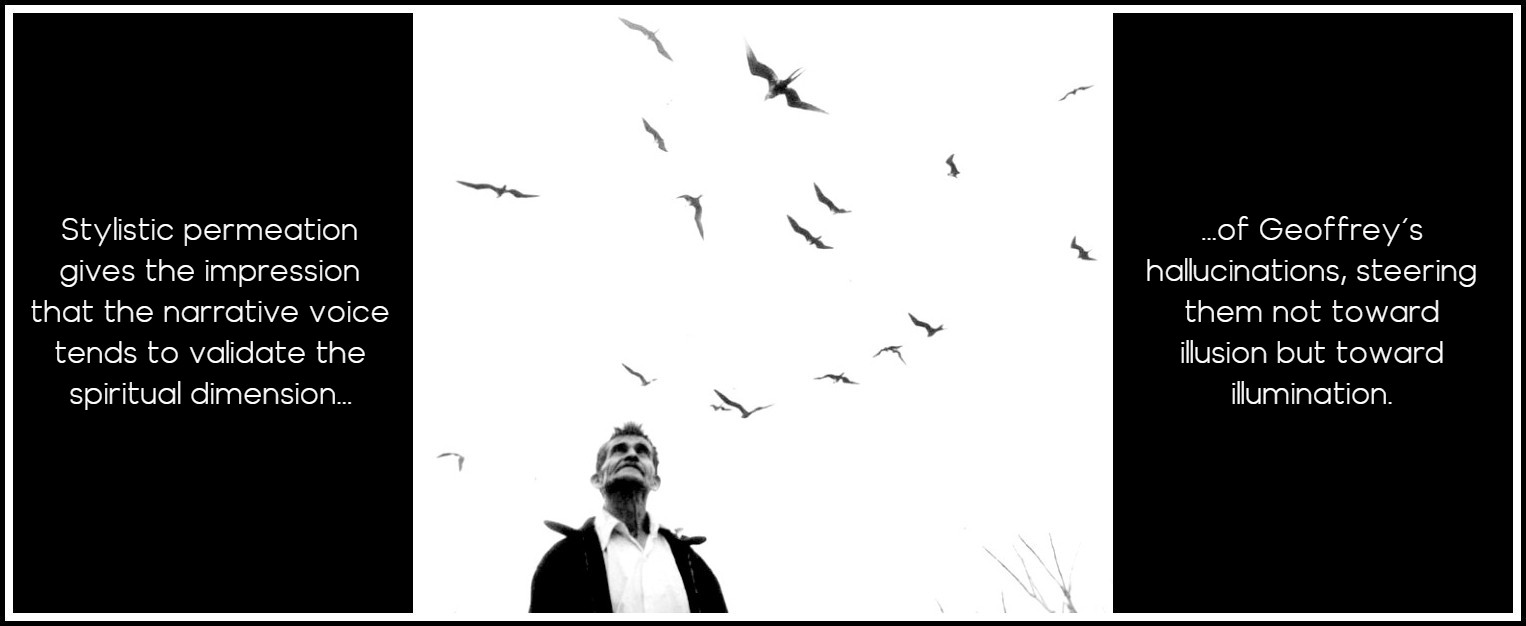
Graciela Iturbide, El señor de los párajos, Mexico 1985
Yvonne’s death is an upward movement toward the sidereal world: She is enshrined among the Pleiades, as were the daughters of Atlas, and as is Marguerite in Gounod’s Faust. Here we encounter some of Geoffrey’s favorite references—mythological allusions and identification with the figures of Faust. Conversely, the Consul’s death is a fall into the volcano.
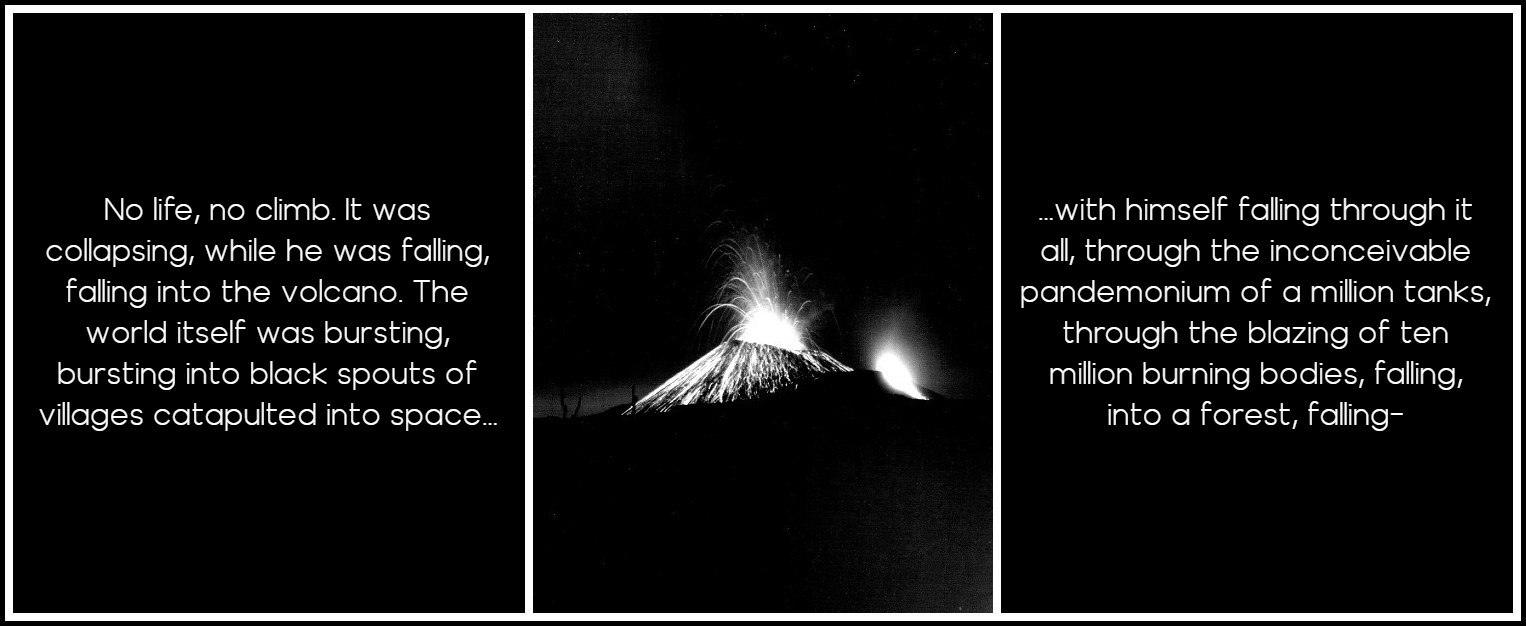
Juan Guzman, El volcán Paricutín, Mexico 1945 | Malcolm Lowry, Under the Volcano, pp. 375-76
The images of falling and mass graves seem, once again, to confirm Geoffrey’s hallucinations, wherein Spengler’s prophecies mingle with threats of eternal punishment. Of course, an ambiguity remains, since one cannot fully attribute these images either to the narrative voice or to the characters themselves. But at the same time, one cannot downplay the effect on the reader of the concomitance of the two visions—Geoffrey’s and Yvonne’s—which are the obverse and reverse of the same teleology in which images of redemption and damnation fall into place. This conjunction, along with the final place allotted to these images and the absence of any explicitly narratorial commentary, tends to endow this dual dénouement with a singular power and, ultimately, to substantiate the Consul’s apocalyptic words.
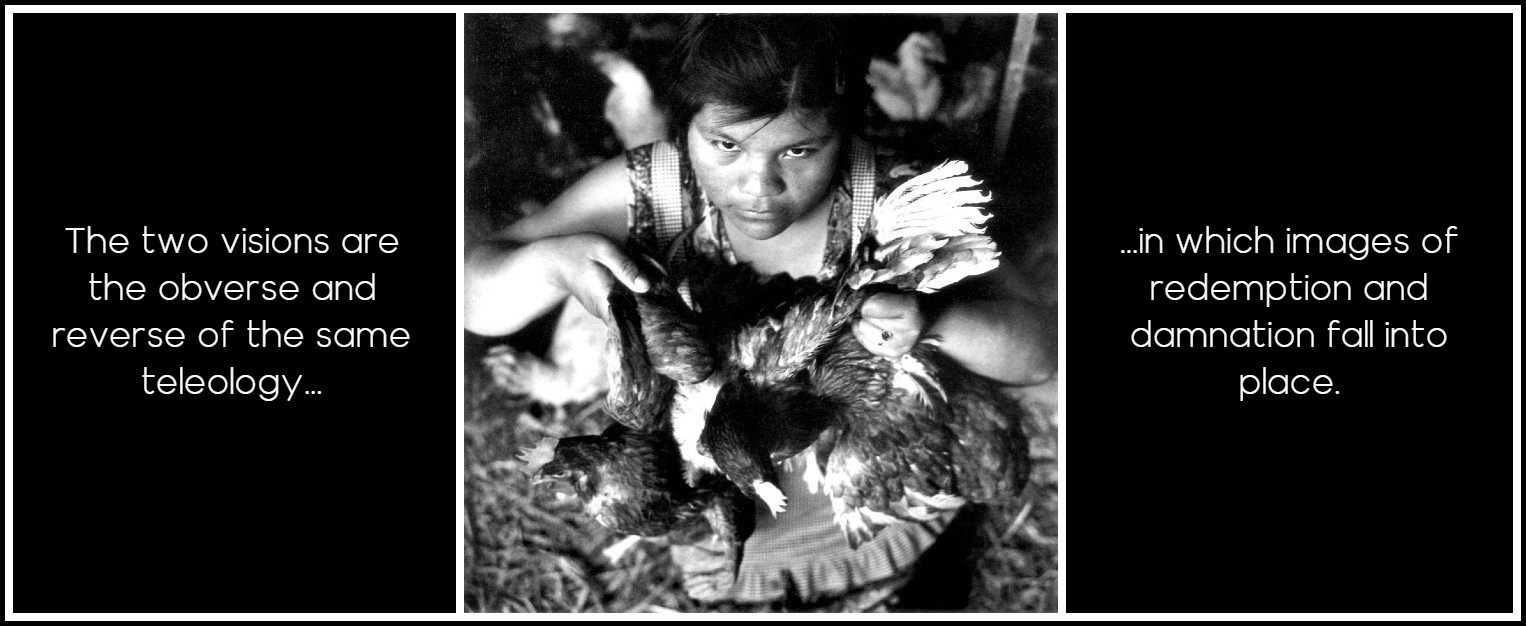
Graciela Iturbide, Vendedora de gallinas, mercado de Sonora, Mexico 1978
Yet, while these images tend to make us forget the dissonant effects that run through the narrative, these effects nevertheless remain. It seems to me, in fact, that with Under the Volcano, we find ourselves somewhat in the position of the reader of In Search of Lost Time who, having reached the end of the narrative, sees the narrator-character re-examine his past experiences through the lens of an idealist theory. The reader, reassured in his vocation as a reader just as Marcel is in his vocation as a writer, then begins to reread the eight volumes that make up In Search of Lost Time, only to discover that the theory developed in Time Regained is in fact contradicted by the actual tenor of the sensory experiences evoked in the preceding volumes. To clarify my point, regarding Lowry’s text, I will begin with an example. It concerns one of the recurring motifs of the narrative, the words [given on the image below] written on a sign that abruptly intrudes into the Consul’s field of vision.
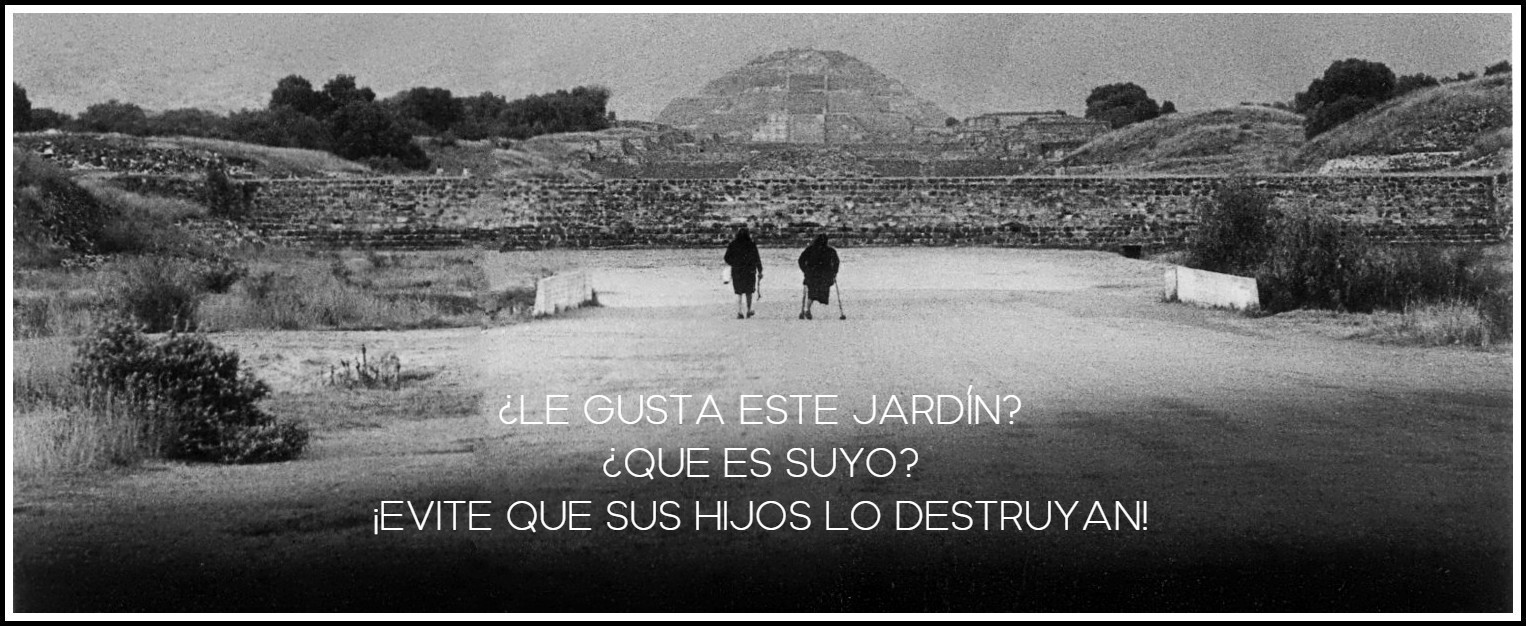
Graciela Iturbide, Calzada de los muertos, Mexico 1979 | Malcolm Lowry, Under the Volcano, p. 132
As in the examples seen earlier, the words are typographically and linguistically set apart on the page, creating a pictorial effect. Spontaneously, the Consul offers an erroneous translation, prompted by the faux ami ‘evitar’, which he translates as the English term ‘to evict’: ‘You like this garden? Why is it yours? We evict those who destroy!’ The warning sign thus becomes a threat of eviction—and the Consul, who is quick to equate the garden in question with the paradisiacal Garden of Eden and to identify himself with a fallen Adam, sees in it a confirmation of his own downfall, a prophetic message. When the words on the sign reappear later, they will take on, in the Consul’s eyes—and inevitably in the reader’s eyes—a baleful aspect. Yet the heuristic dimension attributed to the message is based entirely on a translation error. Indeed, Hugh will correct it a little later: ‘Do you like this garden, the notice said, that is yours? See to it that your children do not destroy it’. [p. 235] The system of equivalence devised by the Consul is thus relativized, reduced to a misuse of language, to a misinterpretation of the text. What Hugh’s translation restores is the immediate, literal meaning—trivial, if you will, but nevertheless accurate.
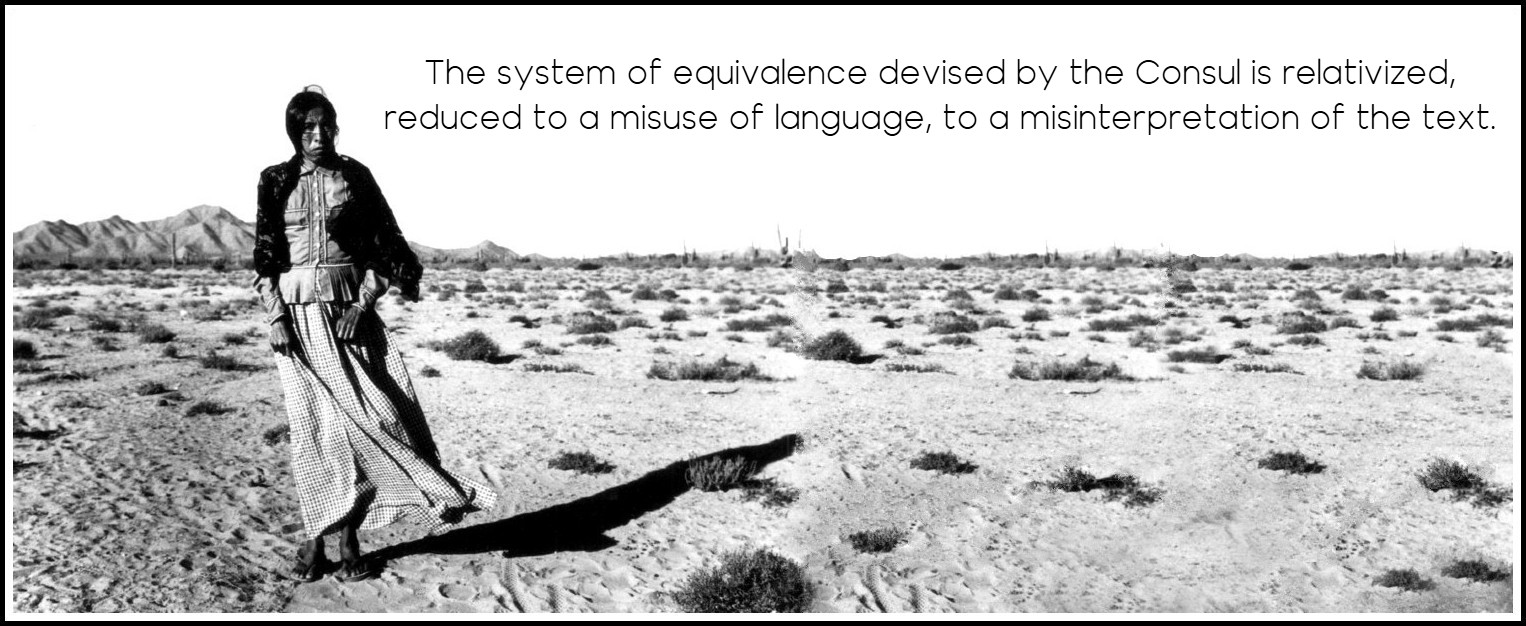
Graciela Iturbide, Desierto de Sonora, Mexico 1979
It is this misuse of the text that the character Jacques Laruelle seems to denounce again, though he himself, since he evolves greatly over time, is not without contradictions. A year after Geoffrey’s death, in the first chapter, Laruelle has indeed followed in the footsteps of his deceased rival: we find there the same interpolations—fantasized images or inserted quotations—that echo a discourse of disaster. But in the other chapters, the Consul is still very much alone, and his oracular, fascinating, and solitary visions are contradicted by the sarcasm of his former friend. The words Laruelle addresses to him in French in chapter seven, ‘Je crois que le vautour est doux à Prométhée et que les Ixions se plaisent en Enfer’, denounce the Consul’s complacent propensity to see everywhere signs of his accursed state. The sentence, moreover, is a false quotation, and this sham cruelly parodies the Consul’s citational impulse. Laruelle’s ironic remark thwarts, so to speak, the way Geoffrey uses his mythological and literary reminiscences as a form of self-justification.
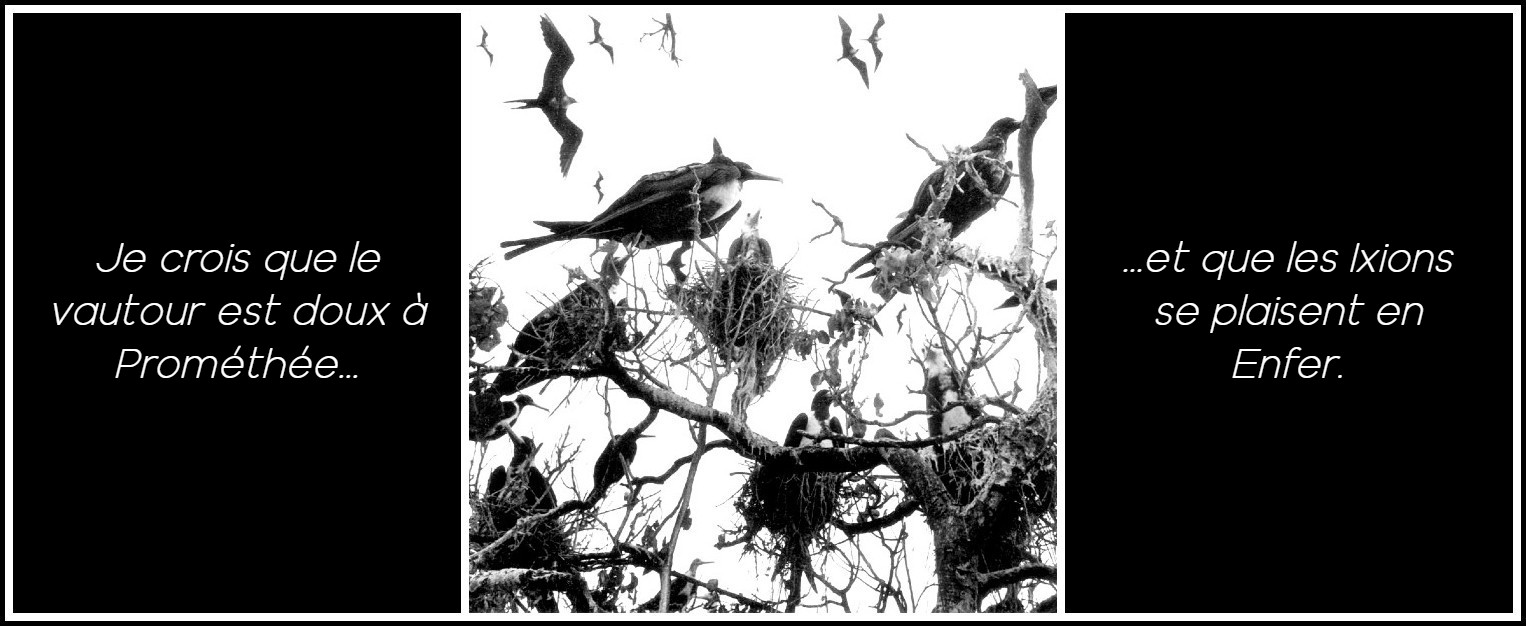
Graciela Iturbide, Nayarit, Mexico 1984 | Malcolm Lowry, Under the Volcano, p. 222
But for the reader, the indeterminacy reaches its peak when, in the passages focused on the Consul, it is the narrative voice itself that seems to distance itself from the growing autonomy of Geoffrey’s visions. At times, the narrative brutally reminds us that the Consul’s visionary gaze is, above all, clouded by alcohol. Thus, this excerpt [given on the image below].
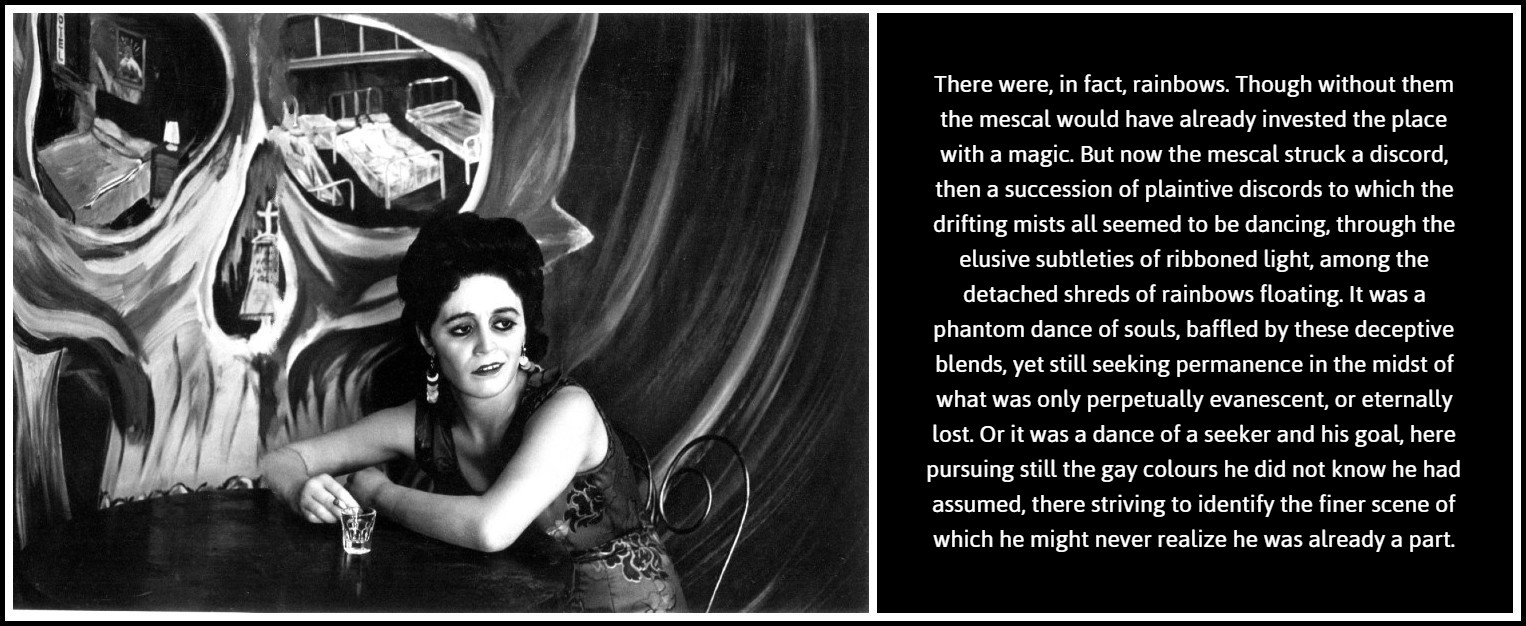
Graciela Iturbide, Mexico 1969 | Malcolm Lowry, Under the Volcano, p. 288
Here, mescal is identified as the explicit source of a game of substitution between images of beauty and hellish impressions—a game that ultimately creates a total uncertainty of vision. This wavering of the visible seems, moreover, less the result of a failed attempt to describe ‘reality’ than an act of creation ex nihilo. The spectacle, moreover, eventually splits into shreds, the text tells us, giving way, in the last two sentences, to an even more explicit narratorial commentary. This commentary speaks to us of illusions, of ghosts, and even of blindness, since it concerns a man who seeks ‘the bright colors he knows not he wears.’ The Consul’s quest—deciphering the real to reveal what it veils—is thus reduced here to a form of blindness: Geoffrey Firmin would be, if you will, a forerunner of Nietzschean man. In fact, the text seems to tell us, reality is simply what it is; there is no consoling or unsettling ‘veiled’ world outside of it, from which occult powers would preside over the destinies of men. Furthermore, in this passage, the theme of colors ties into one of the Consul’s attributes: namely, his dark glasses, which he always puts on upon leaving the cantina, thereby prolonging the darkness in which he likes to immerse himself, recreating around him a colorless sphere that protects him from the banality of the outside world.
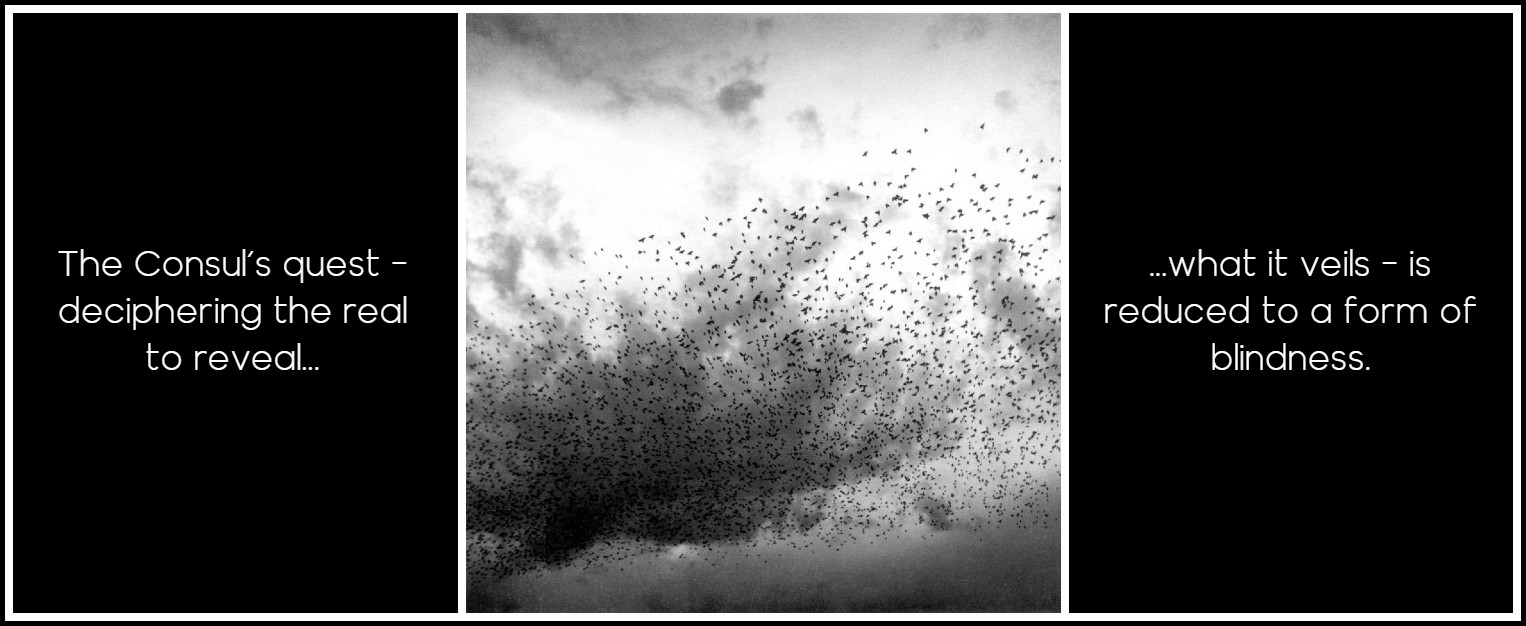
Graciela Iturbide, Dolores Hidalgo, Mexico 1978
These contradictory poles of the novel—which lend the Consul’s visions an oracular quality or, conversely, make them the paradoxical symptom of a form of blindness—seem to us to be sustained right to the very end. In this regard, one may note the perplexity that the repetition, on the novel’s final page, of the words that appeared on the warning sign might evoke in the reader: ‘¿Le gusta este jardín, que es suyo? ¡Evite que sus hijos lo destruyan!’ This placing of the two sentences confers on them an alien status in relation to the rest of the narrative, thus serving as both commentary and conclusion. But what conclusion? Here again, several interpretations are possible. Either the statement is still attributable to the Consul, in which case what would emerge in the text—through a typographical and enunciative rupture—would be a sort of posthumous voice, a voice from beyond the grave intoning a little tune of ‘I told you so.’ The Consul’s death, at once ignominious and sublime, would thus confirm the prophetic aspect attributed to the warning sign.
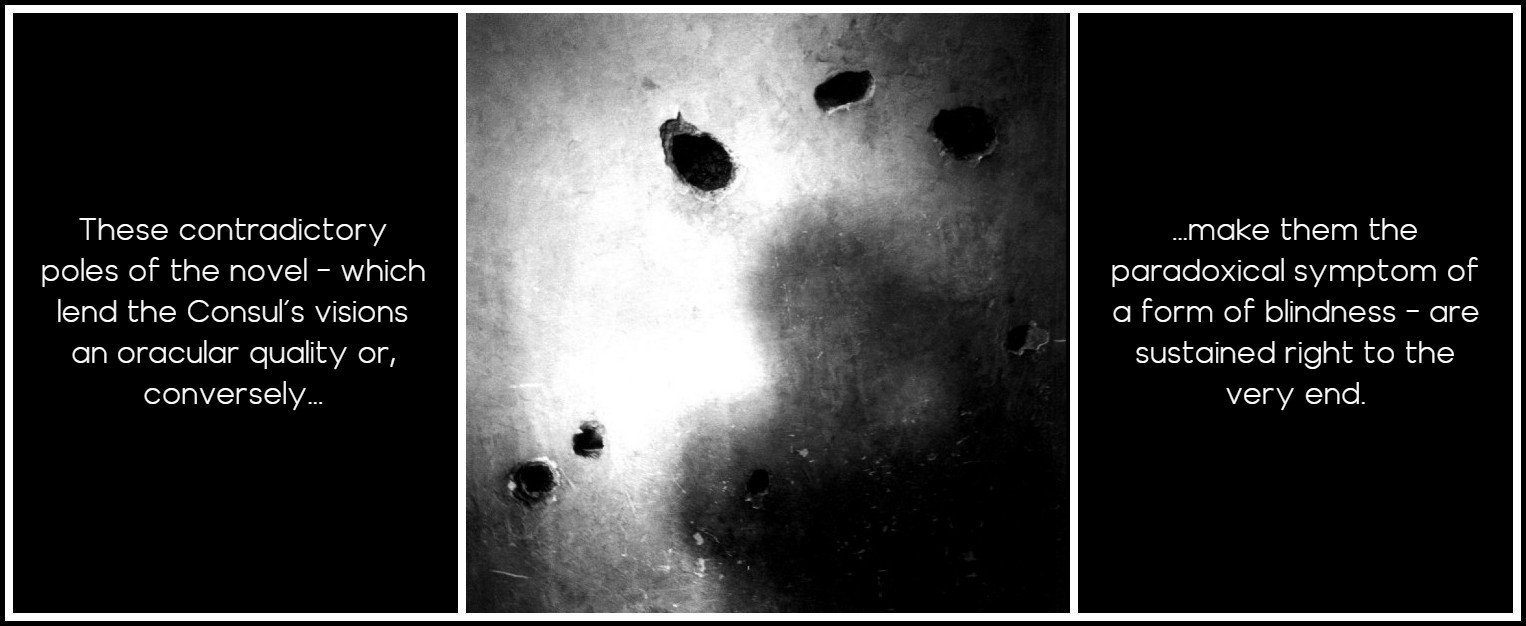
Graciela Iturbide, Autorretrato en casa de Trotsky, Mexico 2006
A second possible reading: the pronouncement is the work of a narrative voice that here fully assumes its position of omniscience, and which confirms the Consul’s views—with the complicity of the reader, who has kept in mind the ominous meaning that the late Geoffrey Firmin attributed to the message. This second interpretation aligns with the first: in both cases, the Consul’s deciphering of the world is validated. However, there remains a third possible interpretation, which contradicts the first two: the quoted words are attributable to the omniscient narrative voice, but do not serve as an endorsement of the Consul’s interpretation. The quotation would be a final rectification, a return to the literal meaning—which would then be justified by the mention of the Spanish terms on the sign, and not by the Consul’s erroneous translation—a translation, I remind you, referencing a biblical intertext, in this case Adam’s expulsion from Paradise. In other words: the real has no esoteric reverse, and the Consul, overzealous in his efforts to imbue it with literatures (in the plural), has brought about his own downfall.
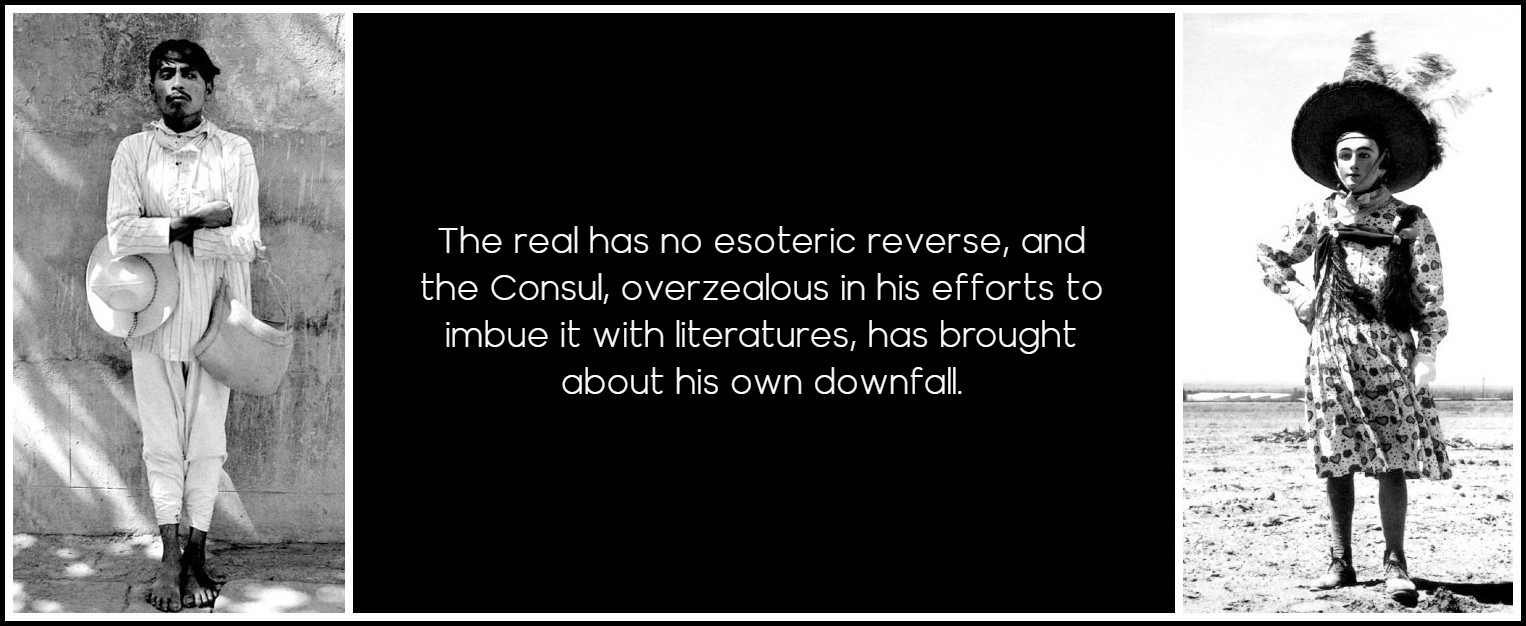
Manuel Alvarez Bravo, Hombre de Papantla, Mexico 1935 | Graciela Iturbide, Carnaval, Mexico 1974
This is the hypothesis of ‘the idiocy of the real,’ put forward by one of Lowry’s unconventional commentators, Clément Rosset, in Le réel: Traité de l’idiotie. According to him, the magic of mescal lies in the fact that it produces a staggering gait, an erratic and irrational path, and, at the same time, a rationalizing discourse that retrospectively connects the disordered sequence: there would thus be a conjunction between total indeterminacy and total determination. Alcohol serves to accentuate, and thus bring to light, two fundamental truths: on one hand, the insignificance of the real, a meaning that cannot be found, not because it has been lost, but because it never existed. On the other hand, there is a wholly human propensity to seek an underlying dimension, a super-reality hidden beneath the real, and which in fact has the unacknowledged aim of rejecting it and distancing itself from its unbearable univocity—a propensity from which, according to Clément Rosset, only truly materialist philosophies escape, those of Epicurus, Lucretius, or Marx.
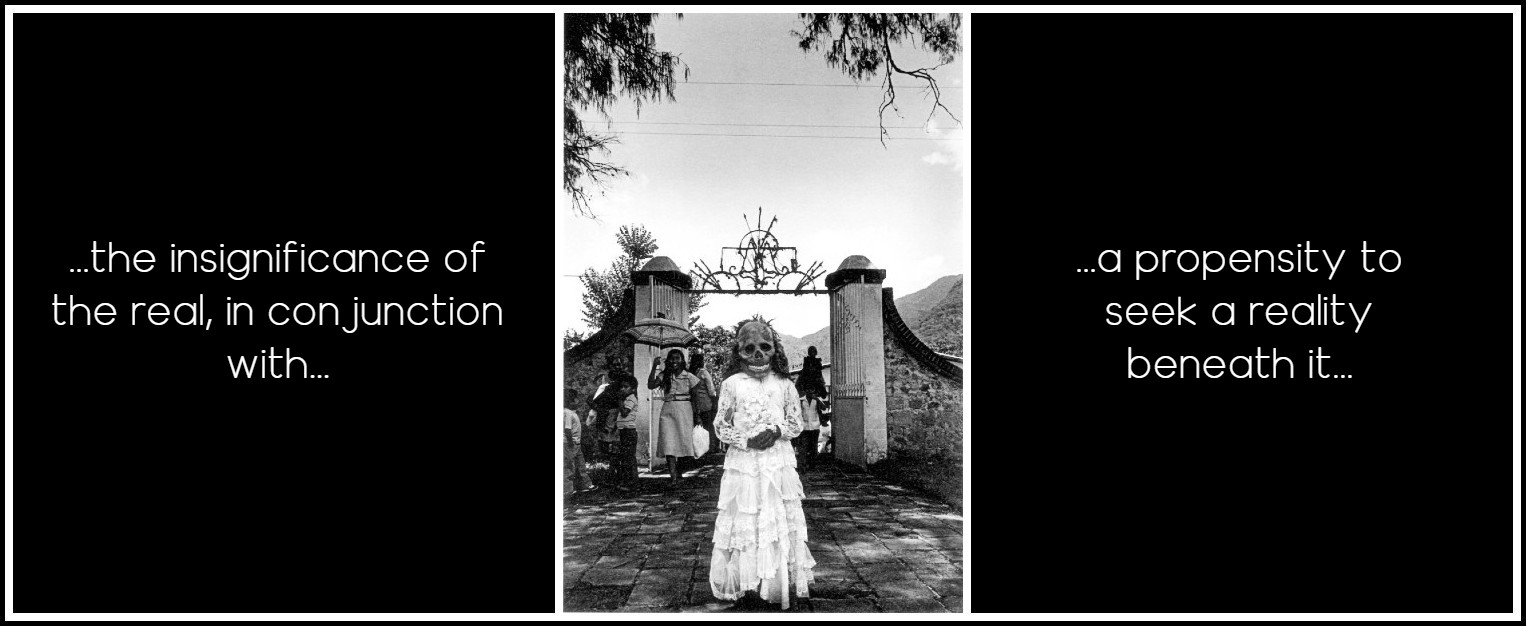
Graciela Iturbide, Primera comunión, Mexico 1984
In fact, these two aspects coexist in Under the Volcano: wherever the Consul finds himself, he has the intuition that he is always there by chance, and his intoxication grants him the privilege of seeing the unbearable insignificance of the world laid bare before his eyes—what he refers to as ‘the horror of an intolerable unreality.’ [p. 80] The true enlightenment that alcohol would enable would thus be, first and foremost, that through which the reign of chance is revealed, the advent of nothingness. But at the same time, the Consul is far ‘too human’ to abidingly accept the bare presence of things without linking them entirely to invisible equivalents, too human to celebrate the trivial materiality of the perceptible rather than seeking ideal escape. And here again is the plunge into the cycle of meaning, thanks to literature, thanks to the metaphorization of all things, in which the Consul indulges outrageously, in proportion to the number of glasses consumed. A passage from the tenth chapter, quoted by Clément Rosset, exemplifies this dual movement. It is the moment when, having reached a prodigious level of intoxication, the Consul takes refuge in the excusado (the toilet) of the cantina. He then sees something singular and unique suddenly appear [given in the text on the image below].
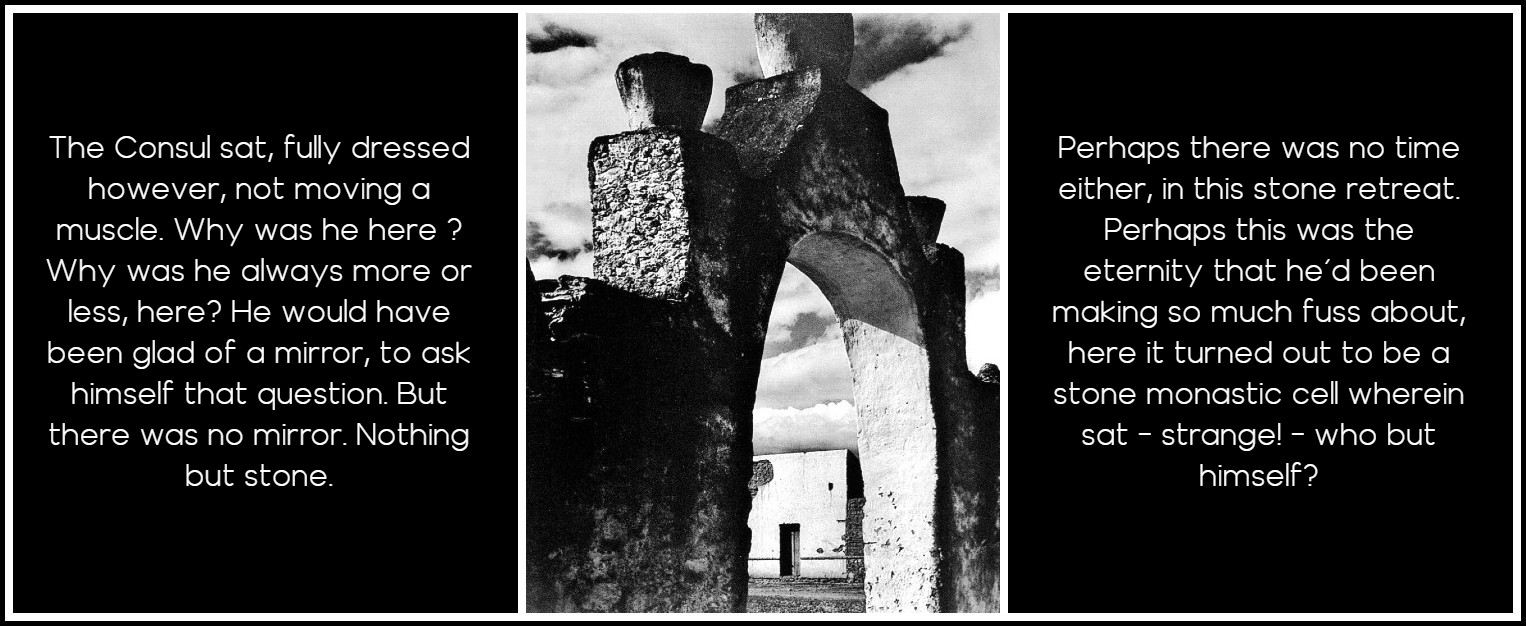
Paul Strand, Puerta de la iglesia, Mexico 1933 | Malcolm Lowry, Under the Volcano, p. 296
There is no mirror here to deny the one-dimensionality of his surroundings, the opacity of the stone. Things, suddenly, have no reverse side; there is no explanation for their astonishing singularity. Yet, already, words begin to construct another world: the stone, even as it displays its bare, depthless existence, becomes the material of a ‘monastic cell.’ The image then develops: that of Christ’s tomb, from which the stone is removed in the morning; that of the penitent’s cell, observed by the eye of God. And, moreover, Geoffrey ends up hearing these words: ‘I’m watching you… You can’t escape me.’ [p. 302] We arrive, then, at the condition of the ‘speaking man’ evoked by Michel Deguy: ‘To be driven out of Eden, the non-place of ‘primitive’ coincidence, is to be separated from it by the ‘as.’ To be fallen is to be victim of a metaphor.’1 The Consul manifests this ‘essentially metaphorical’ condition in two ways: despite his speeches, he sees the world as it is, in its ‘primitive’ immediacy, and, at the same time, this same world seems to him to conceal within itself the folds of metaphor, thereby calling for a hermeneutic reading.
1 – Michel Deguy, Actes, p. 269, and ‘Usages poétiques du symbole’, Cahiers internationaux du symbolisme, n° 13, mars 1967, pp. 9-10. Quoted by Claude Simon in ‘La fiction mot à mot’, Nouveau Roman: hier, aujourd’hui, Paris, 10/18, 1972, p. 82.
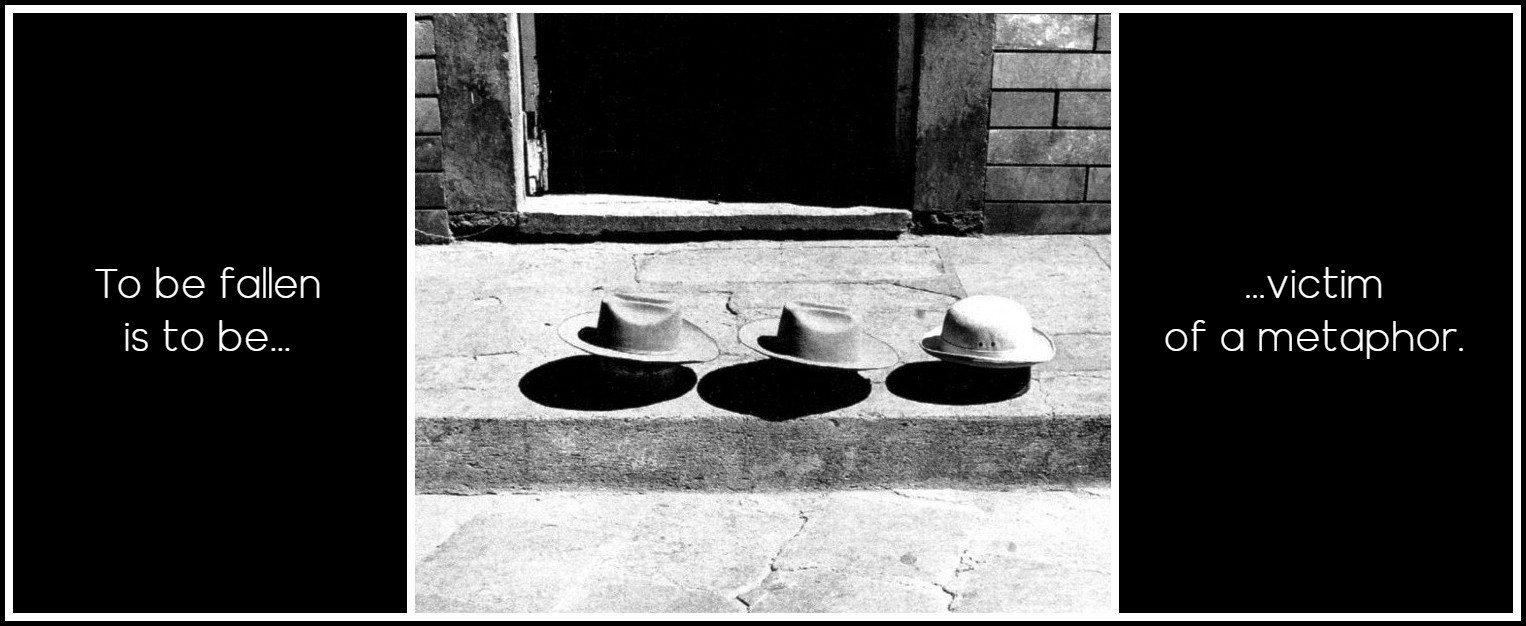
Lázaro Blanco, Cabezas vacías, Mexico 1975
It thus seems to me that Lowry’s text attests to a double aporia: either (1) the world is experienced and not commented upon, in which case it is, in accordance with the anti-metaphysical postulates of phenomenology, a pure appearance in which the absolute and original form of experience is constituted, or (2) the only possible mode of apprehending the world involves its fictionalization, a doubling of the real that alone is capable of reconstituting a form of continuity and intelligibility—a re-presentation in the absence of a presentation. The tremor of the visible, ever at work in Under the Volcano, and the massive use of quotation, are the result of this continuous shifting between the dazzling nature of coincidence and the experience of separation. The Consul’s words, which contaminate the enunciative voice, pose the question in terms of a realignment of speech and the world, whose contradictory poles I shall, to conclude, recall.
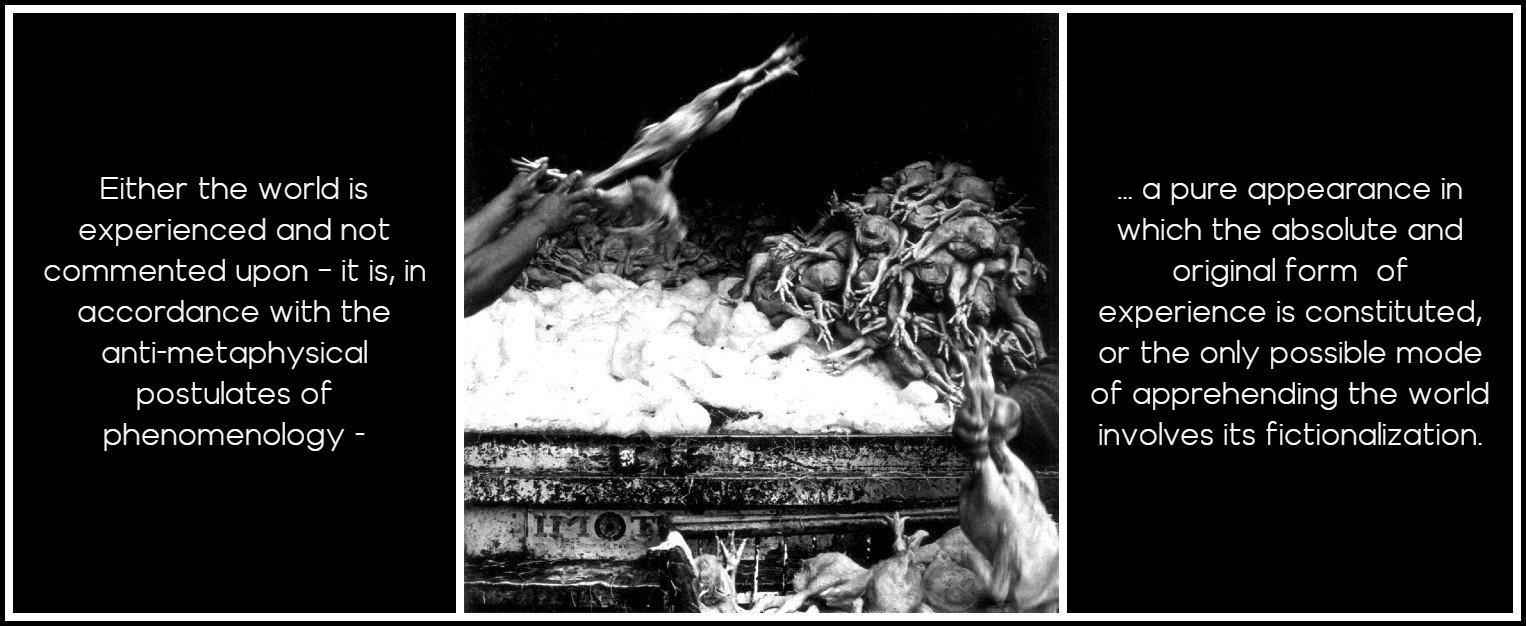
Graciela Iturbide, Mexico 1995
On one hand, the text’s stammering, Geoffrey Firmin’s unbridled logorrhea, symbolize the impossibility of communicating enlightenment—the inevitably deferred transmission of the obvious univocity of the perceptible. These are also the passages in which, believing he has spoken, the Consul realizes that his words have remained audible only to himself. For example, after the long, disordered speech addressed to Yvonne and Hugh, which he realizes was never actually spoken [see the text on the image below].
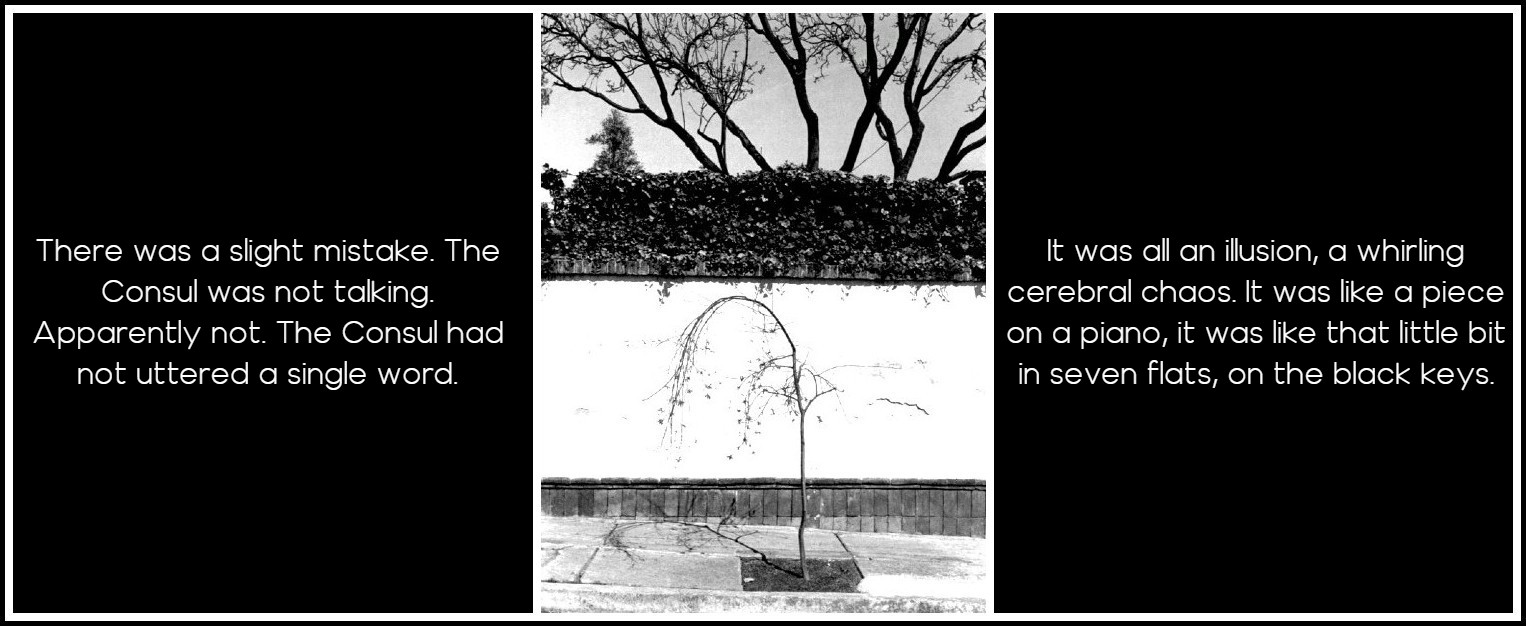
Colette Álvarez Urbájtel, El ejemplo, 1974 | Malcolm Lowry, Under the Volcano, pp. 309-10
The musical comparison here blurs the line between the verbal and the non-verbal, revealing that nothing discursive can be said about the rustlings of the world, about the intuition of its obviousness. Taken to the extreme, non-metaphorical and non-symbolic language will, moreover, be reduced to pure onomatopoeia [see the text on the image below].
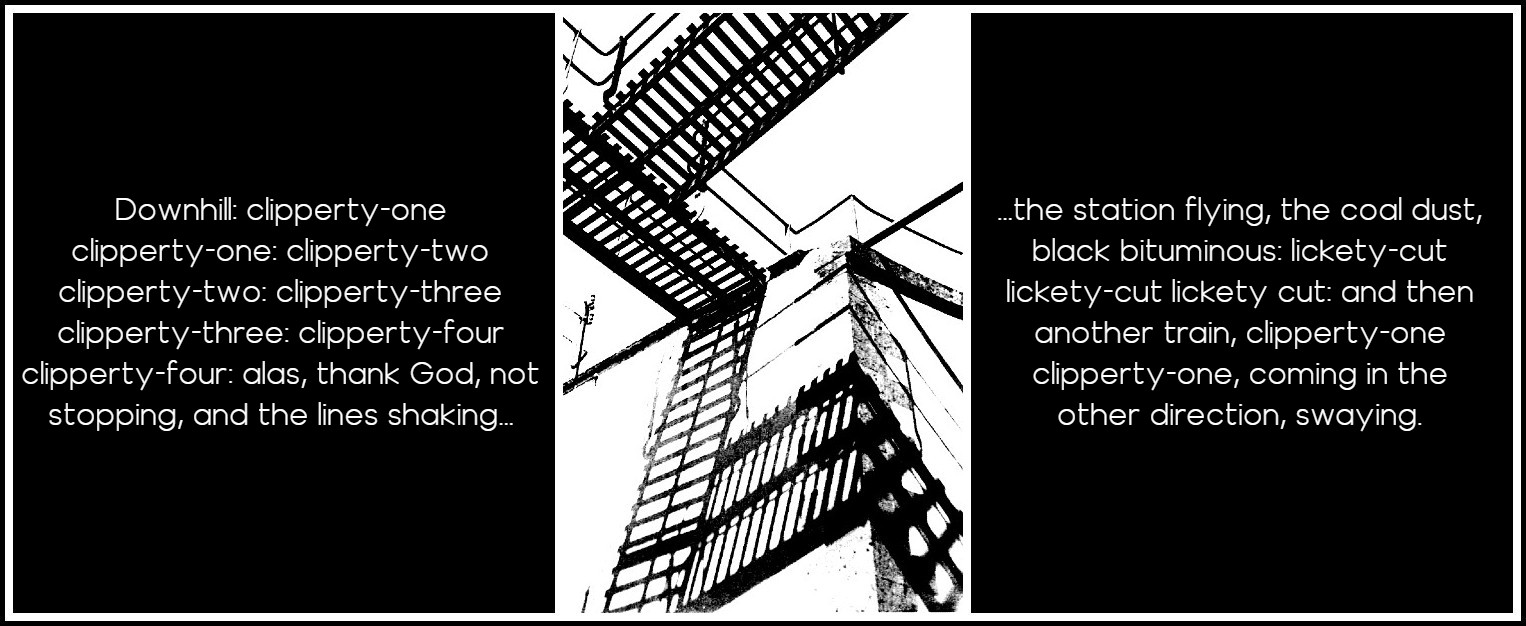
Agustín Jiménez, La Penitenciaría de Lecumberri, Mexico 1931 | Malcolm Lowry, Under the Volcano, p. 284
Here, the sonic effect is accentuated by the typography, which evokes the modulations of a musical phrase. Speech that coincides with the emergence of the perceptible can only unravel, petering out into a pure vibrational rhythm—like the mournful residue of a co-presence whose reality only mescal could, in flashes, reveal. In contrast, language again becomes excessively metaphorical, imbued with the detours of myth and the symbolic: it is a discourse about, a commentary on rather than speech of the world.
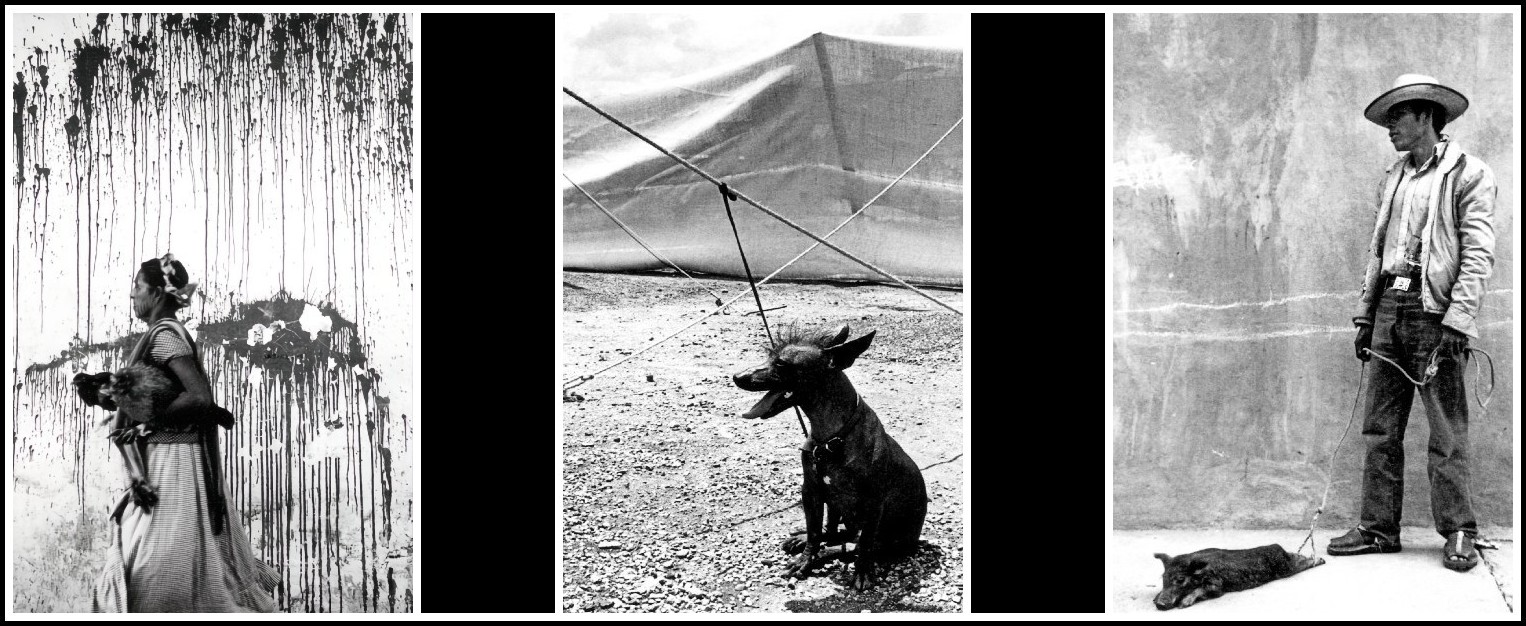
GRACIELA ITURBIDE
Juchitán, Mexico 1979 | Oaxaca, Mexico 1998 | Dolores Hidalgo, Mexico 1978
Indeed, what does Yvonne discover beneath the scribbled drawings, in the passage cited earlier, if not a poem that, like the drawings, is symbolic through and through. In it, the Consul evokes his cursed destiny, that of a fallen man pursued by the eye of God, like Cain in Victor Hugo’s epic poem, La légende des siècles. Beneath the symbols lie other symbols, inscribed in a metaphorical circularity from which Geoffrey Firmin can only escape at the cost of his language drying up. Thus, Lowry’s character pushes to the extreme the insoluble dichotomy between a speech that, in blending with the music of the world, becomes inarticulate, and that which, oracular and imbued with literature, can only be speech in retrospect, always shadowing the world with wavering meanings. These two modes of language, both excessive, are doomed to incommunicability and confusion: the Consul, unwillingly, reaffirms the myth of Babel, which he explicitly echoes while thinking of all the alcohol consumed: ‘a babel of glasses […] built to the sky, then falling, the glasses toppling and crashing […]’ [p. 294]. When Yvonne writes to him: ‘My tongue is dry in my mouth for the want of our speech’ [p. 367], it is already too late: the fires of alcohol have disfigured the Consul’s voice, caught between silence and cryptic prophecies. In his darkness, no-one can follow him anymore. To Yvonne’s plea for a common language for the here and now, he counters with the power of phrases already read which, in their apocalyptic charm, bypass life.
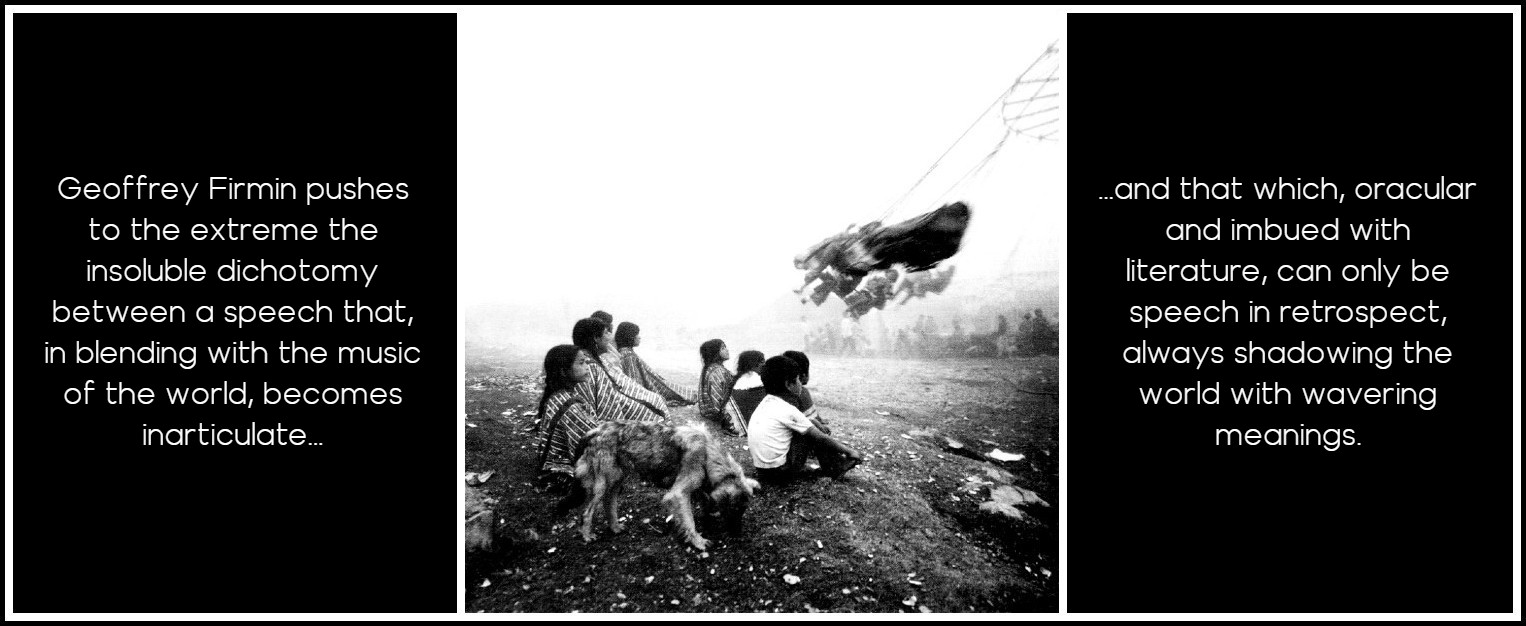
Walter Reuter, Y el viento se lleva el alma, Mexico 1988
JUDITH SARFATI LANTER: THREE BOOKS (IN FRENCH)
CLICK ON THE IMAGE TO GO TO A DESCRIPTION OF THE BOOK
Donner forme au sensible
Littérature et animisme
Droit et littérature
MARA, MARIETTA: A LOVE STORY IN 77 BEDROOMS – READ THE FIRST CHAPTER
A literary novel by Richard Jonathan
RICHARD JONATHAN, ‘MARA, MARIETTA: A LOVE STORY IN 77 BEDROOMS’ — READ THE FIRST CHAPTER
AMAZON & APPLE BOOKS

RICHARD JONATHAN, ‘MARA, MARIETTA: A LOVE STORY IN 77 BEDROOMS’ | AMAZON PAPERBACK OR KINDLE
RICHARD JONATHAN, ‘MARA, MARIETTA: A LOVE STORY IN 77 BEDROOMS’ | APPLE iBOOK
MARA, MARIETTA: A LOVE STORY IN 77 BEDROOMS
A literary novel by Richard Jonathan

Available from AMAZON (paper | ebook) & iBOOKS, GOOGLE PLAY, KOBO & NOOK (see LINKS below)
RELATED POSTS IN THE MARA MARIETTA CULTURE BLOG
CLICK ON THE IMAGE TO GO TO THE POST
By Richard Jonathan | © Mara Marietta Culture Blog, 2026 | All rights reserved
Comments