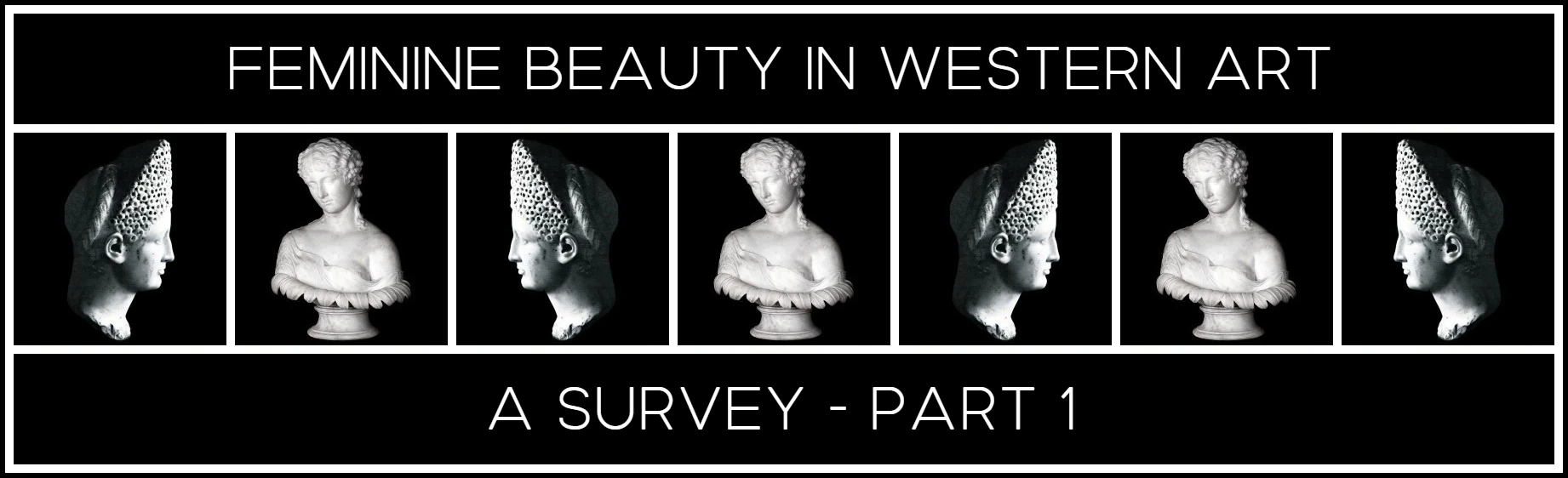
Classical Beauty and Characteristic Beauty
FEMININE BEAUTY IN WESTERN ART: A SURVEY – PART 1
Kenneth Clark
From Kenneth Clark, Feminine Beauty (London: Book Club Associates / Weidenfeld & Nicholson, 1980) pp. 8-14
Note that in his essay Kenneth Clark deliberately limits himself to a single overriding question: How has Western art imagined feminine beauty? The questions asked by later scholarship—Who defines feminine beauty, through what institutions, for whose benefit, and with what consequences?—are not Clark’s concern. His focus is strictly on beauty as an aesthetic phenomenon. While one can legitimately argue that his approach is too narrow, particularly in its complete sidelining of feminist perspectives (there’s not a shadow of critical awareness in his ‘innocent’ adoption of the ‘male gaze’), one cannot justifiably reproach him for ignoring the intellectual agenda of later art critics, nor for opting for a sweeping but cursory survey of the subject (given its vast scope and the constraints of publishing). Always bear in mind that the principal distinction Clark makes is between CLASSICAL BEAUTY, based on symmetry and proportion, and CHARACTERISTIC BEAUTY, in which personality modifies ideal form. He argues that these two modes persist through Western history despite changing fashions. [Richard Jonathan]
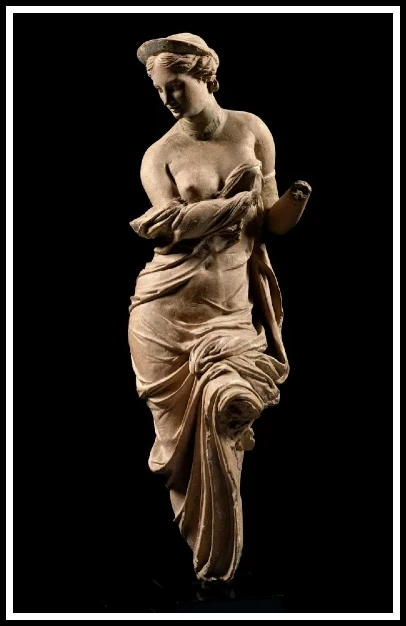
The ‘Heyl Aphrodite’ – 200-100 BC
By way of introduction, I note that there are and have always been two kinds of beauty, which I may call classic and characteristic. Classic beauty, which reached its climax in ancient Greece, depends on symmetry, established proportion and regular features. Characteristic beauty treats the features with greater freedom and will allow a retroussé nose and small, sparkling eyes, provided that they give the face greater animation. Nevertheless these two kinds of beauty have much in common. Some degree of symmetry is essential, and transitions must be smooth and logical. And then, on the whole, physical beauty must reflect a peaceful or integrated frame of mind. There have been furious beauties and sulky beauties, but they exist in the margin of a calm integrity. Since, therefore, classic and characteristic beauty have so much in common and so often merge into one another, I have not tried to separate them in the text. Now let us turn to Ancient Egypt, where our survey begins.1
1 – I have slightly modified this paragraph (which is the second of the three paragraphs that constitute Clark’ introduction to his book) in order to ease the transition into the body of the text which follows it. [Richard Jonathan]

Greta Garbo (Photo: Clarence Sinclair Bull, 1931) | Marylin Monroe (Photo: Cecil Beaton, 1956)
The discovery of feminine beauty, like so much that we value in civilized life, was made in Egypt in the second millennium BC. It was a sort of miracle; or perhaps we should say that excavation has not produced a scrap of evidence to explain it. The earliest women in Egyptian art, for example the two goddesses who flank King Mycerinus in a famous group in Cairo, although healthy, well-developed young creatures, cannot be called beautiful.

Hathor, Mycerinus, Local Deity – Egypt, Dynasty IV, 2613-2498 BC
Then suddenly the Egyptian sculptors invented a type of beauty that was not to be equalled until sixth-century Greece. An example of how completely the love of beauty filled the minds of Egyptian artists and, presumably, of their patrons, is the tomb of Ramose. The idea of filling a funeral vault with reliefs and paintings of beautiful men and women is contrary to our notion of death, but it expresses the Egyptian belief that the journey to another world must be made as pleasant as possible.
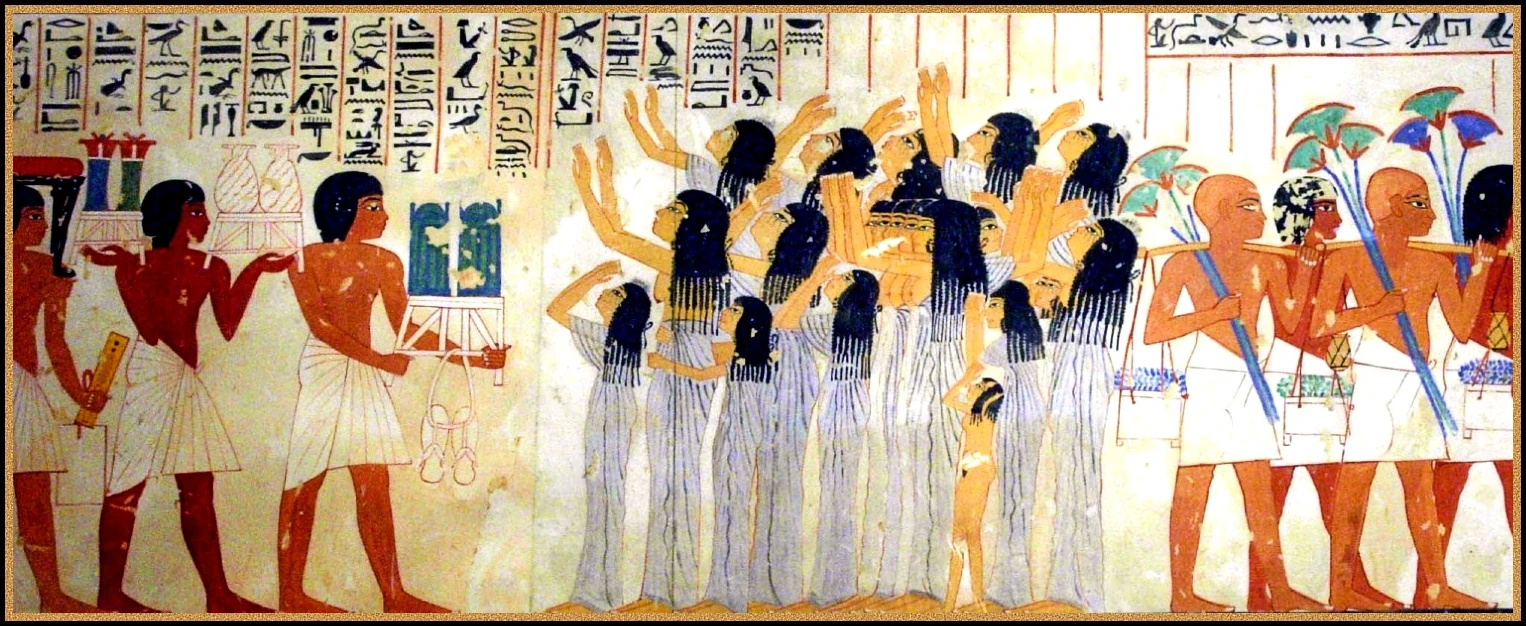
Funeral Procession, Tomb of Ramose – Egypt, Dynasty XVIII, 1567-1320 BC
This obsession with beauty reached its zenith in the entourage of Amenhotep IV (Akhnaton), where a sculptor of genius, who seems to have been called Imhotep, portrayed a group of human beings so exquisitely beautiful that we could scarcely have believed in them were it not that the same sculptor did heads of other members of the court which are revelations of spiteful ugliness. Portraits of the Queen who, for convenience, we may call Nefertiti, reveal a delicate beauty which hardly appears again until fourteenth-century France, combined with a sweetness and humanity that we associate with the early Italian Renaissance. Although our present society can have little in common with that of eighteenth-dynasty Egypt, this is still beauty for today.

Head of Nefertiti, Egypt – Dynasty XVIII, Armana Period, 1373-57 BC
This moment of inspiration barely survived into the period of Tutankhamun, and thereafter Egyptian art relapsed into its thousand years of monotony. But occasionally a relief or a figure of no certain date has survived to show that the delight in feminine beauty had not vanished from Egyptian art.
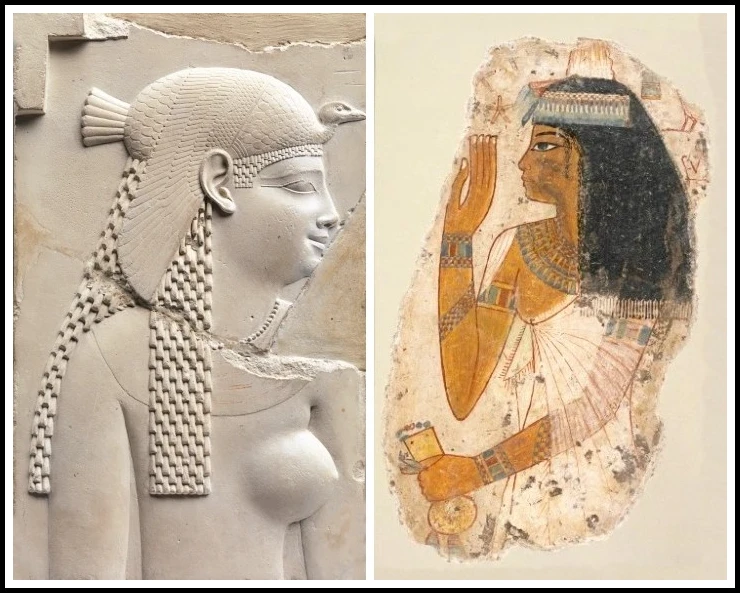
Goddess, Egypt – Dynasty XXVI, 664-525 BC | Lady Tjepu, Egypt – Dynasty XVIII, 1567-1320 BC
Where else could a measure of length be rendered as a beautiful woman with upraised arms?
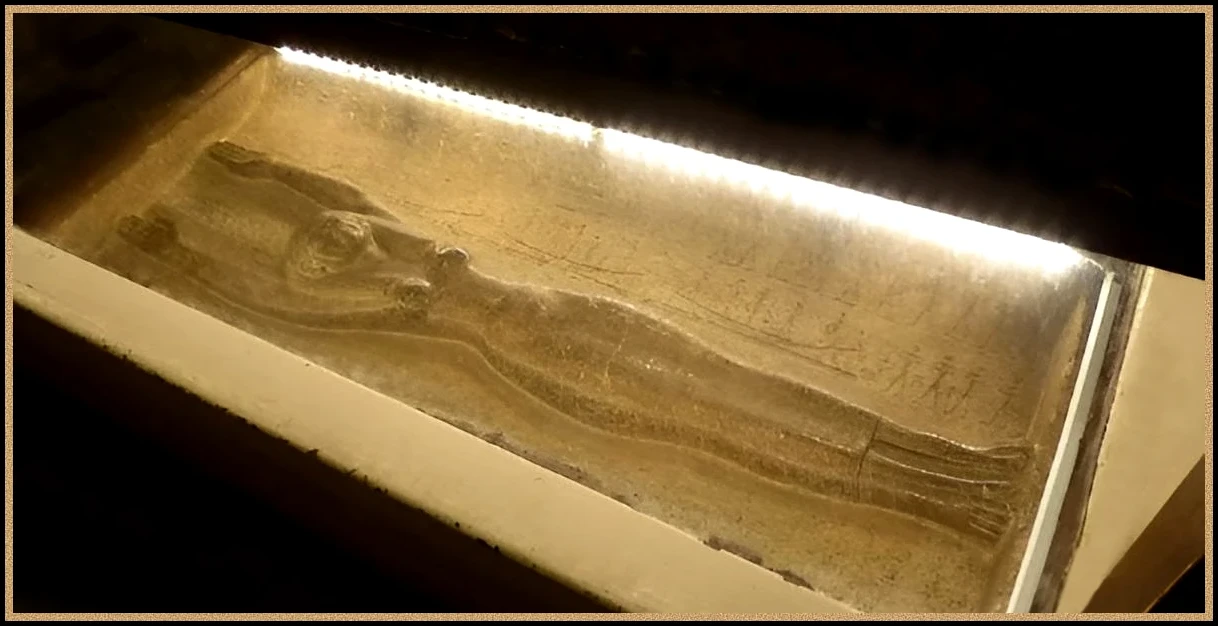
Sky Goddess Nut, Egypt – Dynasty XIX, 1320-1200 BC
At some time during this period an unknown sculptor achieved a dazzling piece of feminine beauty, the Princess with a Wig in the Cairo Museum. If she was really done in the twelfth dynasty, as the museum catalogue says, she could be put forward as the first beautiful woman in art.
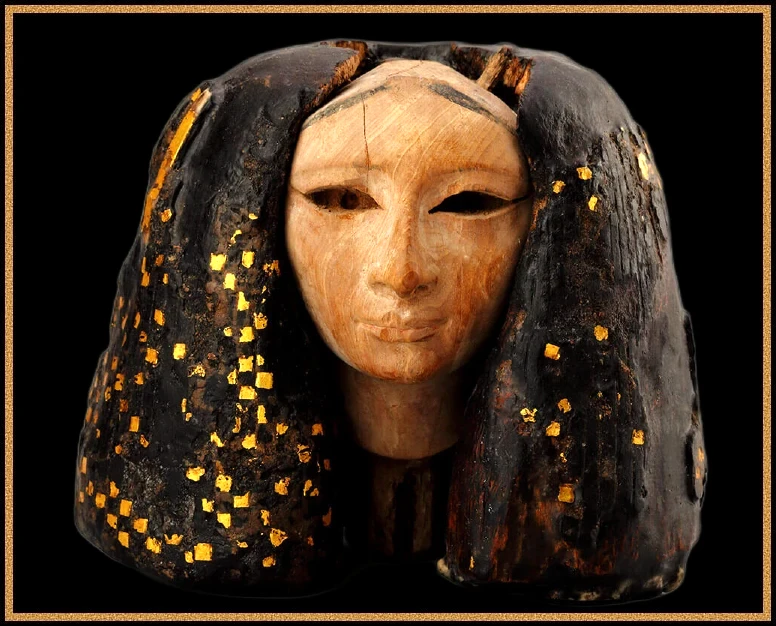
Princess with a Wig – Egypt, Dynasty XII, 1991-1786 BC
Meanwhile, the seafaring nations of the Eastern Mediterranean were producing styles as variable and irresponsible as seafront styles usually are. One of these—the art of the island of Crete—achieved, through isolation, a certain character, but precisely what this character was it is difficult to say. The reason for our uncertainty is that the discoverer of Cretan art was the great archeologist Sir Arthur Evans, and the fragments he unearthed were so fascinating that he created in his imagination a whole new style, different both from Egypt and from the almost contemporary (c. 1400 BC) art of Mycenae. Many of the original fragments were completed by a skilled restorer. There seems to be little doubt that when Arthur Evans returned to Oxford his restorer grew bolder and executed whole figures, which Evans accepted with delight. He was particularly pleased when people said how modern they looked. It is with this reservation that I reproduce one of these figurines. If they are old (which is by no means certain) they support the belief that the beauty of women’s faces is timeless. This is confirmed by a unique example of the kind of sculpture that must have been common in the Mediterranean basin towards the end of the sixth century, the so-called Lady of Elche, which survived because it had been exported to Spain. A face of classic beauty is encased in a heavily-ornamented head-dress, which was no doubt intended to make her acceptable to a semi-barbarian people of the Western Mediterranean.
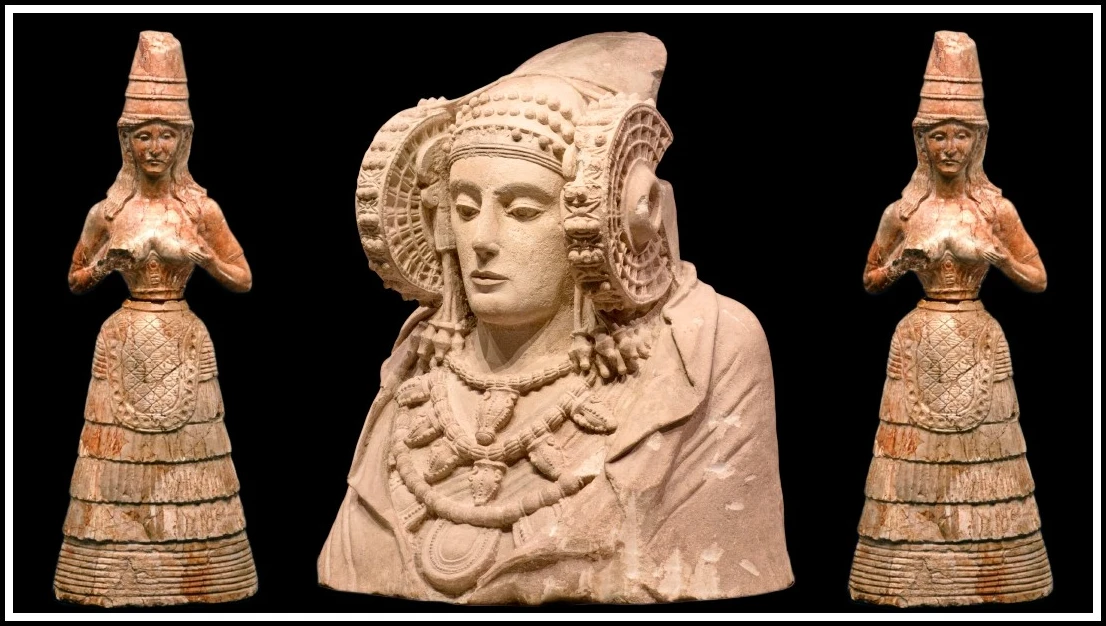
Cretan Figurine – 1,600 BC | Lady of Elche – Graeco-Phoenician, 685 BC
In spite of two centuries of scholarship, the origins of Greek art remain profoundly mysterious. What can we say, for example, about that enchanting relief of the birth of Venus known as the Ludovisi Throne? When and where was it made? What was the original intention behind it? We can only say that here, almost for the first time, we are aware of that gift which Greece bequeathed to European art, an indestructible love of physical beauty.
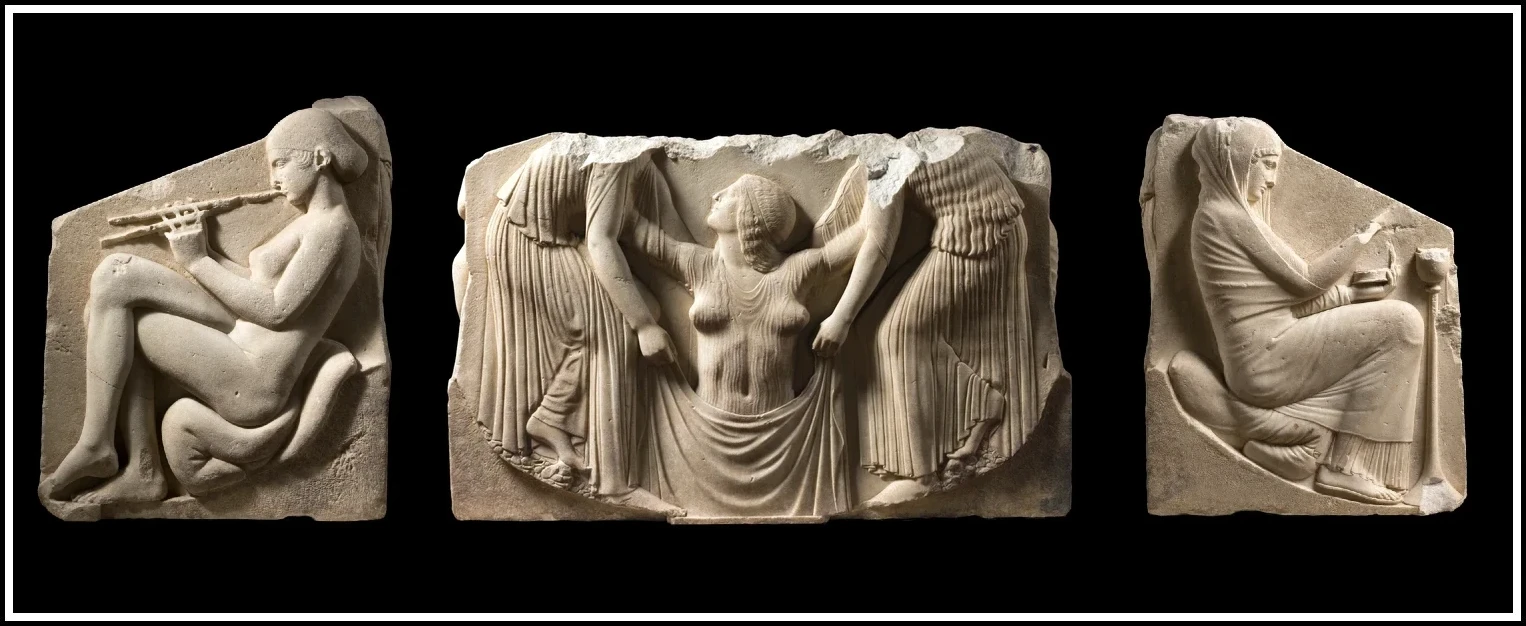
Ludovisi Throne – Ionian, 500 BC
We can study this in a series of standing figures of women, known as the Kore. They stood on the Acropolis of Athens, and must surely have had some ritual purpose. When ritual changed and the Acropolis was rebuilt they were thrown away, but have emerged (from the surrounding rubble) remarkably well preserved. The earliest (the so-called Peplos Kore) shows the simple column of the body surmounted by a head of adorable vivacity. She is succeeded by a series of almost equally seductive columnar figures, which at first look very much like one another, but when compared more closely reveal remarkable differences both in design and in the character of the heads. Most of them show traces of a gentle smile, but a few are severe and relentless. One of the most famous is curiously self conscious, as if posing for her portrait. She must have been a famous beauty.
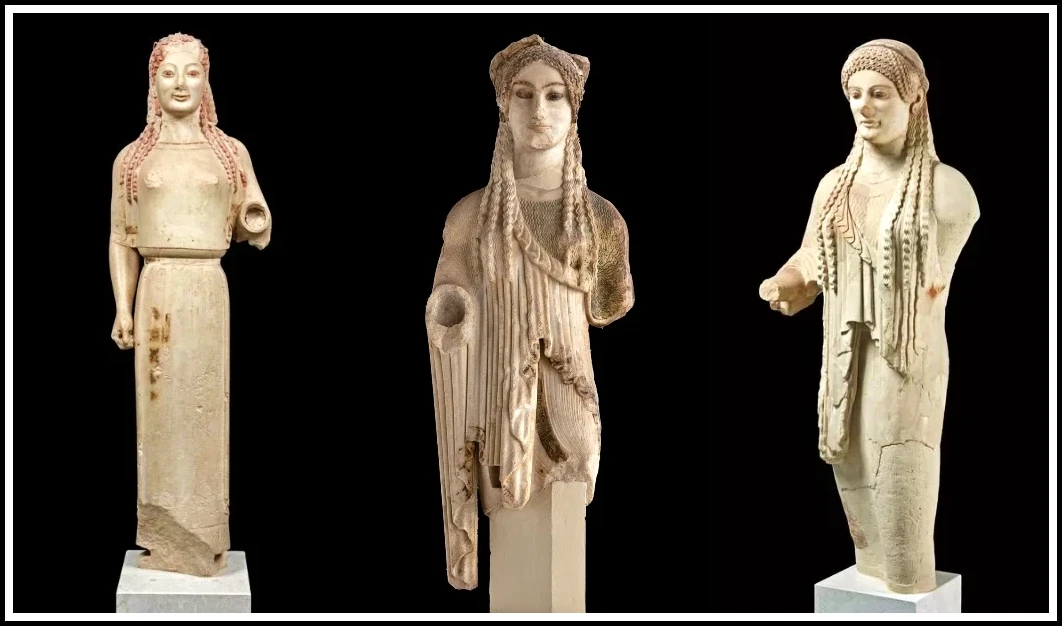
Three Kore – Greek, 600-500 BC
The Kore contradict the popular notion that the Greeks were indifferent to feminine beauty, or at least rated it less highly than male. On the contrary, the ideal of feminine beauty that was to have such a long life in Western Europe goes back to Greek art of the fifth century BC, and has remained remarkably constant until the present day. The head in plate 13, which could date from any period of antiquity, is the ideal beauty of the mid-nineteenth century, and would still be taken as an example of perfect beauty by anyone whose taste had not been influenced by the changing standards of the last fifty years. The nose and forehead run in a line which is indented by only a hair’s breadth, the upper lip is very short, the ear is far back. All transitions are smooth.
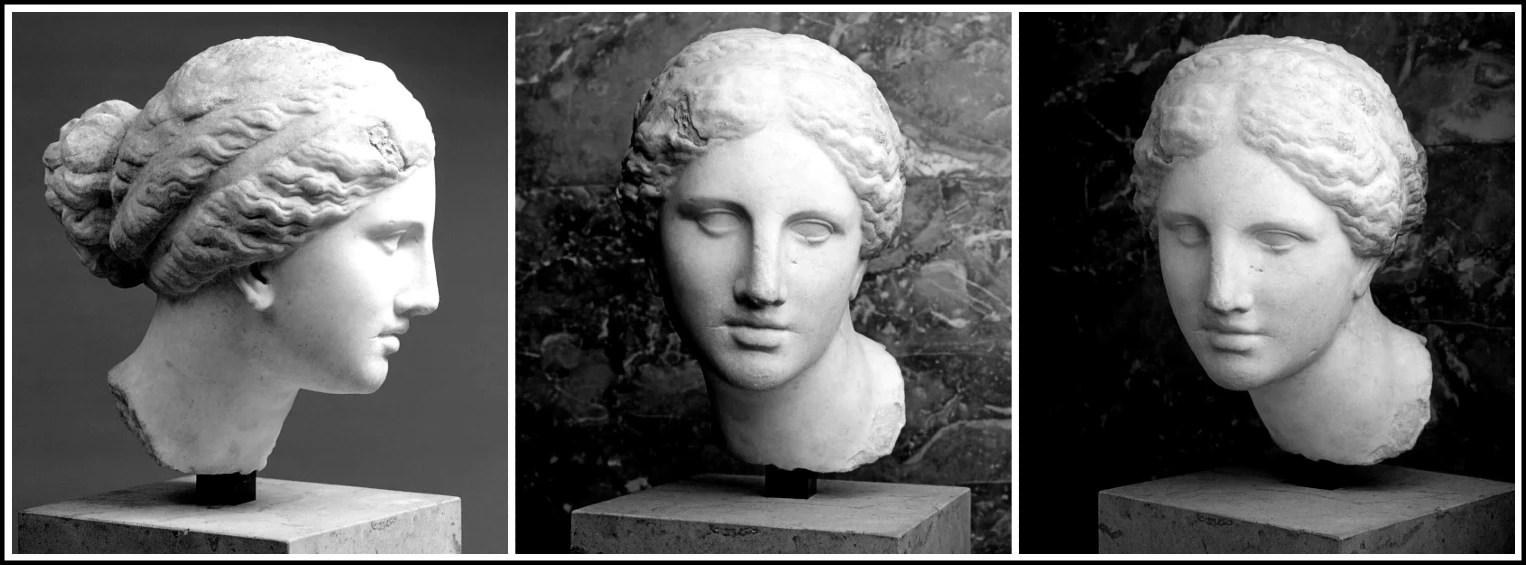
Praxiteles, Head of Aphrodite – Greek, 340 BC
The same system is still apparent in what was once the most famous of all antique figures, the Venus of Milo, although the head, being subordinate to the whole figure, is more generalized. These heads show practically no trace of human emotion, but…
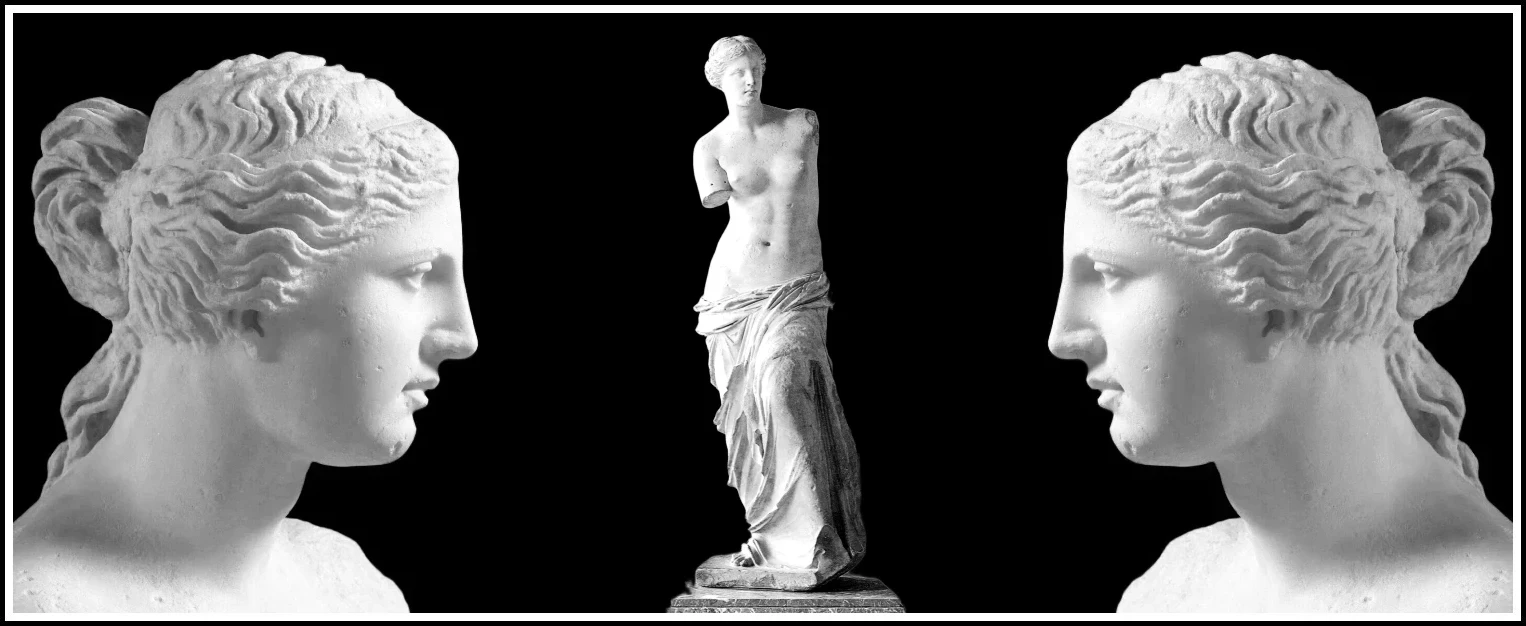
Venus de Milo – Greek, 100 BC
…by the end of the century the eyes can look out into an imaginary distance with a certain pathos.
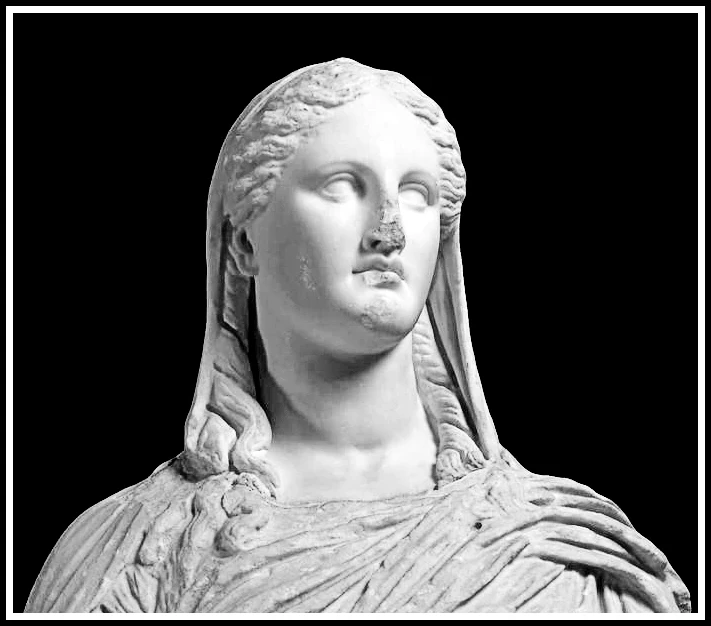
Demeter of Knidos – Greek, 450 BC (detail)
A few surviving fragments show that Greek artists had always understood the meaning of pathos. The most familiar remains the most beautiful, the Mourning Athena. It is like an inexhaustible epigram that summarizes a whole complex of thought and feeling. Never again, perhaps, is the female body used with such restraint as the vehicle of deep emotion. One can also discover fragments that show the sentiment which we call romantic, which remind us how incomplete is our traditional notion of classical art.
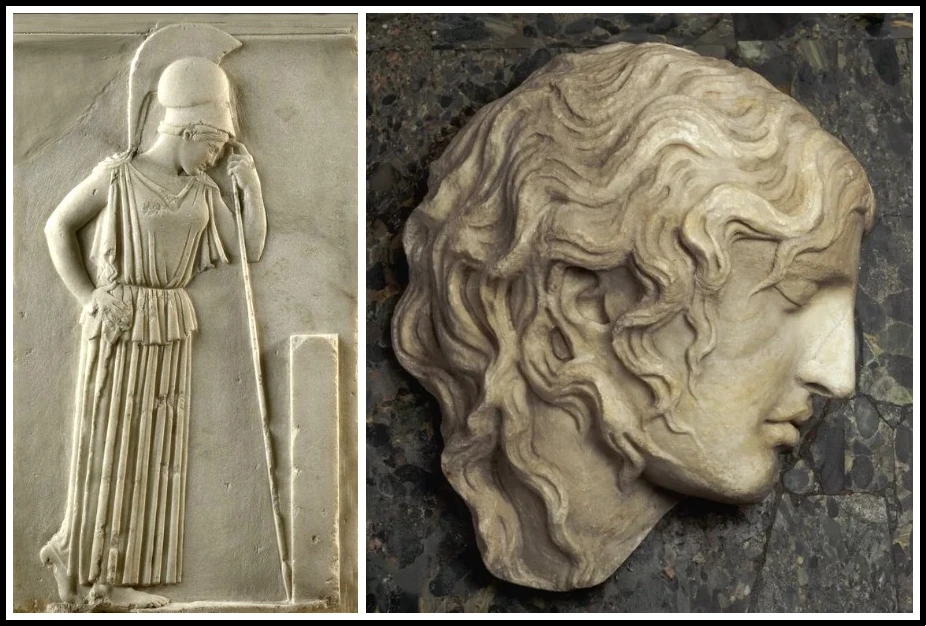
Mourning Athena – Greek, 480-450 BC | Fury Asleep – Greek
The classical conception of beauty was diffused throughout the Mediterranean, partly from Greece itself and partly from the colonies of Sicily and southern Italy. The chief means of this dissemination was coinage. Greek and especially Syracusan coins were accepted as works of art, concentrating in their small diameter the finest talents in Hellenistic sculpture. One cannot call the Syracusan decadrachm a minor work of art; it is a small masterpiece of sculpture.
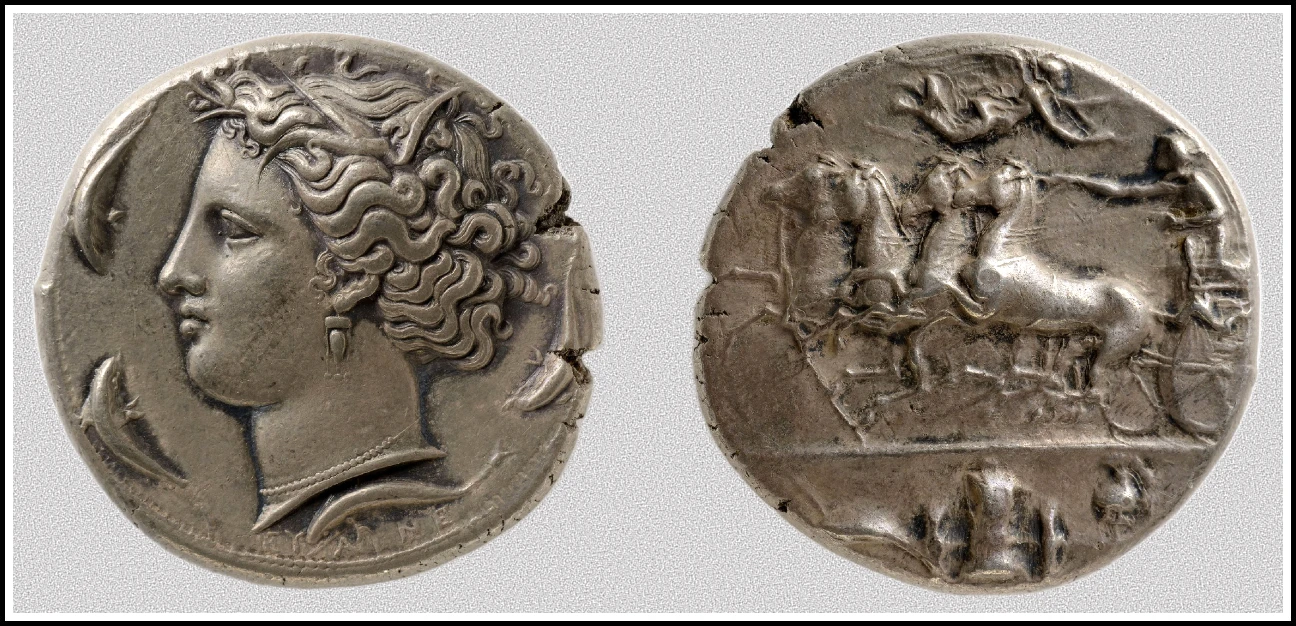
Euainetos, Decadrachm of Syracuse – Greek School, 400 BC
The Greek feeling for physical beauty was also spread by pottery. Just as coins were designed by the finest sculptors, so the leading painters decorated their elegant wine jars with figures which speak to us as directly as a drawing by Picasso.
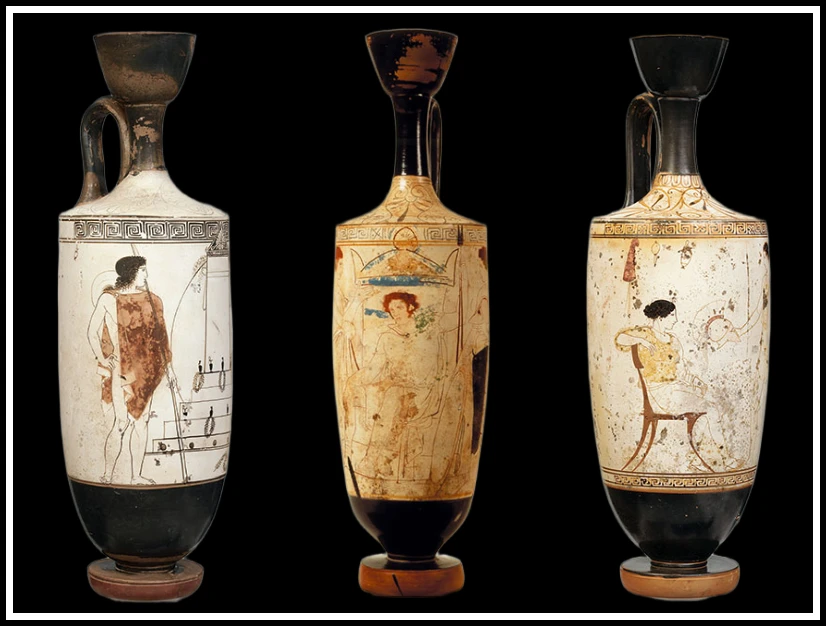
Attic White-Ground Lekythoi – Eretria, 440-400 BC
And then there issued from the workshops of sculptors in Athens and Tanagra figurines nearly all of which represent enchantingly beautiful women. What an aesthetically evolved society they imply! They tell no story, they assert no status; they were simply made to please the eye, and to remind the spectator of something agreeable.
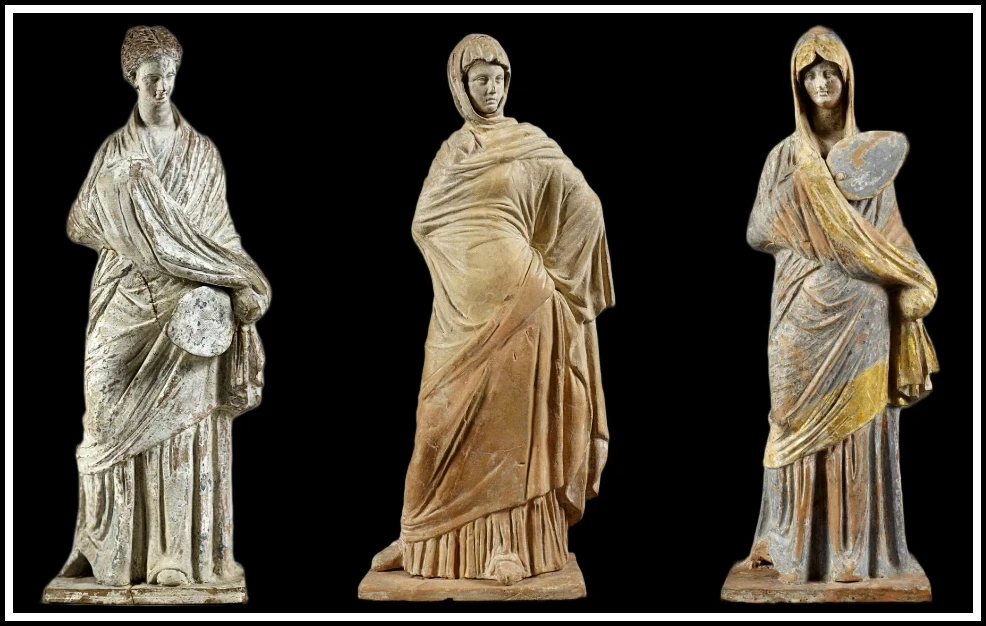
Tanagra Figurines – Greece, 325-250 BC
Can we say that Roman art added anything to the concept of feminine beauty? Much of the antique sculpture found in Rome was imported from Greece; we know that shiploads of marble sculptures left the port of Piraeus for Ostia. But it is fair to say that the Roman love of portraiture did produce a few heads of women that add to our concept of beauty, such as a small head of Poppea. They are more individualized than anything that has come down to us from Greece or Magna Graecia. And there are certain pieces of antique sculpture which seem to have a specifically Roman flavour. An example is the Clytie/Antonia of the British Museum, a work that, were it not for its impeccable provenance, we should consider an early nineteenth-century imitation of the antique. Anything less Greek, in our sense, than this effusive work it would be hard to imagine.
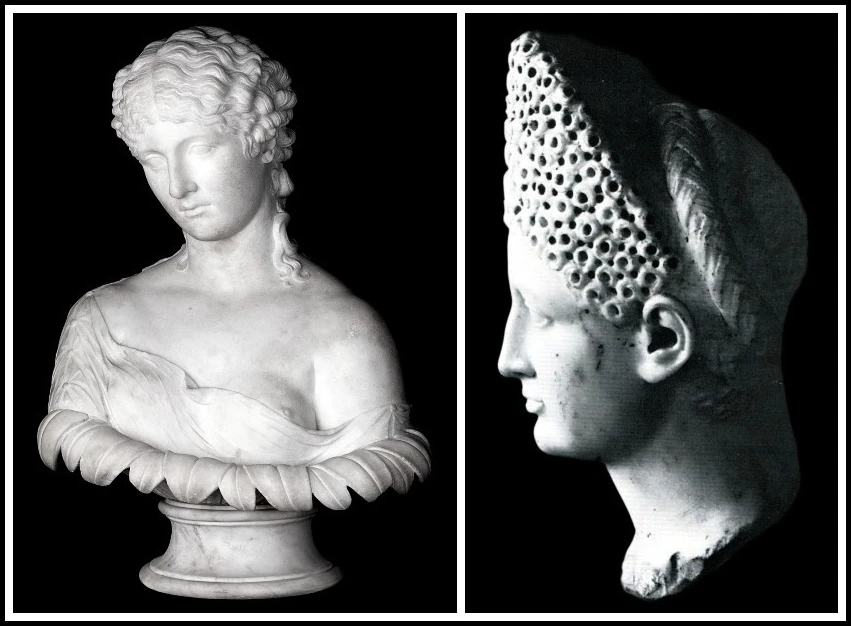
Bust of a woman (Clytie/Antonia) – Roman, 40-50 | Head of the Empress Poppea – Roman, c. 50
It is always a shock to read in literary sources that the Greeks rated their painting more highly than their sculpture, for not a scrap of it remains. But the eruption of Vesuvius in 79 AD has preserved for us a quantity of wall paintings which must, I believe, almost all go back to Hellenistic originals. They tell us that, as we should expect, feminine beauty was more often the subject of painting than of sculpture. To attempt a reconstruction of antique painting on such corrupt evidence would be a mistake. But one series of frescoes, those in the Villa Item, are of high quality, and show us an ideal of feminine beauty of which no precedent in Greek art has survived, although in fact they may well be copies of a lost phase of Hellenistic art. And in the fragments from Pompeii, Stabia and Herculaneum are some very pretty faces to tantalize us with a recognition of our loss. No wonder that the Hellenistic concept of feminine beauty remained embedded in European art long after all other elements of classicism had vanished.
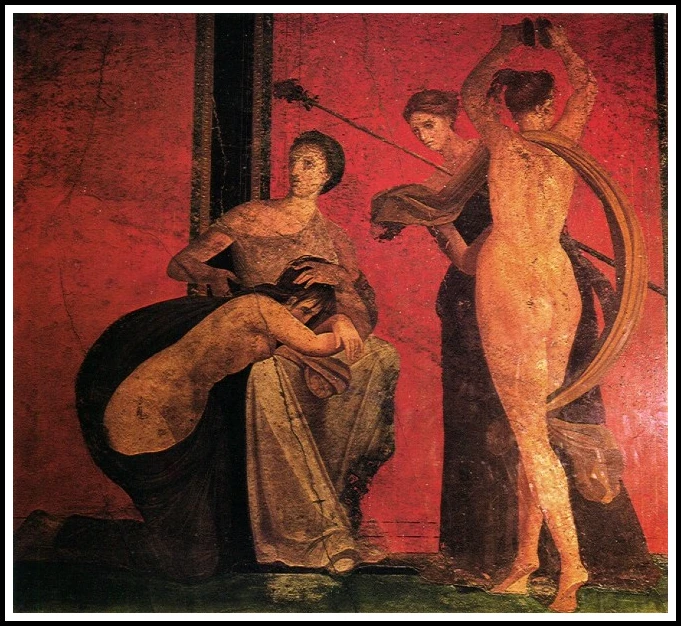
Fresco, Villa of Mysteries – Roman, Pompeii 50
Yet this concept was to undergo what seems to us a dramatic change, for no one could apply the word ‘pretty’ to the ladies who surround the Empress Theodora at Ravenna. When did the change take place? A few surviving works of the late Roman Empire show that it was earlier than we would imagine; or at least that a new type of beauty, which seems to anticipate the style of Ravenna, overlapped with the tradition of classical urbanity.
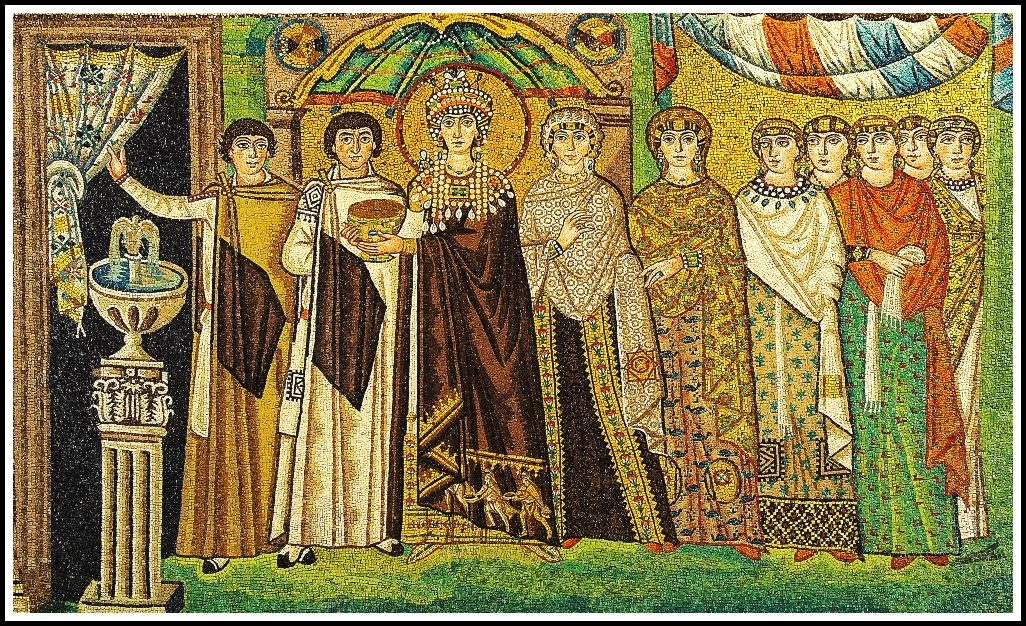
Empress Theodora – Byzantine 550 (Mosaic, San Vitale, Ravenna)
A beautiful example is an engraved crystal representing a mother and her two children, now in the Museum of Brescia. The oval faces, large eyes, and arched eyebrows are on the other side of that barrier of style which separates Rome from Constantinople. The inscription tells us that it was made in the Greek-speaking East. It could be called the first great Byzantine work of art.
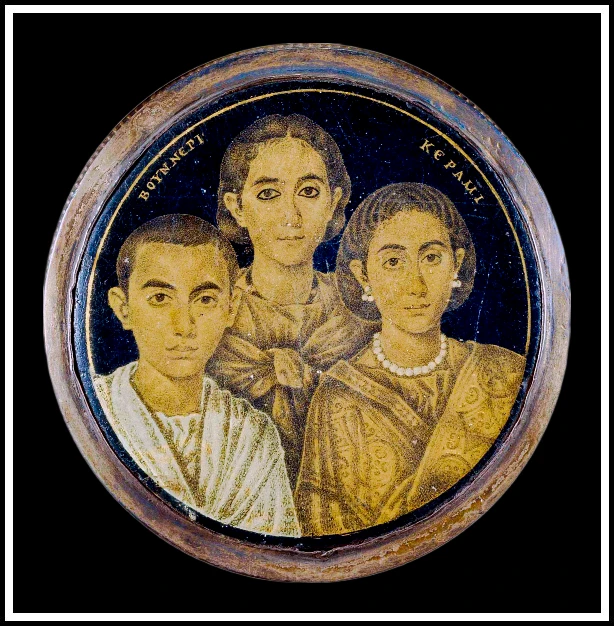
Galla Placidia and Her Children – Graeco-Roman, 430 (Gold Leaf on Glass)
A critic of art in the last century would not have found that Byzantine art had much to contribute to my subject. But today we may feel that a Madonna in the style of Constantinople has a beauty of her own, and it was convincing enough to satisfy the faithful for at least four centuries. But it was more abstract or symbolic than the Greek type, which for some time ran parallel with it. If, today, a beauty in the Greek or Egyptian style were to enter a room, she would be accepted without question; but a Byzantine lady would be isolated, a source of wonder and surprise.
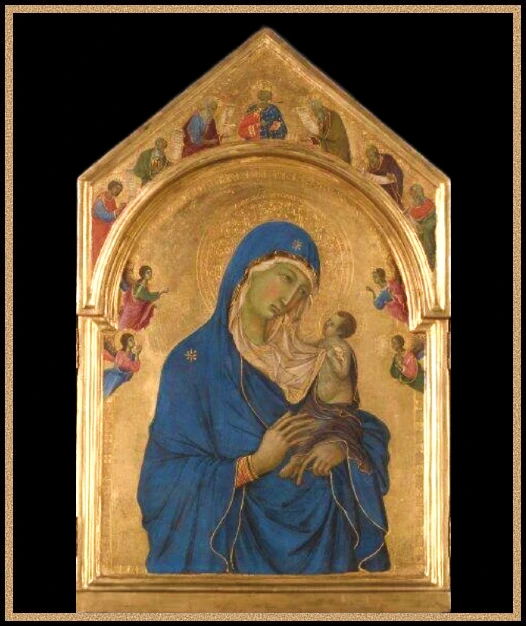
Duccio di Buoninsegna, Virgin and Child, 1315
During the disintegration of the Roman Empire in the West, feminine beauty could seldom be the subject of art, for as art revived it was almost exclusively the servant of the new religion. But towards the end of the twelfth century came those first tremors of sensibility that were to produce one of the greatest styles in history, the Gothic, and among the many achievements of the Gothic style was a new type of feminine beauty. To a large extent it was based on antiquity. Some of the saints on the north portal at Rheims are genuinely Gothic; others, if their heads are isolated, might well be antique.
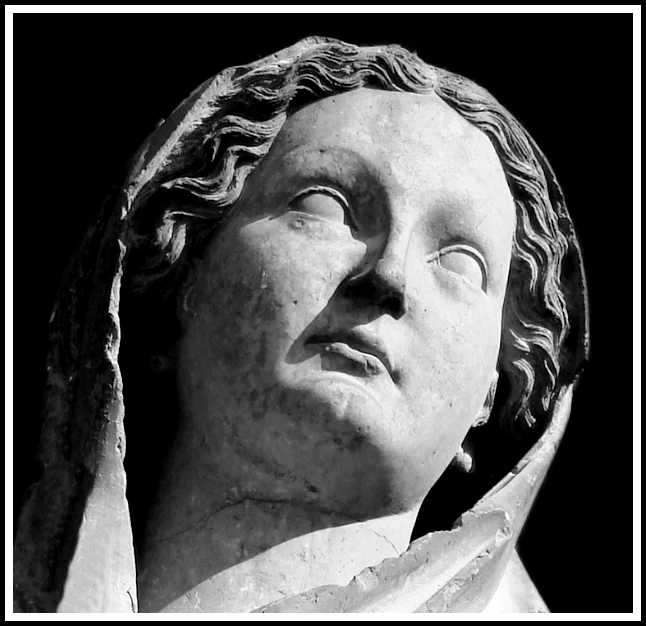
The Virgin of the Visitation – Rheims Cathedral, Central Door, 1225-45 (detail)
But in such a figure as the Virgin and Child there is a new rhythm and a new attitude towards humanity, in particular towards feminine beauty. The most beautiful Gothic Virgins are indeed the most refined and exquisite of all types of femininity, and they appear and reappear in European art for almost two hundred years.
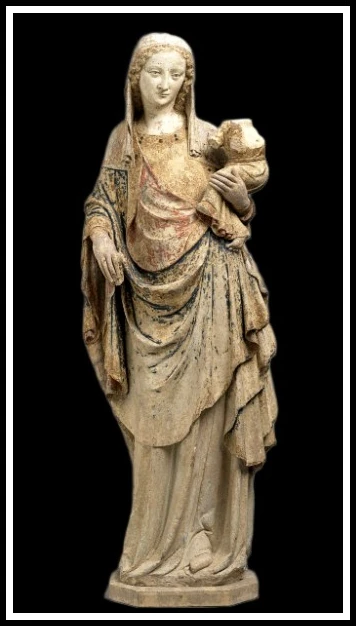
Virgin and Child, c. 1315, France
The Wilton Diptych, whatever its precise date, cannot be much earlier than 1400, and it reveals the same ideal of feminine beauty that could have been found in 1200.
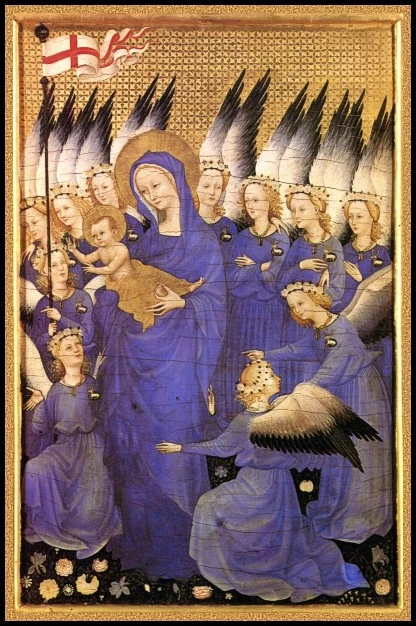
French School, Wilton Dyptich, 1395 (right panel)
Not that the later medieval sculptors were incapable of new inventions, and even of an unexpected psychological insight.
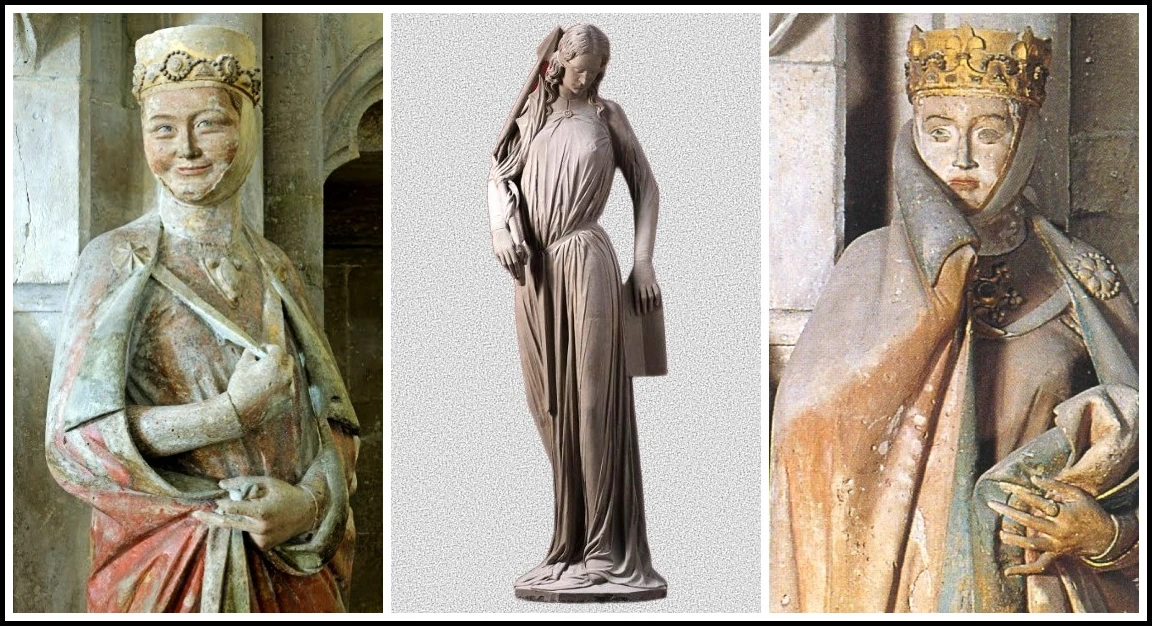
Regelinda (Smiling Polish Woman), Naumburg Cathedral, 1250-60 | Synagoga, Strasbourg Cathedral, 1230 | Uta Von Ballenstedt, Naumburg Cathedral, c. 1250
Surely there were many members of the congregation of Notre Dame de Grâce who were shocked to see Our Lady and the infant Christ turning so emphatically in opposite directions, but they accepted the belief that all images were inspired by God.
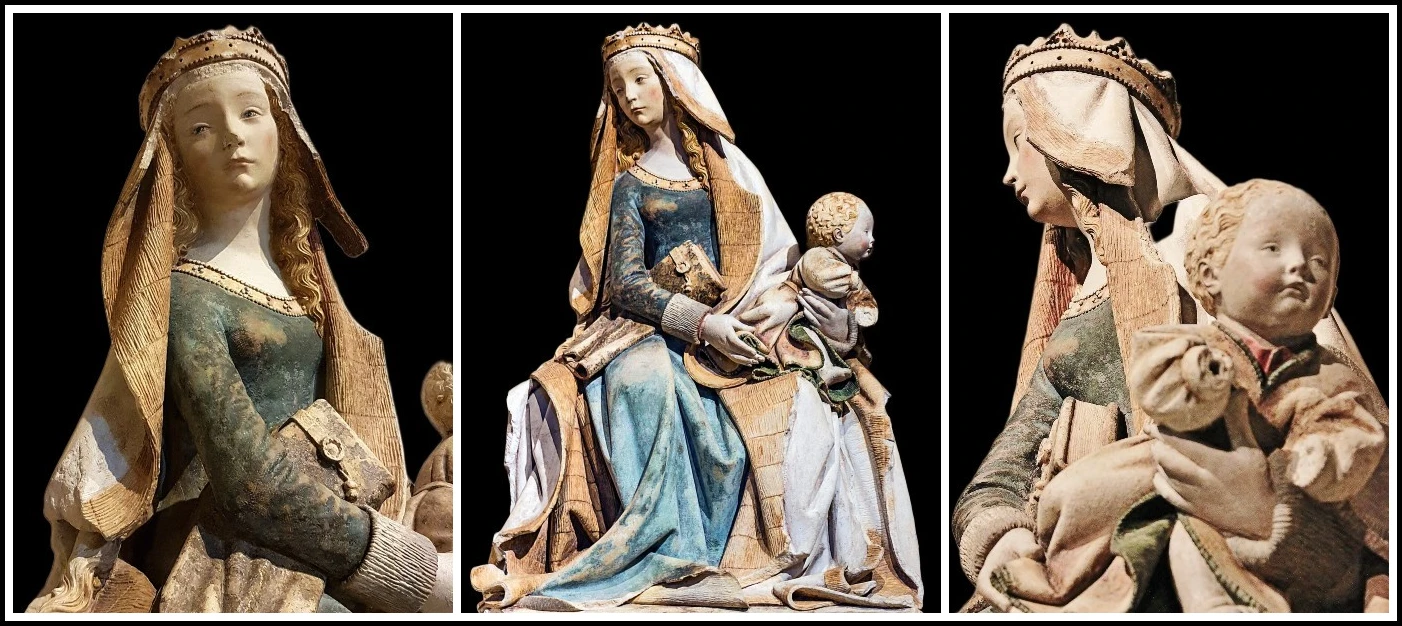
Virgin and Child, Nostre Dame de Grasse, Toulouse
CONTINUED IN FEMININE BEAUTY IN WESTERN ART: A SURVEY – PART 2
MARA, MARIETTA: A LOVE STORY IN 77 BEDROOMS – READ THE FIRST CHAPTER
A literary novel by Richard Jonathan
RICHARD JONATHAN, ‘MARA, MARIETTA: A LOVE STORY IN 77 BEDROOMS’ — READ THE FIRST CHAPTER
AMAZON & APPLE BOOKS

RICHARD JONATHAN, ‘MARA, MARIETTA: A LOVE STORY IN 77 BEDROOMS’ | AMAZON PAPERBACK OR KINDLE

RICHARD JONATHAN, ‘MARA, MARIETTA: A LOVE STORY IN 77 BEDROOMS’ | APPLE iBOOK
MARA, MARIETTA: A LOVE STORY IN 77 BEDROOMS
A literary novel by Richard Jonathan

Available from AMAZON (paper | ebook) & iBOOKS, GOOGLE PLAY, KOBO & NOOK (see LINKS below)
RELATED POSTS IN THE MARA MARIETTA CULTURE BLOG
CLICK ON THE IMAGE TO GO TO THE POST





By Richard Jonathan | © Mara Marietta Culture Blog, 2026 | All rights reserved
Comments