Classical Beauty and Characteristic Beauty
FEMININE BEAUTY IN WESTERN ART: A SURVEY – PART 2
Kenneth Clark
From Kenneth Clark, Feminine Beauty (London: Book Club Associates / Weidenfeld & Nicholson, 1980) pp. 14-19
THIS IS PART 2 OF THE ESSAY. READ PART 1 FIRST.
In the early fifteenth century the Gothic convention had been compromised at many points. The portrait developed a new intimacy, and in the moving Entombment by Dieric Bouts, the painter has made the heads of the holy women into an ascending cry of pain. Women were no longer depicted in virtuous isolation, but as playing a part in a remarkably civilized life.
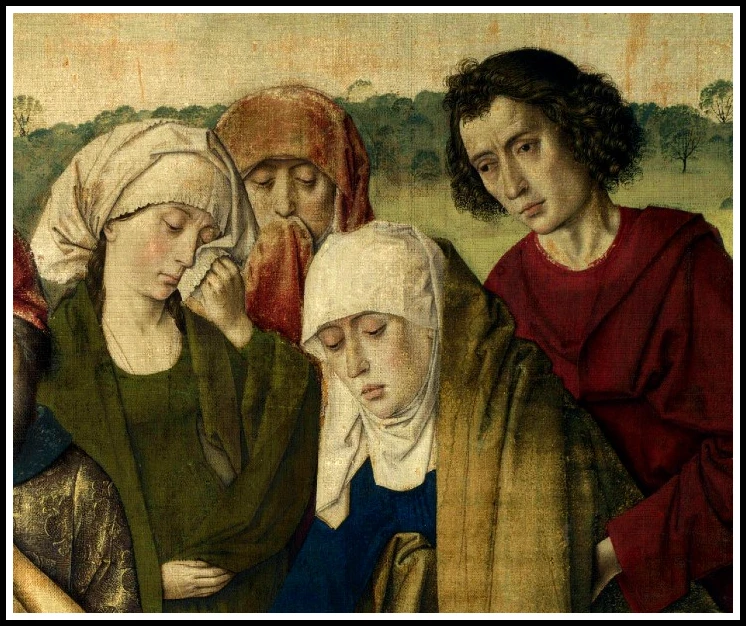
Dieric Bouts, The Entombment, 1455 (detail)
At the end of the century, denuded of their clothes, they appear on a variety of pretexts, chiefly connected with sorcery or witchcraft. Thus the nude enters European art, not through sensuality, but through magic and truth.
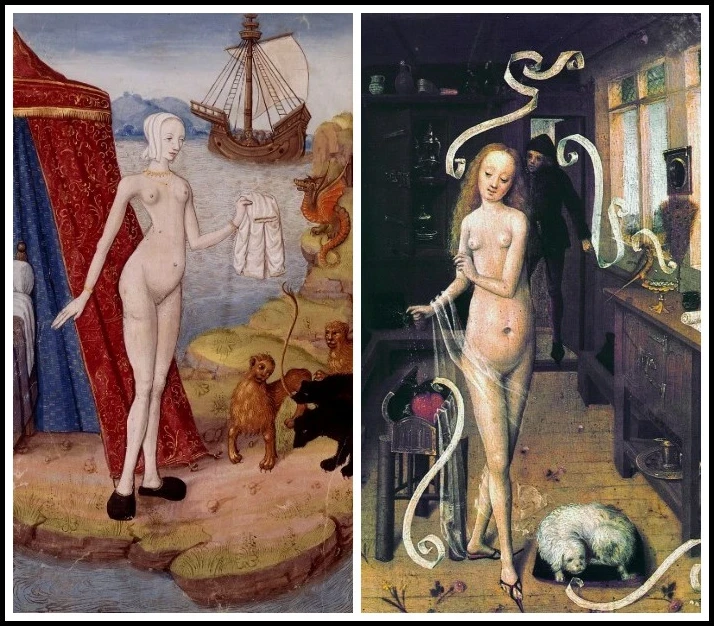
Ariadne on Naxos (Ovid) 1505 | The Master of Niederrheim, The Charm Love, 1470
There is a grandiose feeling of truth in Memling’s Bathsheba. On the other hand, Cranach’s Cupid Complaining to Venus is an erotic fantasy. He discovered (relatively late in his life) the seductive qualities of a slender body, and created a whole series of elegant Venuses, totally naked except for their enormous hats. These slender, provocative figures were painted in the same decade as the grandiose goddesses of Titian.
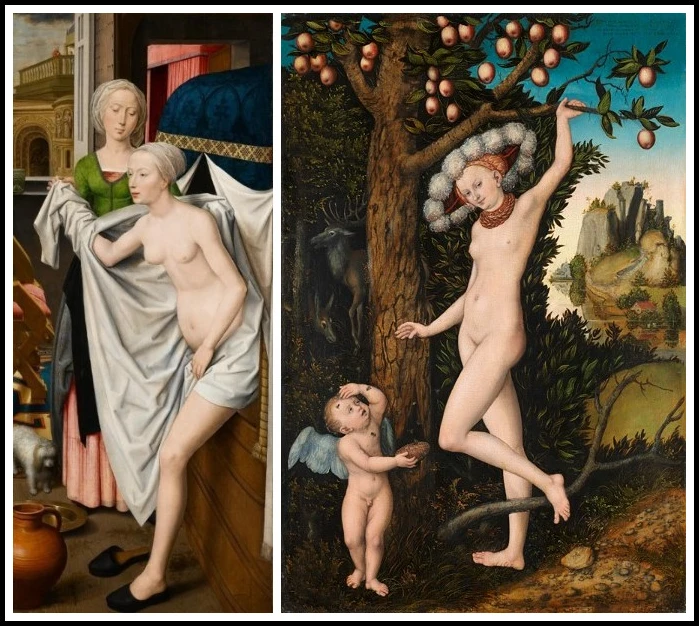
Hans Memling, Bathsheba, 1485 | Lucas Cranach the Elder, Cupid Complaining to Venus, 1555
The concept of feminine beauty achieved its most complete triumphs in the Italian Renaissance. It may have been more all-pervasive in the eighteenth century but it never reached the same level of greatness. We need think only of Botticelli, Leonardo da Vinci, Raphael, Giorgione and Titian to see in the mind’s eye a procession of women, marvellously varied yet united by the seriousness with which their beauty has been portrayed. The way was prepared in the first half of the fifteenth century by Fra Filippo Lippi and Luca della Robbia. Fra Filippo continued the Gothic tradition of idealized sensuality, but made it more individual, so that many of his women seem to us real people whose smiles invite us to form a friendship.
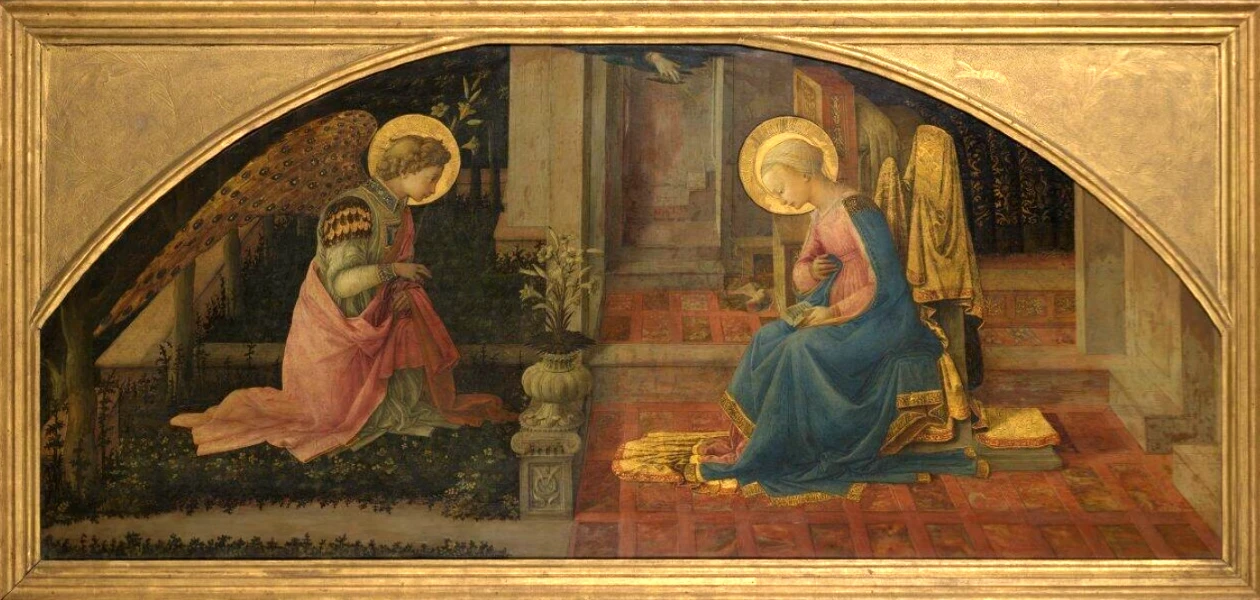
Fra Filippo Lippi, The Annunciation, 1448
Luca della Robbia’s Madonnas, although conforming to the imaginative needs of his time, are remarkably truthful. They are beautiful in a rather obvious and undemanding way, so that we hardly think of them as beautiful women at all, but as embodiments of maternal feeling and devotion. Calm, unpretentious, yet often saying the last word in sentiment and design, these Madonnas have influenced our concept of everyday beauty far more than is commonly realized.
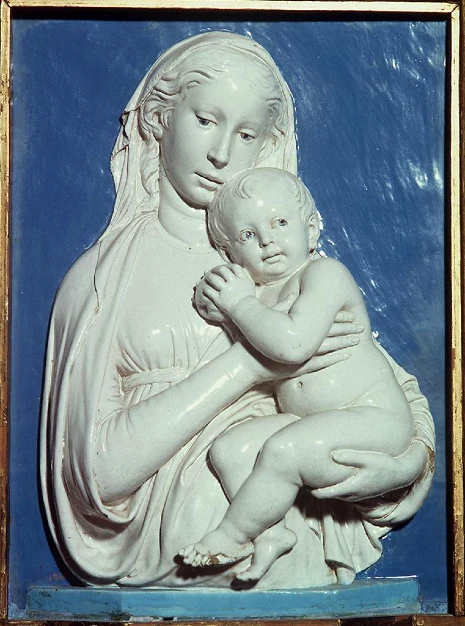
Luca della Robbia, Madonna della Mela, 1450
Halfway through the century there emerges one of the most fateful of all exponents of feminine beauty, Sandro Botticelli. Since he was first acclaimed by Walter Pater in the 1870s, his Madonnas have filled a place in the average man’s imagination previously occupied by the prosperous beauties of Raphael. His early detractors called them sickly, and it is true that very few of them have that look of radiant health that is commonly demanded as a component of physical charm. But there are heads in Botticelli’s pictures, like the right hand Grace in the Primavera, which seem to me the quintessence of unchanging beauty, and it is hard to imagine a time when they were not recognized as such. They were admired in his own lifetime, and they expressed the mood found in the poems of the leading Medicean poet, Poliziano, the feeling that beauty is delicate and destructible—per doman non c’e certezza.
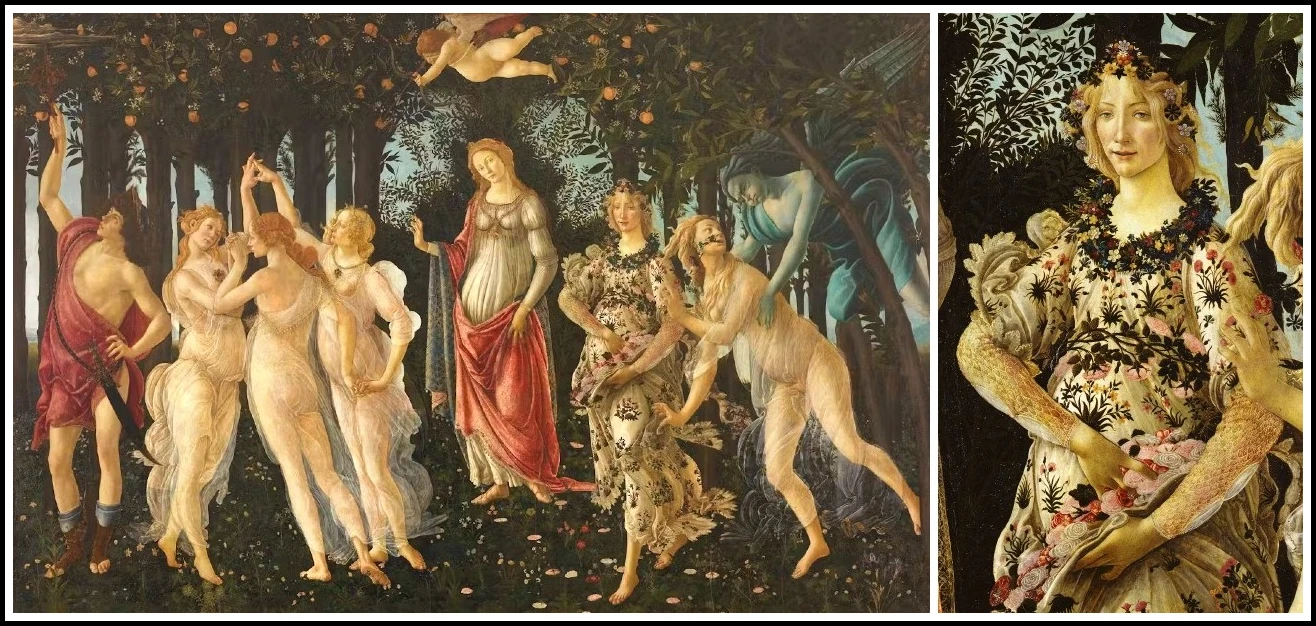
Sandro Botticelli, Primavera, 1478
The average Florentine wanted something less evanescent, and looked for his ideal of femininity to Ghirlandaio and Desiderio da Settignano, who convince us that they have portrayed the beauties of their time exactly as they were.
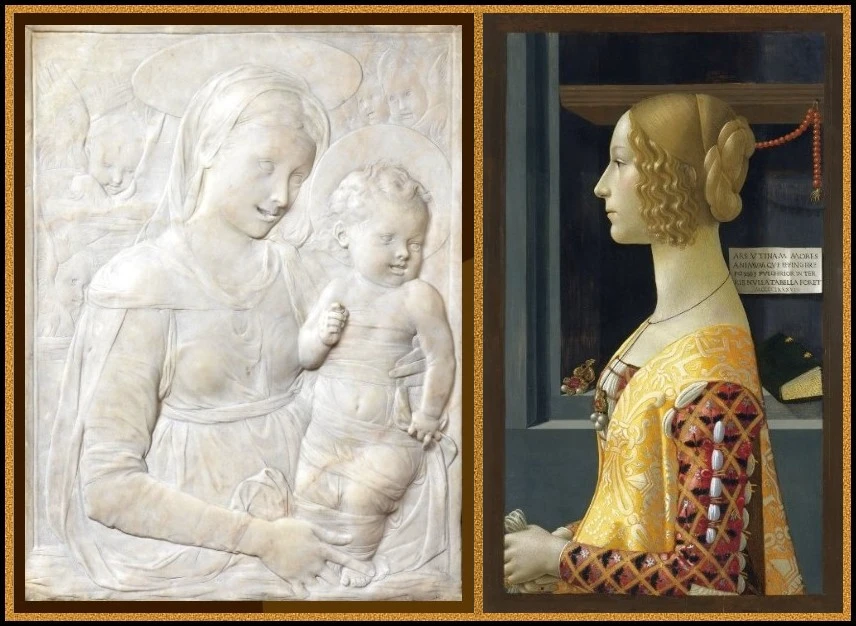
Desiderio da Settignano, Virgin and Child, 1460 | Domenico Ghirlandaio, Giovanna Tornabuoni, 1490
The quattrocento concept of beauty passed out of fashion precisely at the end of the fifteenth century. Its place was taken by an ideal which was to remain in the ascendant for three centuries. This was the creation of Leonardo da Vinci, Raphael and Giorgione. Leonardo is the point of transition. His early drawings of women’s heads are exquisite pieces of fifteenth-century naturalism, a naturalism which he maintained until the end of the century in such portraits as the Cecilia Gallerani.
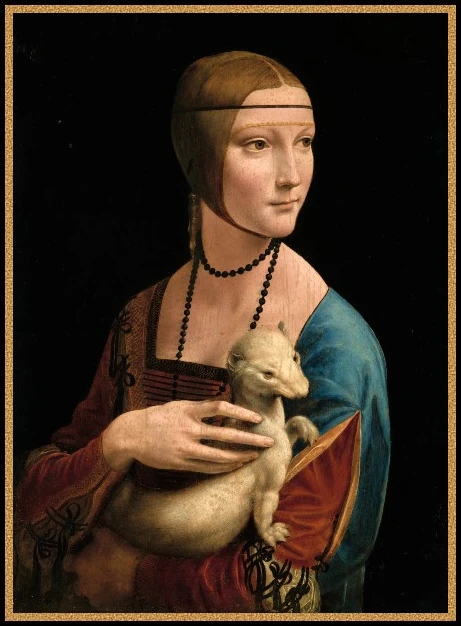
Leonardo da Vinci, Lady with an Ermine (Cecilia Gallerani), 1490
This feeling still shines through the head of the Virgin in the Louvre Vierge aux Rochers.
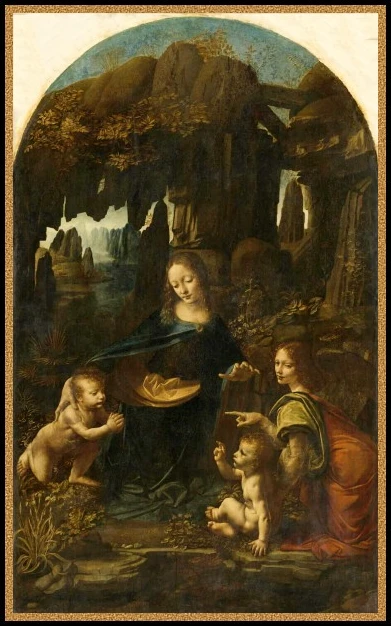
Leonardo da Vinci, Virgin of the Rocks, 1486
Then, in a cartoon for a Virgin and St Anne, he creates the ideal of beauty that is eternally linked with his name. The Virgin is half-smiling, with an expression which is mysterious but still human—a concept of the Virgin Mary which we may gladly accept.
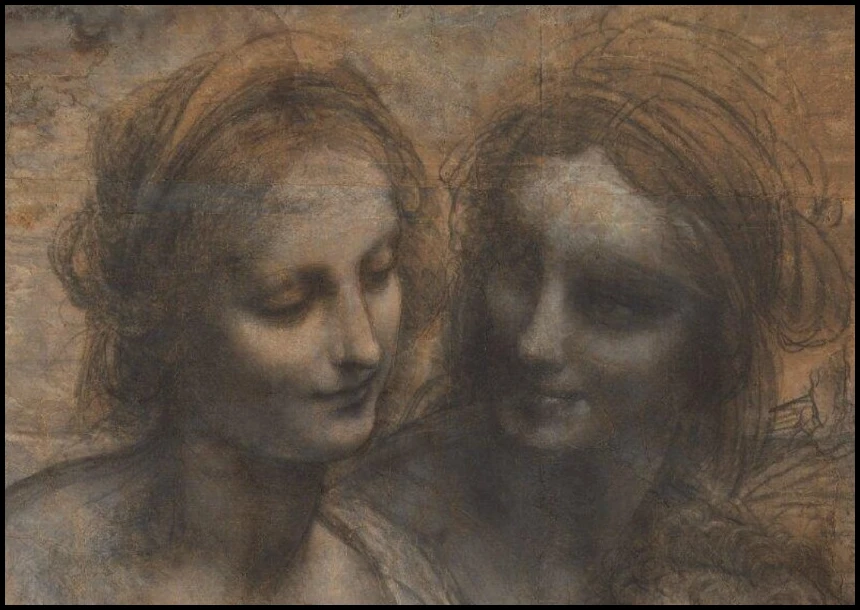
Leonardo da Vinci, The Virgin and Child with St Anne and John the Baptist (detail) 1498
The same expression is transferred to St Anne in a beautiful drawing. It is one of the most delicate and mature of all Leonardo’s embodiments of feminine beauty.
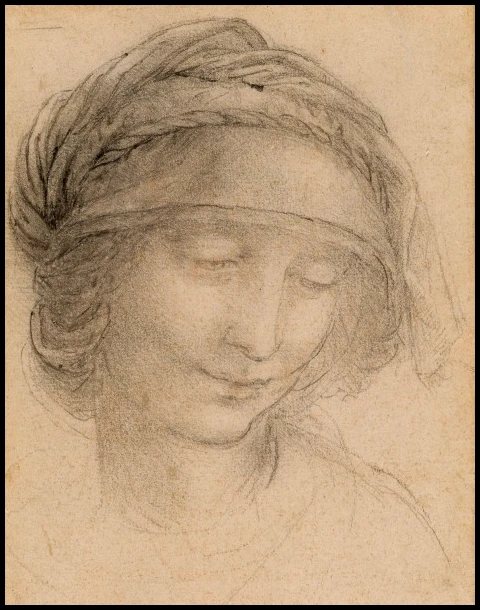
Leonardo da Vinci, Head of Saint Anne, 1510
But inevitably it was too subtle for his followers, who continued to exploit the type of beauty known to us in the various replicas of the Madonna with the Yarn Winder.
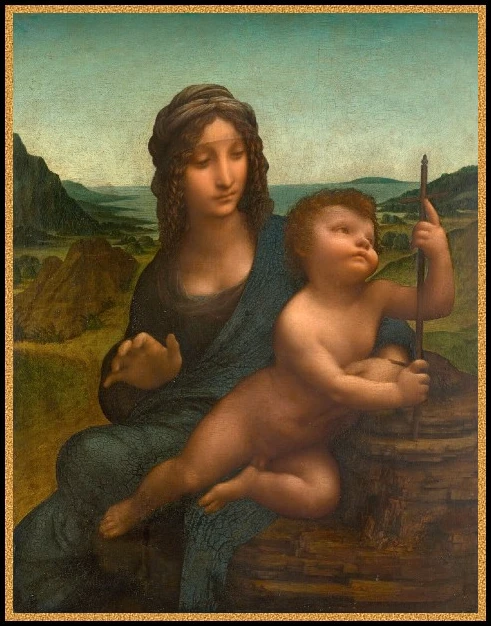
Leonardo da Vinci, Madonna with the Yarn Winder, 1505
Early in his life Raphael did a painting of the Three Graces that anticipates in a dozen ways his concept of beauty, both in face and form.
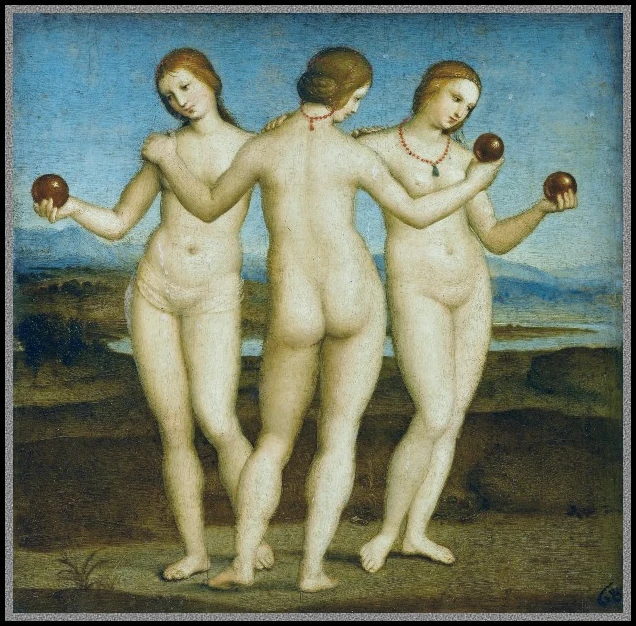
Raphaell, The Three Graces, 1505
In our present context, however, the key picture is the Granduca Madonna, a work of such perfect unity and completeness that one is reluctant to analyze it. It continues the tradition of della Robbia, both in design and in the calm simplicity of the head.
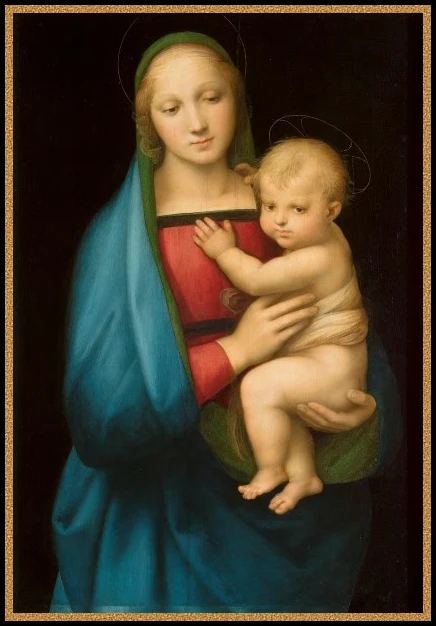
Raphael, Granducca Madonna, 1504
Raphael’s mature conception of feminine beauty appears in his great decorations, like the Stanze of the Vatican, and he has left us a sort of pièce justificative in the picture known as the Donna Velata, which looks as if it had been done from life, and so may represent his mistress, known as La Fornarina. No doubt it was painted in Rome, under the influence of an antiquity that every day produced fresh wonders. But the round, full modelling is far more naturalistic than the simplified planes of an antique head. Raphael’s concept of feminine beauty had an influence that cannot be overstated. For over three hundred years it was an ideal to which every woman aspired. ‘Belle comme une Madone de Raphael’ was a standard expression of praise, and was reflected in the work of dozens of painters from Ingres downwards.
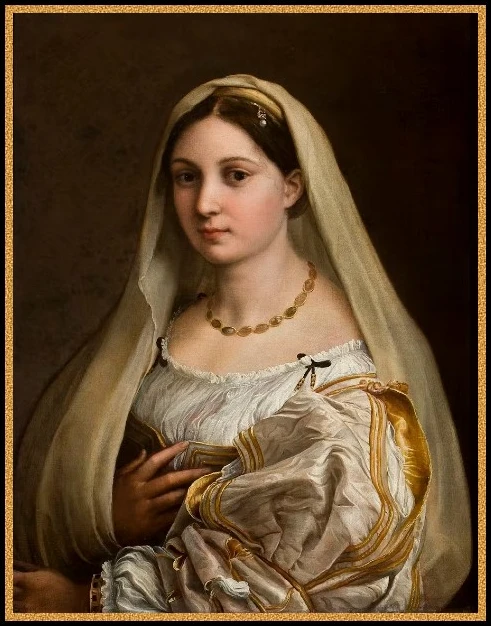
Raphael, La Donna Velata, 1516
But in precisely the same decade there appeared an alternative concept of feminine beauty—that which was derived from Giorgione and Titian. The Sleeping Venus (The Dresden Venus), certainly Giorgione’s invention although it may have been worked on by Titian, was a discovery almost as conclusive as Raphael’s Granduca Madonna, and far more influential. All the reclining figures in Venetian and north Italian painting go back to this source. The figure has a simplicity that makes other solutions of the problem seem slightly ostentatious.
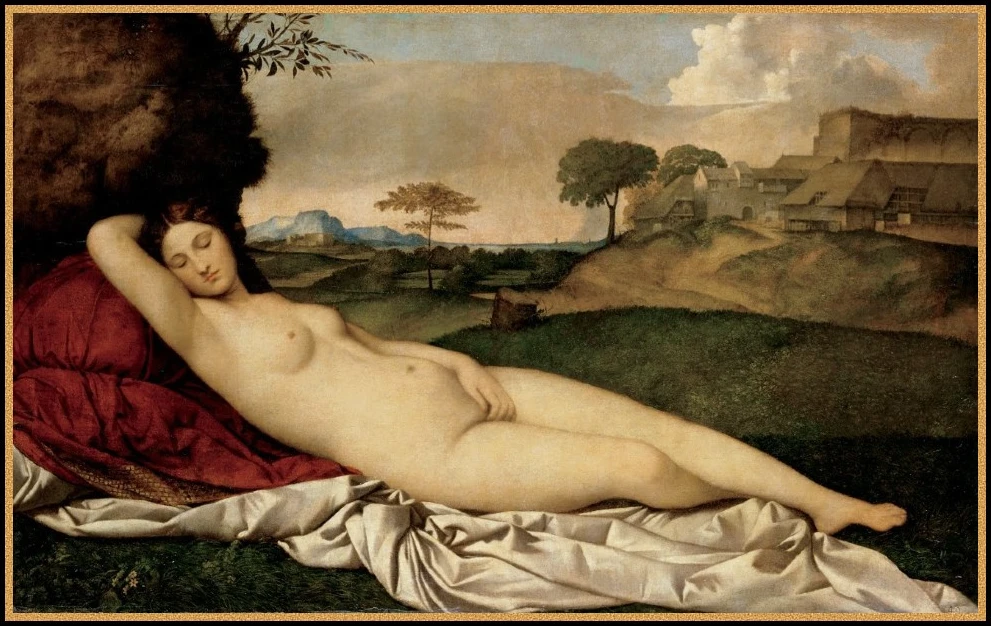
Giorgione, Sleeping Venus (The Dresden Venus), 1510
Such perfection could not be repeated, but the Louvre Concert Champêtre is still full of Giorgione’s poetry, although some of the actual execution is probably the work of Titian. That the women are nude while the men are clothed shows that Giorgione thought of them as symbols of beauty. He does not intend us to think that this scene actually took place, as Manet does in Le Déjeuner sur l’Herbe.
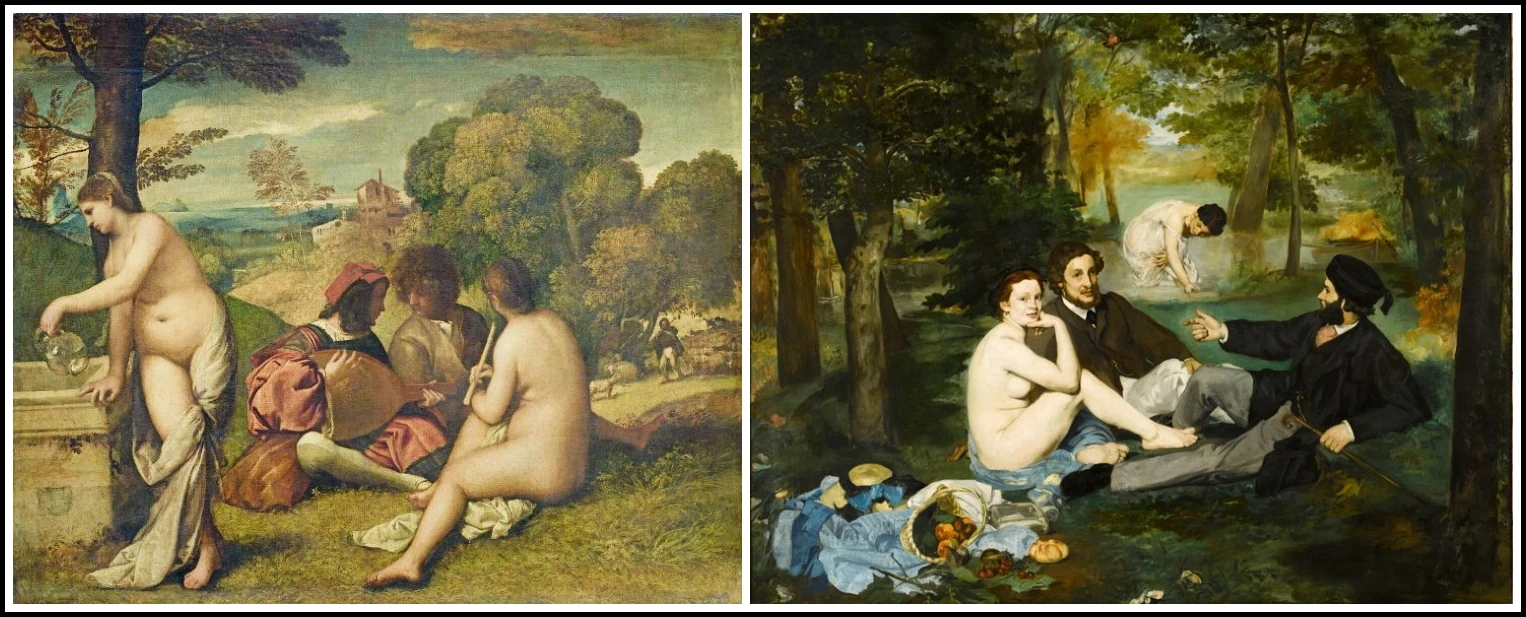
Giorgione/Titian, Le Concert Champêtre, 1513 | Manet, Le Déjeuner sur l’herbe, 1863
For fifty years Titian devoted himself to the depiction of feminine beauty with undiminished appetite and a wide range of responsiveness, and in the picture known as Sacred and Profane Love he has left us a declaration of his feelings on the subject.
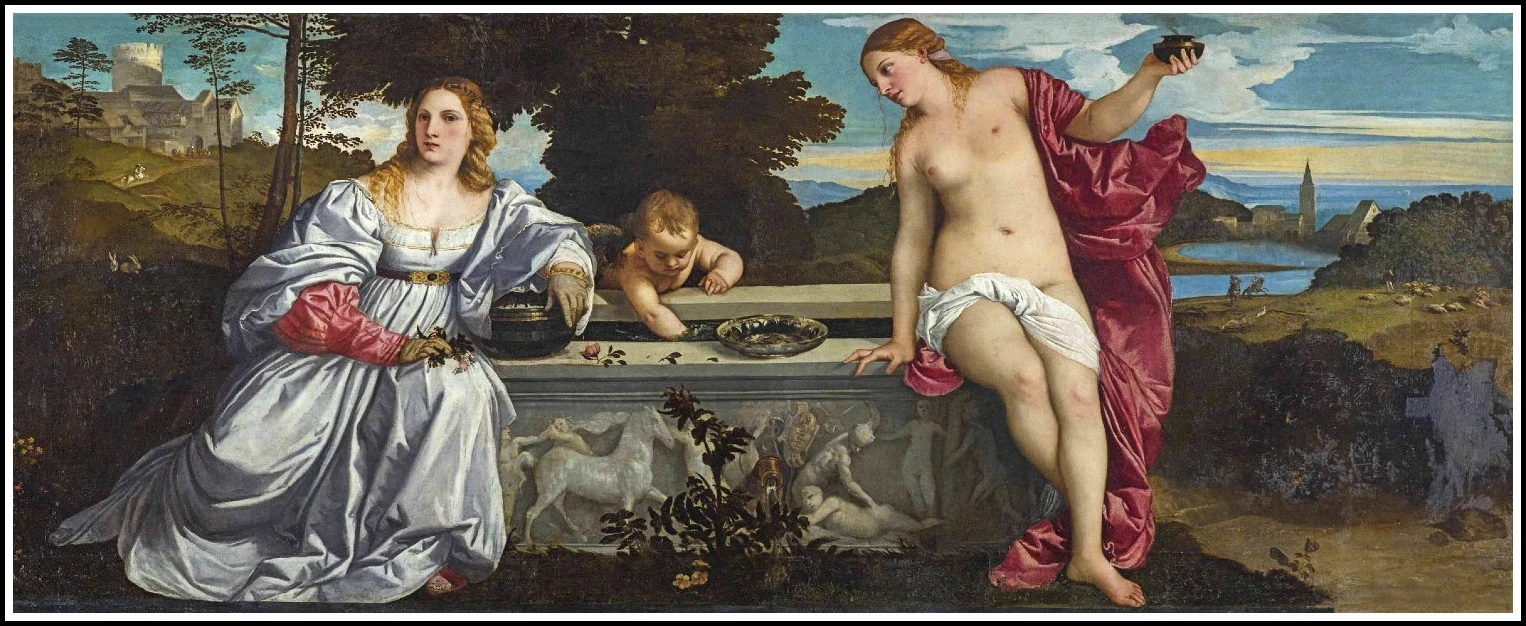
Titian, Sacred and Profane Love, 1515
There is a glorious naturalness in his response to feminine beauty which prevents any thought of mere sensuality, and sometimes, as in the Venus Rising from the Sea (‘Venus Anadyomene’) his feelings are controlled by an austere sense of sculptural design, so that we do not immediately recognize how unashamedly sensual the figure is.
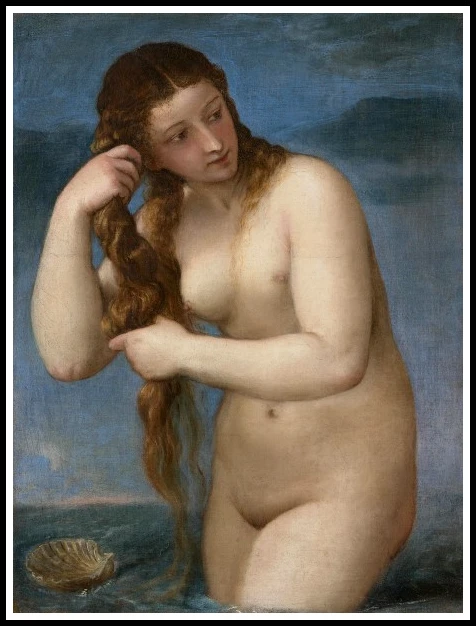
Titian, Venus Rising from the Sea (Venus Anadyomene), 1520
A sense of health and a grateful acceptance of a well-covered body, as in Venus with the Organist, lifts our carnal desires out of immediate needs into the happy realm of healthy nature.
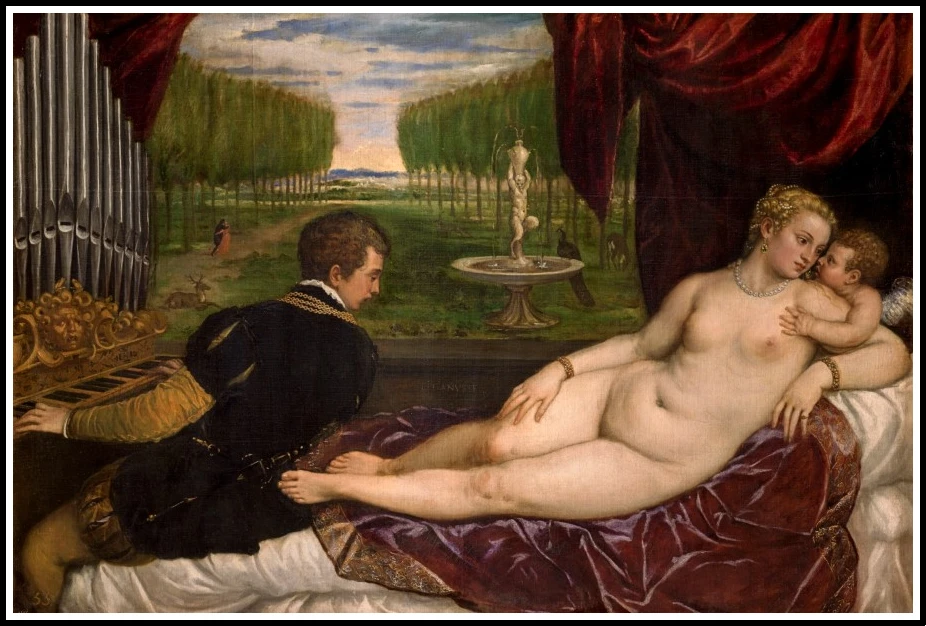
Titian, Venus with an Organist and Cupid, 1555
Meanwhile a painter of more limited gifts was making femininity his chief source of inspiration; because when all is said about Correggio’s contribution to the Baroque style it is as a painter of beautiful women that he will always be remembered. Where did he find these ravishing creatures, whose sweetness and refinement are so different from the solid good looks that we find in the work of his predecessors ? They have a self-surrender that has never been depicted elsewhere. The answer is, of course, that he found them in his imagination, and the ladies of Parma, who probably looked much the same in 1530 as they do today, made only a slight contribution.
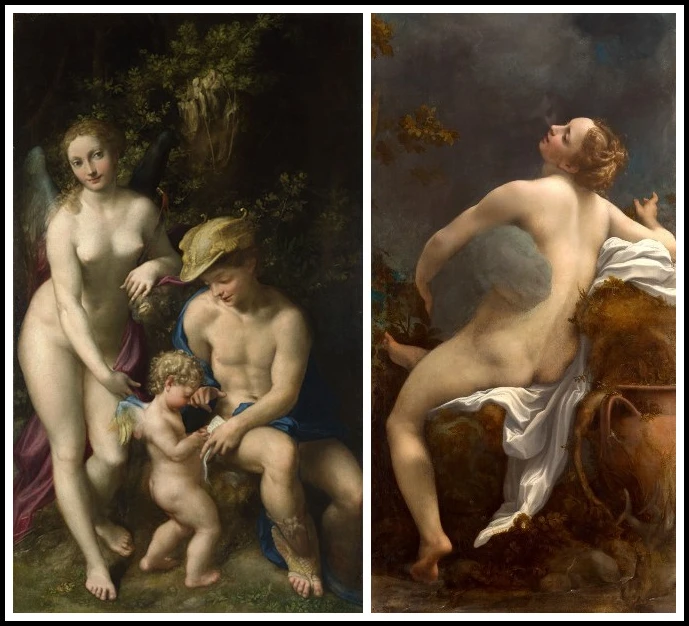
CORREGGIO
Venus with Mercury and Cupid (‘The School of Love’), 1525 | Jupiter and Io, 1531
His Saints and Virgins make an appeal to us that is unprecedented. They are in ecstasy, and their rapture passes beyond adoration to martyrdom. His St Flavia is the first instance of feminine beauty being used as a means of heightening our distress at an act of cruel violence.
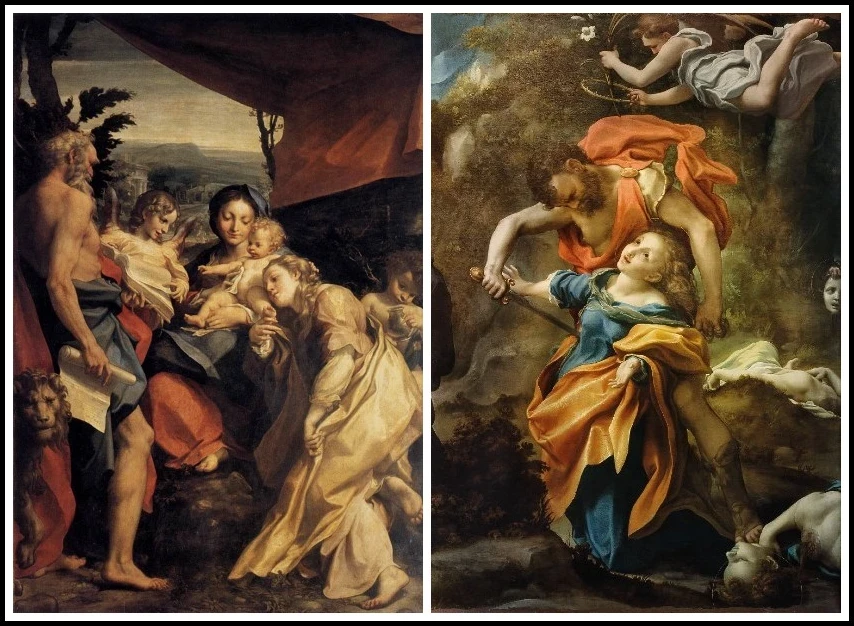
CORREGGIO
Madonna and Child with Saint Jerome, 1528 | Martyrdom of St Placido and St Flavia, 1524 (detail)
While Correggio was perfecting his ideal of voluptuous prettiness, Michelangelo was following an almost opposite course in a series of heads of women known as the Teste Divine. They are amongst the most inexplicable of all his works. They were probably done as presents for a young nobleman named Gherardo Perini, but why did Michelangelo give them their fantastic head-dresses; why, above all, did he work them up to a condition of finish almost unique in his art? We shall never know. They are a part of his work which is outside our concept of Michelangelo, and are one more reminder of how little we know about him—or about his patrons. We know only that the Teste Divine were greatly admired in his own day, and their impassive beauty had an influence far beyond the place and time of their origin.
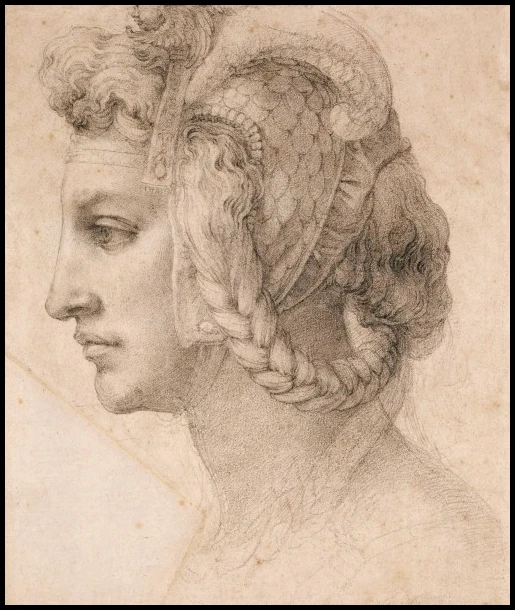
Michelangelo, Testa Divina, 1520
CONTINUED IN FEMININE BEAUTY IN WESTERN ART: A SURVEY – PART 3
MARA, MARIETTA: A LOVE STORY IN 77 BEDROOMS – READ THE FIRST CHAPTER
A literary novel by Richard Jonathan
RICHARD JONATHAN, ‘MARA, MARIETTA: A LOVE STORY IN 77 BEDROOMS’ — READ THE FIRST CHAPTER
AMAZON & APPLE BOOKS

RICHARD JONATHAN, ‘MARA, MARIETTA: A LOVE STORY IN 77 BEDROOMS’ | AMAZON PAPERBACK OR KINDLE

RICHARD JONATHAN, ‘MARA, MARIETTA: A LOVE STORY IN 77 BEDROOMS’ | APPLE iBOOK
MARA, MARIETTA: A LOVE STORY IN 77 BEDROOMS
A literary novel by Richard Jonathan

Available from AMAZON (paper | ebook) & iBOOKS, GOOGLE PLAY, KOBO & NOOK (see LINKS below)
RELATED POSTS IN THE MARA MARIETTA CULTURE BLOG
CLICK ON THE IMAGE TO GO TO THE POST


By Richard Jonathan | © Mara Marietta Culture Blog, 2026 | All rights reserved
Comments