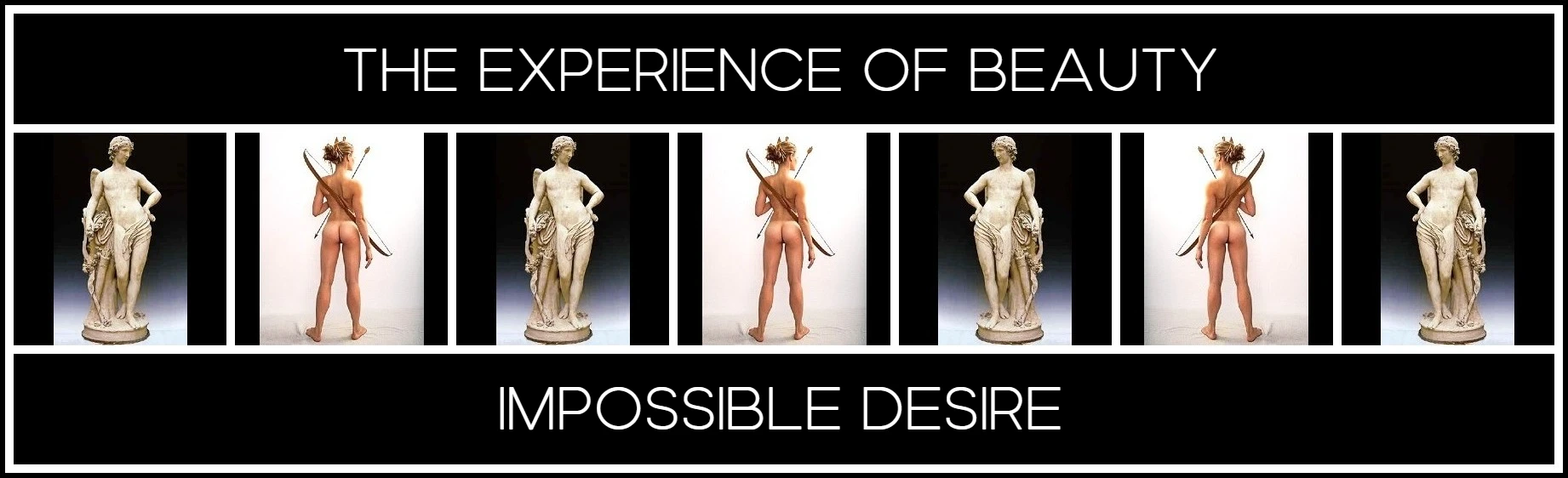
What in the eye gives rise to beauty?
THE EXPERIENCE OF BEAUTY: IMPOSSIBLE DESIRE
James Kirwan
Posted by kind permission of James Kirwan, Professor in Cross-Cultural Studies, Kansai University, Osaka; Researcher in Aesthetics, Literary Theory, Hermeneutics, and Exoticism.
From James Kirwan, Beauty (Manchester and New York: Manchester University Press, 1999) pp. 40-50
The scales of the understanding are not, after all, impartial. One of the arms, which bears the inscription ‘hope for the future’, has a mechanical advantage; and that advantage has the effect that even weak reasons, when placed on the opposite side of the scales, cause speculations, which are in themselves of greater weight, to rise on the other side. This is the only defect, and it is one which I cannot even wish to eliminate.
Kant, Dreams of a Spirit-Seer
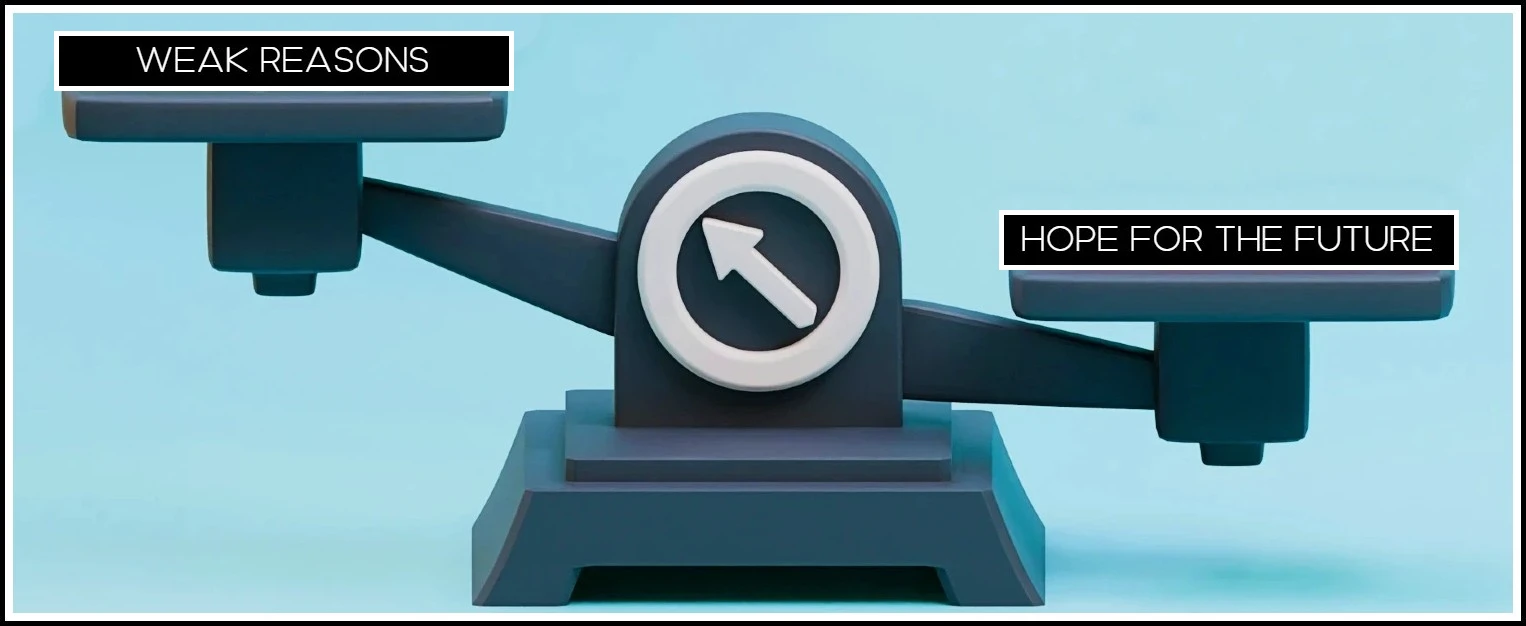
Photo: Hartono Creative Studio, Unsplash (detail, modified)
We are drawn toward the beautiful object without knowing what to ask of it. It offers us its own existence. We do not desire anything else, we possess it, and yet we still desire something. We do not in the least know what it is. We want to get behind beauty, but it is only a surface. We should like to feed upon it but it is merely something to look at; it appears only from a certain distance. It seems to be a promise and not a good. But it only gives itself; it never gives anything else.
Simone Weil, ‘Forms of the Implicit Love of God’, Waiting for God
Photo : Polina Kuzovkova, Unsplash
If there is one thing that is given in the experience of beauty, or rather, one thing inseparable from the notion of beauty, it is pleasure.1 To kalon, translated alike as ‘the beautiful’ and ‘the fine’, is that which attracts, arouses admiration, pleases. Democritus, a contemporary of Plato and a circumspect hedonist, held that ‘great joys are derived from beholding beauty’. For Aristotle the kalon is neither goodness in itself nor pleasure in itself, but rather the good when it is pleasant, what is desirable for its own sake. Likewise in the Epicureans, beauty is talked of, not surprisingly, in terms of its value as pleasure; some went so far as to identify the two—beauty and pleasure—thereby making the distinction a purely linguistic one. In the twelfth and thirteenth centuries, the feelings inspired by beauty were described in terms of admiration and delight2, pleasure and satisfaction3. The beautiful, writes Aquinas, is that the very perception of which gives pleasure. And this is the way in which the pleasure of beauty is distinguished from all other types of pleasure: it does not answer an appetite, it is, as Aquinas writes, in contrast to ‘good’, an object of contemplation rather than desire; it does not lead to something else.
1 – Beauty has, indeed, been defined as pleasure regarded as the quality of a thing, pleasure objectified. See George Santayana, The Sense of Beauty: Being the Outline of Aesthetic Theory (New York, 1896) pp. 44-52
2 – admiratio, stupefacta mens
3 – gaudium, jucunda, delectabilis
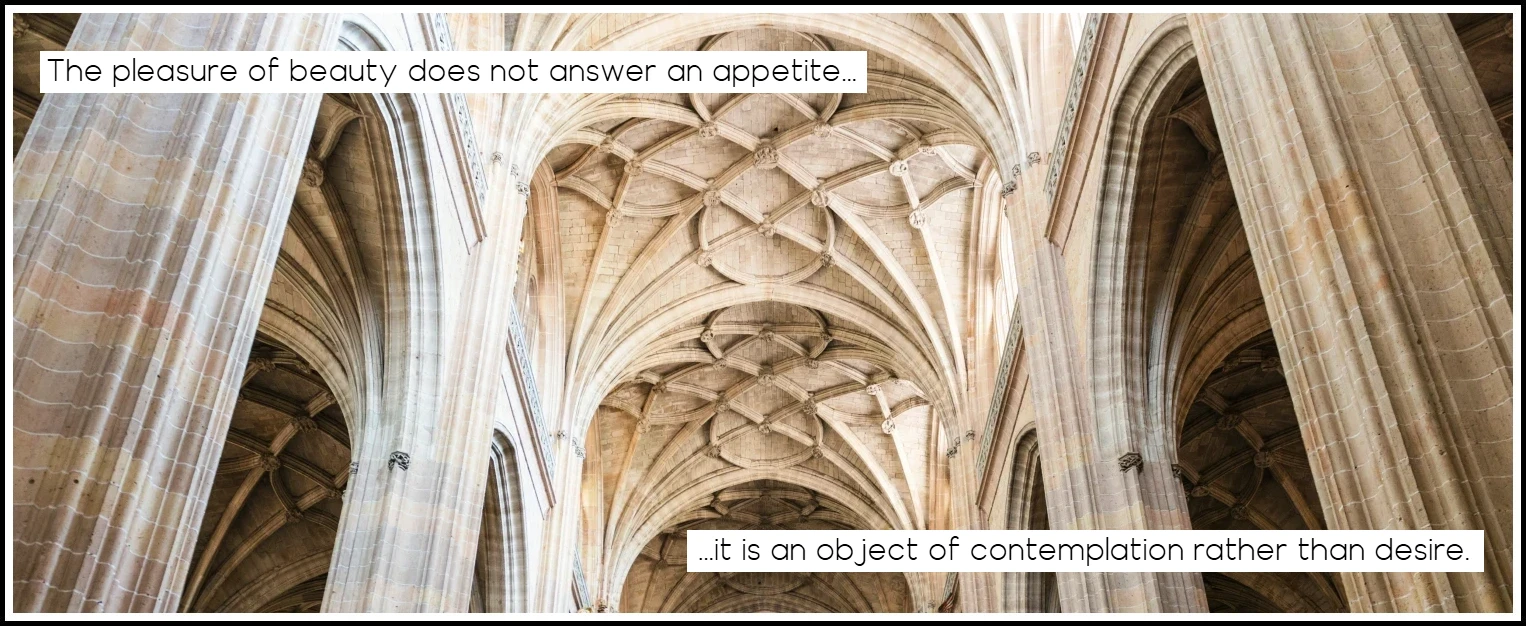
Photo: Getty Images for Unsplash
This, indeed, is what the pleasure of beauty has been since its inception: neither appetence nor inappetence, or at least neither of these in an accountable form. Plato describes it as that pleasure of which the want is painless and unconscious, and of which the fruition is unalloyed with pain. Indeed, he introduces the notion of beauty specifically to demonstrate that not all pleasures are born of the cessation of pain, even while conceding that the majority are. Likewise, Aristotle contrasts those pleasures which are passive—the scent of flowers, for example—with those in which what we enjoy is the promise of some satisfaction, as in the smell of food. A wise man, writes Eriugena, looks at the beautiful object and is not seized with avidity or lust but refers it solely to the glory of God. It is not, however, the case that beauty is the only pleasure that is not preceded by a discoverable frustration, that does not seem to answer an appetite. Other examples might be drawn from the pleasure we take in activities that we are experiencing for the first time—though often such instances seem liable to analysis into components of desire fulfilled by that experience, notwithstanding our ignorance that the experience would fulfil them, or even that we entertained the desires. However, there are various aesthetic pleasures—being excited, vicariously frightened, held in suspense, moved to tears—which do appear genuinely groundless, or at least explicable only by appeal to the satisfaction of general psychological tendencies.1 What particularly marks out beauty is not that, on reflection, it appears to be a disinterested pleasure, but rather the peculiar emotion that attends this pleasure, or, rather, the nature of the emotion of which this pleasure is a part.
1 – It is perhaps the formal condition of being a ‘disinterested pleasure’ that beauty shares with these other experiences that has led so many to use the word ‘beauty’ as, confusingly, synonymous with all of them.
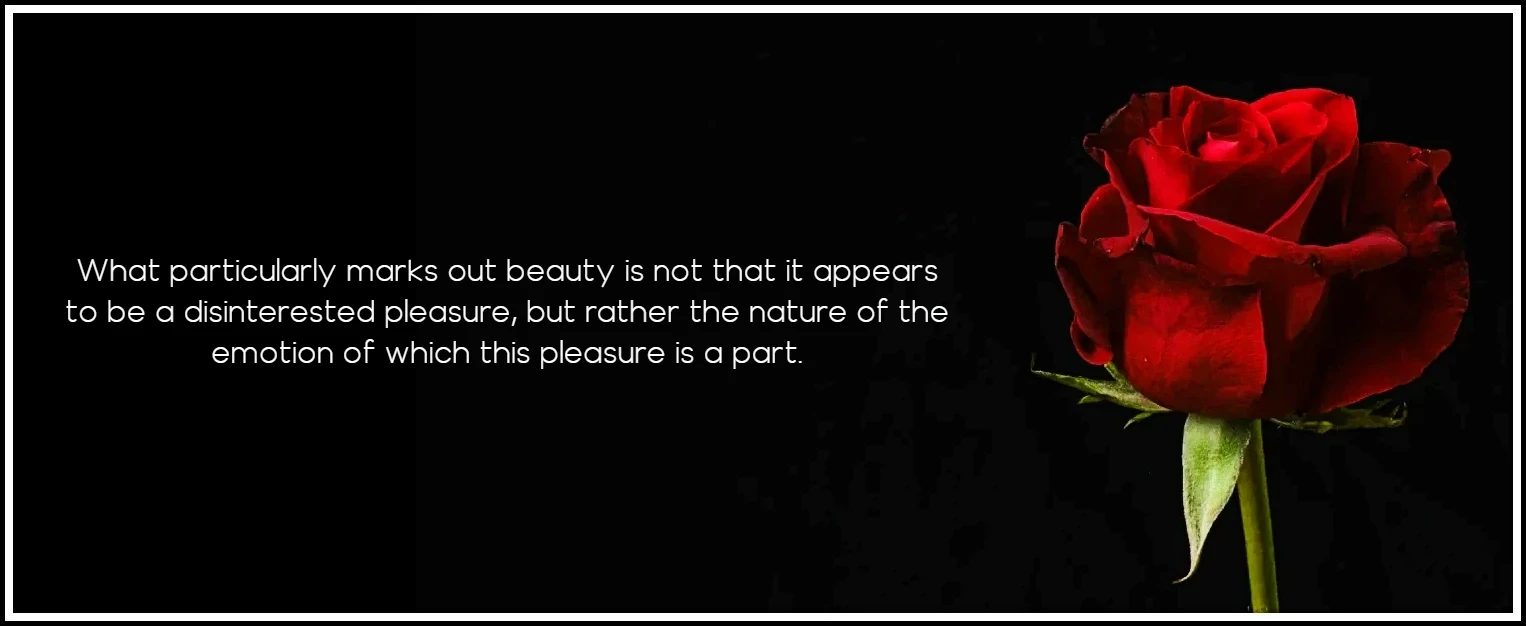
Photo: Engin Akyurt, Unsplash
The phrase ‘disinterested pleasure’ is, quite simply, inadequate as a description of what is felt in beauty. Even the phrase ‘necessary delight’, which at least seeks to convey something of the suddenness of the pleasure, fails to convey the precise quality of the feeling.1 More important, however, is the fact that, though we are struck by the beauty of a particular object, there is yet a continuity between every instance of beauty itself which is more than simply the coincidence of one object of necessary delight with another. Within the instance we experience something like a resumption of beauty: we become aware of beauty again. So that, while the instance may be fortuitous, the feeling itself does not have those qualities of singularity and surprise which the word ‘delight’ conveys. Aside, then, from the antinomical character of the phrases ‘disinterested pleasure’ and ‘necessary delight’, there is also the problem that they do not adequately describe the feeling of beauty. For beauty is experienced as intimation rather than consummation, as both abundance and lack. If we do not call this feeling ‘yearning’ it is only because it has no ostensible object, or rather, we attribute its inspiration to an object which could not be an object of yearning. Indeed this may be why we are more ready to accept the obviously inadequate term ‘pleasure’ over the more adequate but obviously contradictory ‘yearning’, itself a form of pleasure, in so far as it is a state in which a desirable object dominates consciousness1, yet one to which not only an end but also a consciousness of that end seem essential.
1 – Partly because, though the feeling is posited as a quality of the object, we call that object ‘beautiful’ precisely because we are, paradoxically, aware that the object only appears as an object of necessary delight—we do not recollect the instance of beauty as a delusion.
2 – Even to the extent of suppressing the impossibility of that object’s attainment.
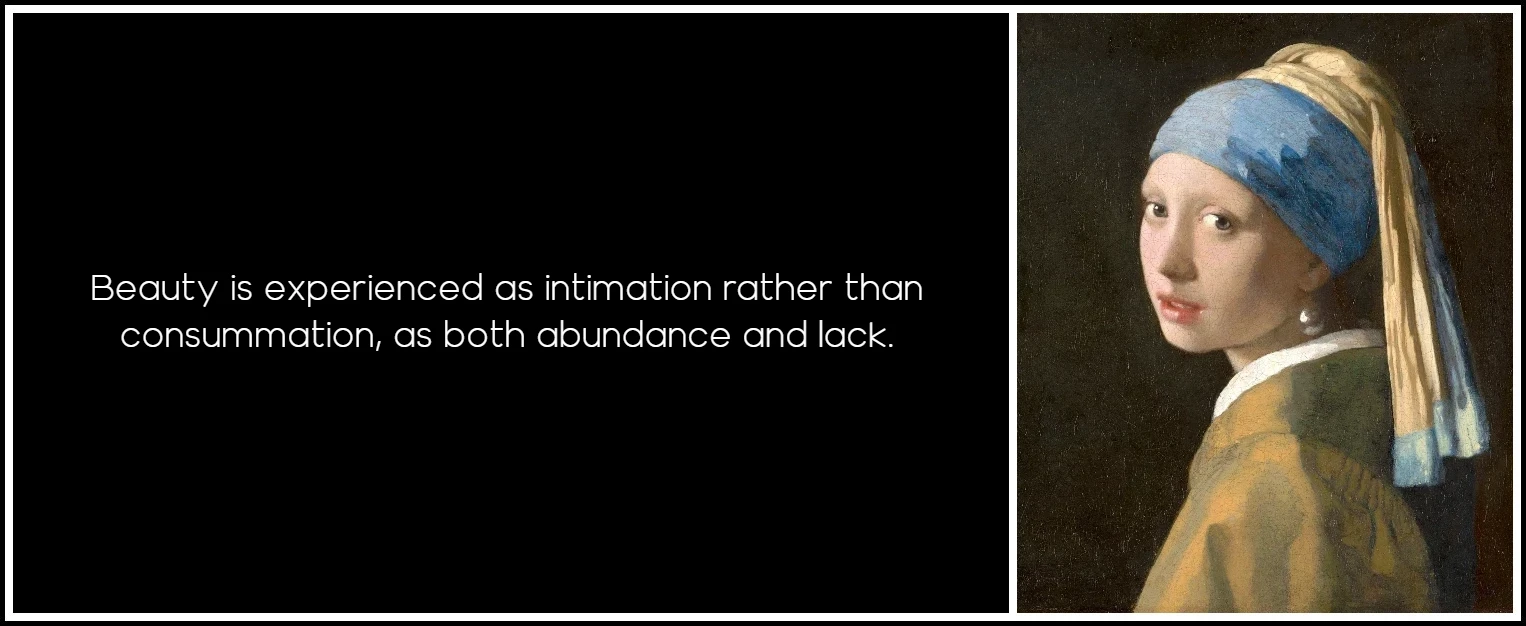
Vermeer, Girl with a Pearl Earring, 1665 | Mauritshuis, The Hague
What, then, is yearning? It is the entertainment of a desire in the face of a consciousness of that desire’s futility. It is that state of mind which Kant describes as ‘vain wishing’; a state of mind which, according to Kant, demonstrates ‘the presence of desires in man by which he is in contradiction with himself’.1 Such vain desires, he asserts, manifest themselves in those instances where we seek the production of an object by means of the thought of it alone, without any hope of succeeding, and with the full knowledge that success would be impossible; as for example when we wish to undo the past, or to annihilate the interval that divides us from a wished-for moment.2 Though we are conscious of the inability of the desire to cause its object to come into being, our desire is, nevertheless, not deterred by this consciousness from ‘straining’ towards its object, just as if it might thereby find fulfilment.
1 – Kant, Critique of Aesthetic Judgement, Introduction
2 – Such tricks hath even the weakest imaginations.
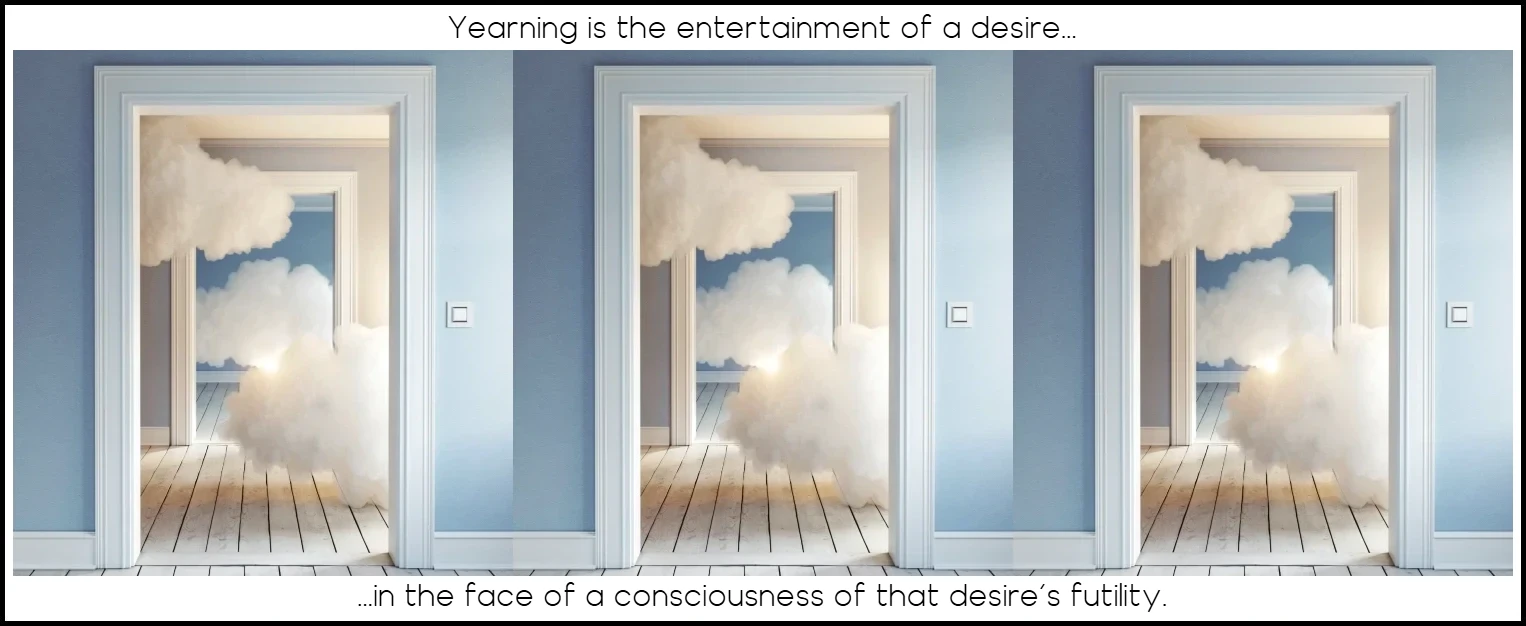
Photo: Getty Images for Unsplash
All such contrary emotions, such expressions of autistic (as opposed to realistic) thinking, might be collected under the term ‘yearning’, in so far as ‘yearning’ conveys just this arrested or static aspiration. This stasis or poise is also the fundamental moment of the metaphysical. The works of Plotinus, Dionysius, and Ficino are themselves both descriptions and expressions of a yearning without object; that is, the very existence of these works and the tradition in which they stand is the expression of a desire that posits its object in such a way as to place this object beyond achievement (or even conceptualisation) here, in the world. Because metaphysics expresses this desire for the absolute, for the transcendent, the concept of God is always its vanishing point.1 But if this Absolute is the vanishing point of metaphysics then the desire for it is also the starting point of metaphysics, for metaphysics is fundamentally religious, in that it always builds towards a keystone that can only be the unconditional, that which is beyond the world yet will render the world significant—God, Ein Sof.
1 – Indeed certain metaphysical thinkers, such as Descartes or Berkeley, seem to get themselves into difficulties precisely in order to be rescued by an Absolute.
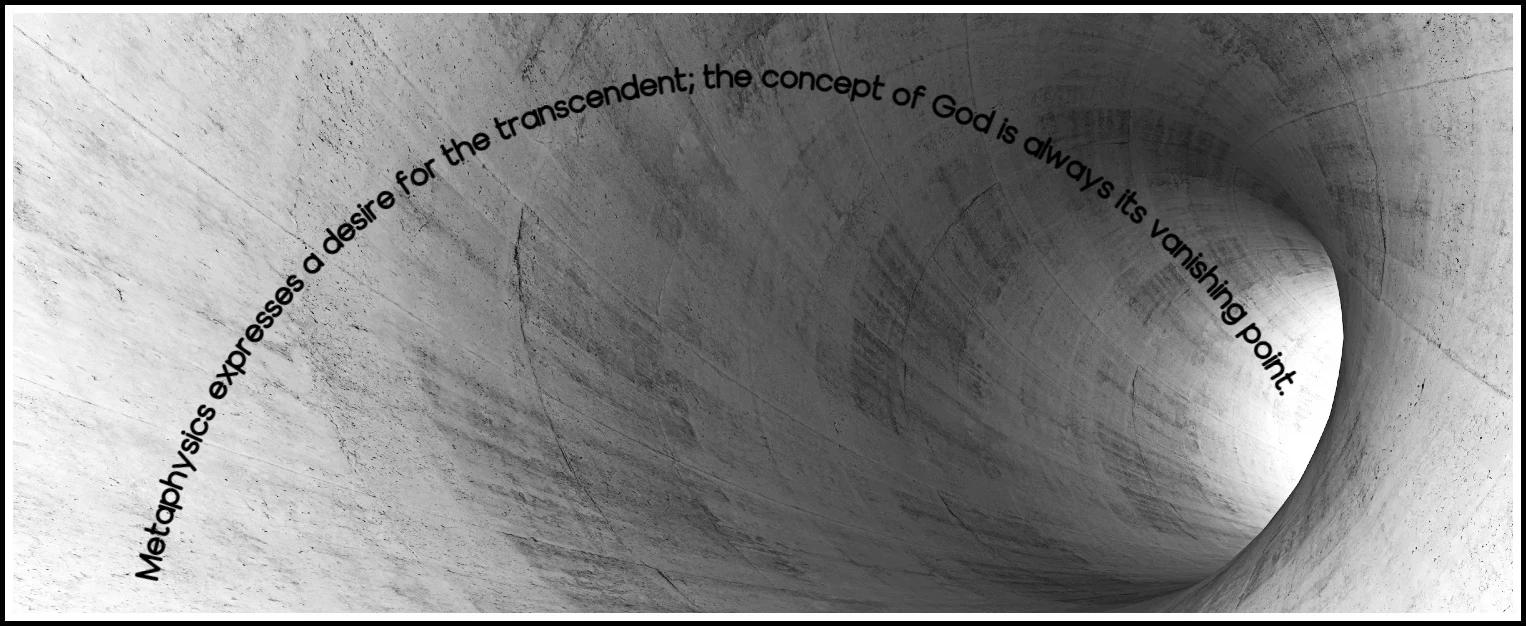
Photo: Getty Images for Unsplash
The metaphysical, then, can be said to be not simply a type of discourse, a subject among others, but rather an element that diffuses itself through everything that makes an appeal to the transcendental; explicitly in religion and morality, implicitly in innumerable everyday turns of mind—feelings of destiny, finality, poetic justice. Nevertheless it is its existence as a discourse that I wish, for the moment, to consider, and, in particular, the parallels that can be drawn between its ‘significant meaninglessness’ and those ‘contradictory’ emotions I spoke of above. For while it is only by denying the impossibility, or the figurativeness, of the metaphysical assertion that it can be made an assertion about the world, at the same time it only exists by virtue of this impossibility, that is, because we desire the unconditional. Thus it is when our interest stops with the expression, the thought, isolated from any considerations of validity, that metaphysics (and wonder), as opposed to mere nonsense, comes into being. The metaphysical always appears at a point of greatest contrast between desire and impossibility. Were it not for the concepts of creation and free will, for example, the concept of God might be made perfectly consistent—man is the problem in theology. I weep with solicitude for one who is beyond all solicitude, and thereby comfort myself. Metaphysics exists in that moment when we are most ‘aware’ of both sides of the equation, the desirability of a desire we cannot renounce and the impossibility of that desire’s fulfilment; both sides are action and reaction.
Photo: Gregoire Jeanneau, Unsplash
The significance of the metaphysical, then, is that nostalgia left behind by its cancelling out what it appears to assert, the vacuum created by this contradictio in adjecto. It does not collapse on itself, does not disappear into meaninglessness, because the impossibility it momentarily asserts is a desirable impossibility. Metaphysics depends upon a moment in which we entertain such a desire, and on letting that moment pass as a moment of desire. It is the impossibility which generated the emotion, and the emotion which generates the belief, the giving of significance. The metaphysical is that which I wish to be significant; it exists because I choose that it should. Thus though metaphysics should, by definition, make no difference to the economy of thought, it is also, in contrast to error, and in contrast to simple meaninglessness, that which, by definition, does make a difference to this economy. This decision, then, not to separate form and content, feeling and belief, that is, the decision that metaphysics should exist, must be the result of a desire, a lack.
Pierre Soulages, 2013
The metaphysical presupposes the existence of a state in which reason and affection, though apparently mutually exclusive in this instance, can ‘combine’ to express themselves in a single impulse.1 Such a state is indeed commonplace; the very notion of self-deception presupposes its possibility. Psychology has given many accounts of the mechanism involved in such instances of the division of the soul, in forgetfulness and parapraxes of all sorts. But how such states exist is not of interest to me here; the reason for their existence is, for my present purposes, sufficiently well accounted for by the way in which they are made manifest.2 What I do wish to highlight is the parallel between the paradoxical structure of metaphysics, as that which withholds the present (the entertainment of the desire) from the future (the realisation of the impossibility of fulfilment) in the name of that future, and the paradoxical structure of beauty as ‘disinterested pleasure’, yearning without object, being as value, timelessness in time. For the existence of metaphysics provides us with a concrete example, in a way that the more ephemeral everyday examples of yearning mentioned above do not, of that paradoxical form of mental stasis that must result from the desire for the unconditional. It is in this desire for the unconditional, I believe, that we find the human tendency which will account for the ‘yearning without object’ that constitutes the feeling of beauty.
1 – It is reason, after all, which discerns the fallacy in the thought, and thus renders necessary its presentation as metaphysics.
2 – The unconscious is that which does this.
Pierre Soulages, 2012
In the following outline of the structure of beauty1, while I will abandon the ‘unreasonable and capricious’ language of ancient philosophy, the notion of transcendence must remain. This is the nature of the subject: if the concept of beauty could be exhausted by the language of mathematics or conscious motives, that is, without taking into account the unreasonable and capricious in human nature, its definition would hardly have remained, for two and a half thousand years, cast in the form of a contradiction in terms. The following account, however, does not require any commitment to the metaphysical—only the concession that the urge towards that form of feeling which the existence of metaphysics signifies is part and parcel of being human.
1 – As I believe it can be deduced from consideration of the circumstances surrounding it, the history of its theoretical treatment, and its enduring definition as ‘disinterested pleasure’.
Pierre Soulages, 2013
The instance of beauty starts with our taking an object (situation/thought) as expressive of the possibility of the existence of a state of affairs that would fulfil our inherent and enduring desire to transcend those very conditions, the contingencies of our existence, that give rise to desire.1 At this stage, however, we must be aware that, since this desire is, necessarily, an impossible one, our interpreting of the object as expressive of its fulfilment is an interpretation, an act of wishful thinking. In order, then, to continue entertaining the idea of the fulfilment, for the pleasure it affords us, it becomes necessary for us to ignore, or suppress, our cognizance that what we are experiencing is the effect of an action we have ourselves performed—the projection of our own feelings onto the object. To achieve this we must entertain the idea that it is the world itself which is showing evidence that our desire for transcendence, or perfection, is not vain. In order to do so we must suppress the consciousness of this wish, which by its very existence negates what is wished for, by denying that our ‘response’ depends upon the idea of the object being expressive of anything. The pleasure that is beauty, then, could not be felt at all were it not that the subject, by a certain subreption [concealment of facts], entertains that pleasure as ‘disinterested’, and therefore ascribes the feeling to the merely sensible qualities of the external world. Hence beauty’s appearance as something we have reacted to, as a state we are thrown into by the mere appearance of the object, rather than the result of an action (interpretation) on our own part.
1 – Any of the many ways in which an object may become symbolic, including through personal association, may be responsible for our initial interpretation of the object in this way.
Photo: Ben Ingham
It is important to emphasise that there is no question of the presence of beauty until we reach the last of the stages of the process outlined above. It is the idea, given to us through the symbolic qualities of an object, of the satisfaction of a desire for transcendence, cognized as impossible to entertain rationally, yet, at the same time, too desirable to relinquish completely, that is entertained by the subject in finding the object beautiful. But it is only the entertainment of the idea in this particular way that constitutes the beauty of the object. It is not, then, the idea itself which is beautiful, but rather the object to which beauty is ascribed—though this object may be itself as intangible as a concept. Not only is the idea itself necessarily one that I cannot rationally entertain, but, since it is essential that the idea of transcendence be embodied, that is, exist independently of my desire, the very fact of significance is also part of what is signified: it would be impossible for the object to function as a symbol if we were to allow that it was in any way expressive. For to be conscious of interpreting the object as expressive would be to introduce myself as a condition of that expressiveness, thus precluding the object from intimating a satisfaction of the desire that the world itself should show evidence that my desire might be fulfilled.
Photo: Jane McLeish
But if it is not the idea itself that is beautiful, then neither can beauty be ascribed to the object that expresses that idea for us. This object is necessarily more complex than the object which we actually perceive as beautiful. The beautiful object, constituted by the process outlined above, in order for us to continue entertaining the idea of the desirable impossibility, is one aspect of the object that expresses that idea, since our cognizance of that object—the real phenomenal ground of the instance of beauty—is, necessarily, suppressed by the process. I have designated these two objects, respectively, the ‘perceived beautiful object’, meaning the object to which the subject attributes beauty, and the ‘beautiful object’, meaning the true phenomenal grounds that are involved in the subject’s perception of beauty. I was, nevertheless, reluctant to use the word ‘beautiful’ in connection with the latter object: beauty is the end result of the process, and thus can only properly be predicated on what the subject posits as beautiful.
Photo: Donald Christie
Moreover, though sometimes an awareness of the contingency of the perceived beautiful object is forced upon us, this never occurs except in circumstances where the beauty has departed. It is not possible for the subject to trace the beautiful object back to its phenomenal grounds for the plain reason that, while that object is constituted by a complex of suppressions, no less are the grounds themselves constituted by a process of interpretation. If one is in a position to discover that what was apparently accidental to the instance was, in fact, essential, then it can only be because the elements which comprised the ground of the object are no longer held together by that interpretation.1 It is for this reason that I have said that it is futile to try to verify this thesis solely by an analysis of one’s own experience of a particular example of beauty.
1 – The fact that one can, on reflection, discover that, for example, the beautiful place was actually a beautiful time might easily lead one to conclude that it is in fact possible to discover the true grounds; though merely discovering an essential though overlooked element in the perceived beautiful object is not, of course, discovering the source per se of that beauty.
Photo: Jane McLeish
The difficulties of verifying this thesis at all are, of course, considerable—the nature of the experience itself is such that, as Kant remarked, its grounding can only be deduced from its ‘formal peculiarities’.1 What I would suggest, however, is that the structure of the experience of beauty given above best fits the shape of that blank, the je ne sais quoi, that has traditionally existed at the heart of the subject. It enables us to see both in what way many theories of beauty arose, and also what is valid in them. Beauty can, for example, be a matter of the formal qualities of an object (symmetry), at least in so far as this form can become symbolic; likewise, literally instinctive responses may play a role in some instances of beauty in so far as those instincts render certain qualities significant; it is rooted in basic physiological or psychological drives, or at least in that fundamental drive the goal of which is also implicit in these other drives; it is, figuratively speaking, a ray emanating from God, shining through matter and reminding the soul of its own divinity; it can only be experienced as the quality of an object; it is in the eye of the beholder.
1 – Kant, Critique of Aesthetic Judgement, §35
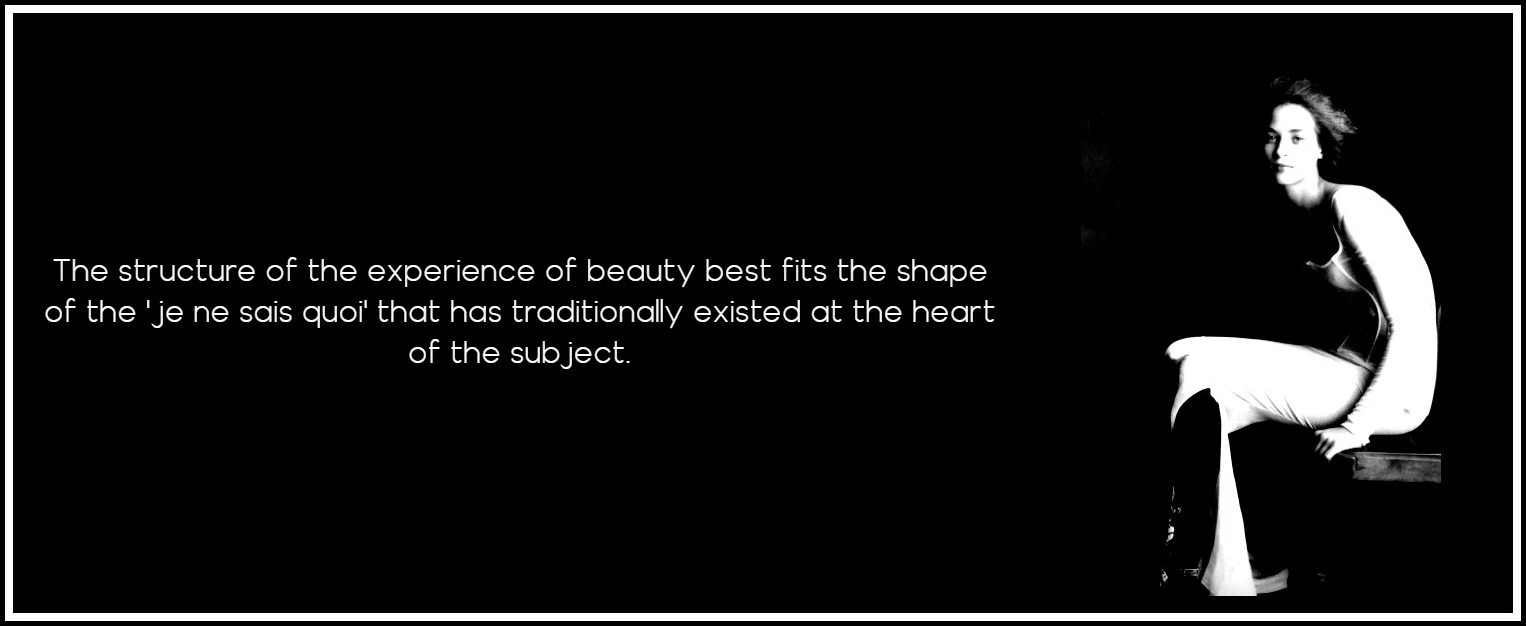
Photo: Ben Ingham
What the thesis does not allow, however, are some of the more problematic and counterintuitive deductions that have been made from such theories in their absolute forms: for example, that what is beautiful about an object is quantifiable solely in terms of the properties of that object (to the exclusion of the particular subject’s interpretation of those qualities), or even quantifiable at all by the subject who finds the object beautiful; that the pleasure of beauty is, somehow, identifiable with the pleasure attending the satisfaction of specific physiological goals; that experiences of beauty are qualitatively different from one another (‘high’ or ‘low’) depending on the nature of the object or the attitude of the subject. The grounds of the attraction of some of these ideas might, however, be sought in the very structure of beauty I have outlined above; as, indeed, might a motive for beauty’s remaining so long ineffable.
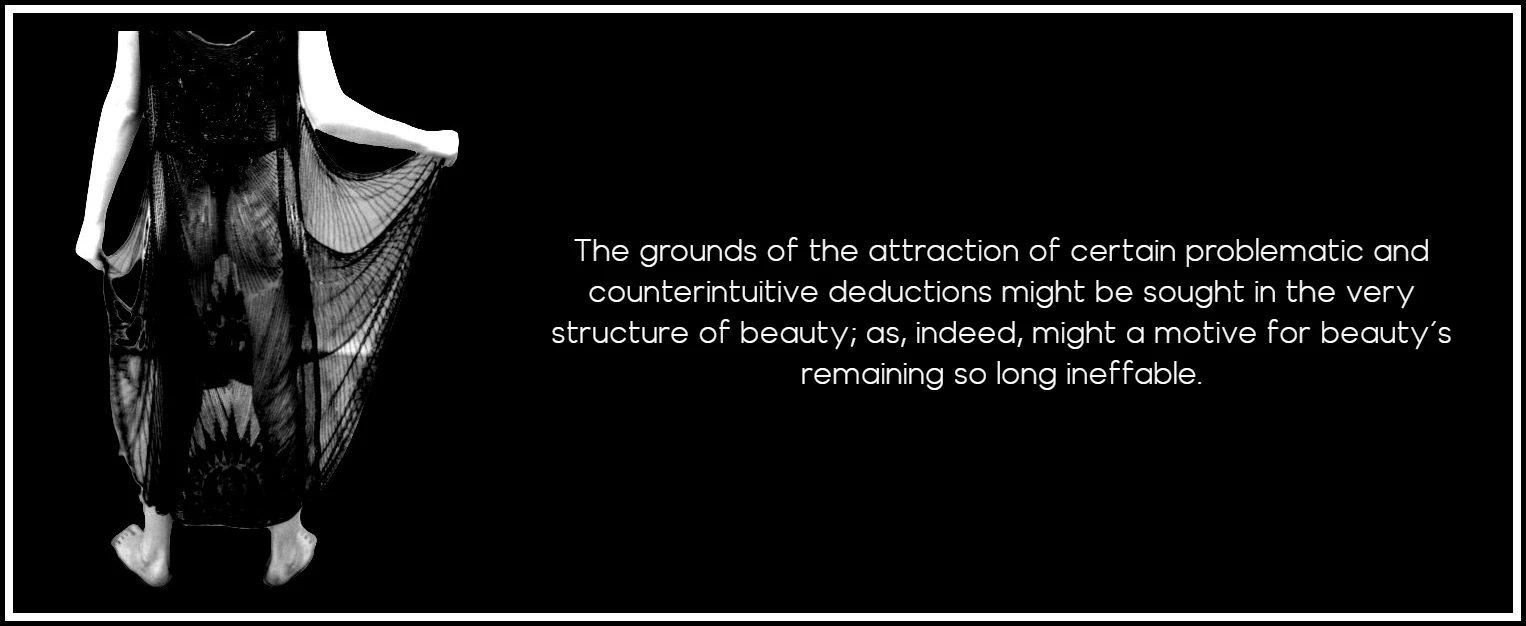
Photo: Demon Pruner
More importantly, perhaps, than the way in which this thesis accounts for both traditional theories of beauty and their shortcomings is that it best accounts for the quality of the experience; what I referred to as the feeling of ‘yearning without object’, combined with a sense of ineffable meaningfulness. The Neoplatonic and early Christian versions of beauty did provide an adequate object for this feeling in a way that the desiccated definition of beauty as ‘disinterested delight’ could not.1 This is the advantage of approaching beauty through Neoplatonism texts—their truthfulness. What distinguishes them from other forms of discourse is that, in them, the God that will complete us is not hidden within a love of humanity, or life, or justice, or integrity, or even truth; they are explicit on the impossibility of conceiving of the in-itself, and, in being so, can account for the positive pole of beauty.
1 – It is, however, curious to note how the source of the very resistance to interpretation, inspired by a desire for transcendence, that characterises the genesis of beauty passed over into modern aesthetics; to the extent that this aesthetics continued to insist upon framing the question of beauty in the form ‘How can we account for a disinterested pleasure?’, in preference to the more accurate, and ultimately more answerable question, ‘How can we account for what is cognized by the subject as a disinterested pleasure?’
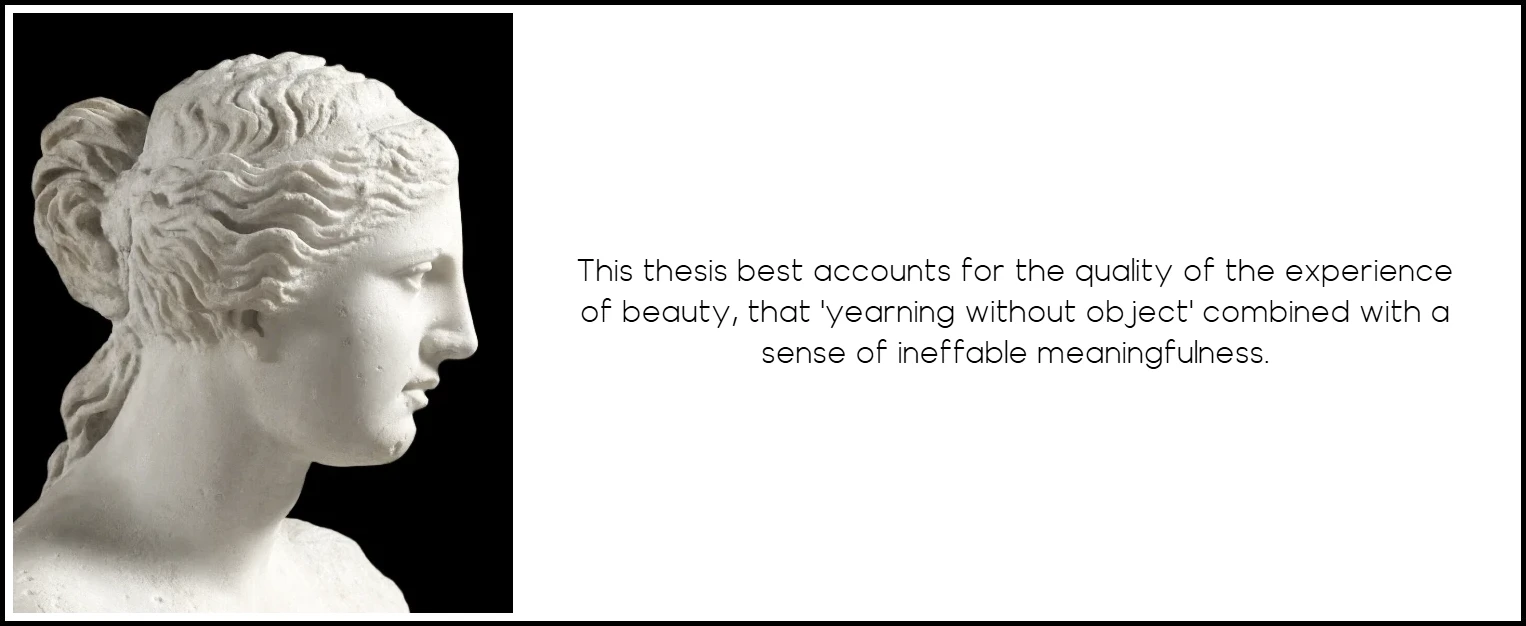
Venus de Milo, c. 135 BC
Indeed everything associated with the experience of beauty, both the sensation itself and the resistance of that sensation to logical definition, points to beauty being a yearning not for any individual end or object but rather for that object which is the goal of being itself, that perfection of the self towards which every action aims and which every pleasure registers. This self, towards which being aims, should not, however, be confused with what is called the ‘true self’. What is called the true self is an illusion created by those particular yet persistent instances in which you feel impelled to do what you do not want to do. The true self is a state of grace that the very necessity of action at once creates (as a conscious ideal) and renders impossible; an absolute freedom, existent yet immutable, that would yet preclude the possibility of doing anything. It is that hypothetical person who would not do all these things and who is, despite the fact that I do them, really me. The idea of the true self, then, in so far as that self thrives on its own attenuation, is a sentimental one—the more people submit to conformity the more avidly they cling to what becomes a substitute not merely for action, but even for desire itself.
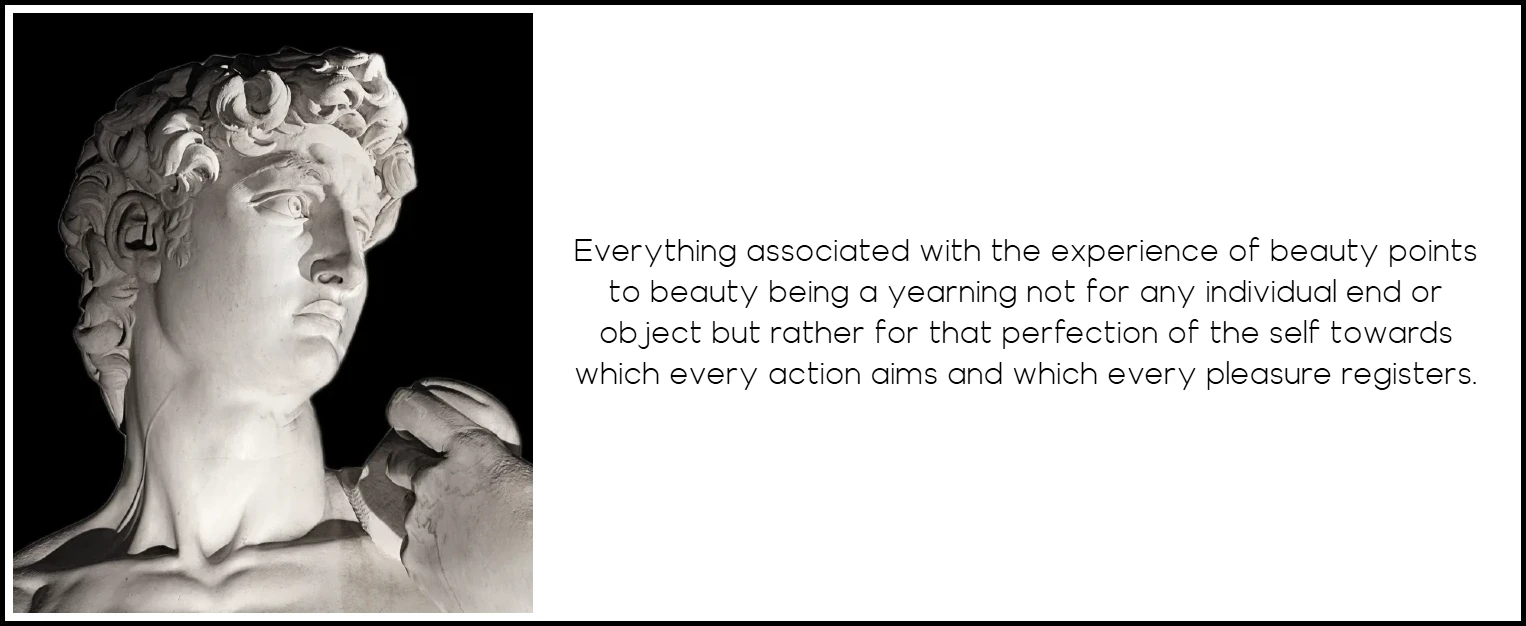
Michaelangelo, David, 1504 (detail)
The notion of the true self is, then, strictly a notion, a reflection on life, rather than a sensation. It is this which distinguishes it from what is felt in beauty, which also contains, as one of its moments, an intimation of the paradisical, the eudaemonic.1 Such, however, is the nature of the beautiful instance that this intimation exists in it in such a way as to be qualified a priori. The experience of beauty is, necessarily, too comprehensive to resolve itself into the notion of a self, too vague to correspond to any way of being: it remains a sensation. Thus though beauty, particularly in art, may inspire in us certain specific desires (perhaps through association), it never inspires what is the corollary of the negative desires of the true self, that is, a sense that the universe conspires against their expression. For, though part of the instance of beauty is a knowledge of the impossibility of eudaemonia, there is, nevertheless, no renunciation involved. Although we realise that the end of every desire cannot be, we do not therefore give up desiring; indeed, it is in beauty that we are particularly aware of how much we are attracted by the world, albeit that this desirability appears as an abstract quality projected, paradoxically but necessarily, onto an object that we do not experience as itself an object of desire. In this sense the impulse created by beauty, in contrast to the reflection which issues in the loyal protest of the idea of a ‘true self’, is always a total revolt.
1 – I use ‘eudaemonia’ here in the Platonic rather than Aristotelian sense, that is, as bliss, beatitude, perfection, fulfilment; see Phaedo, 81-114, Republic, 516-26.
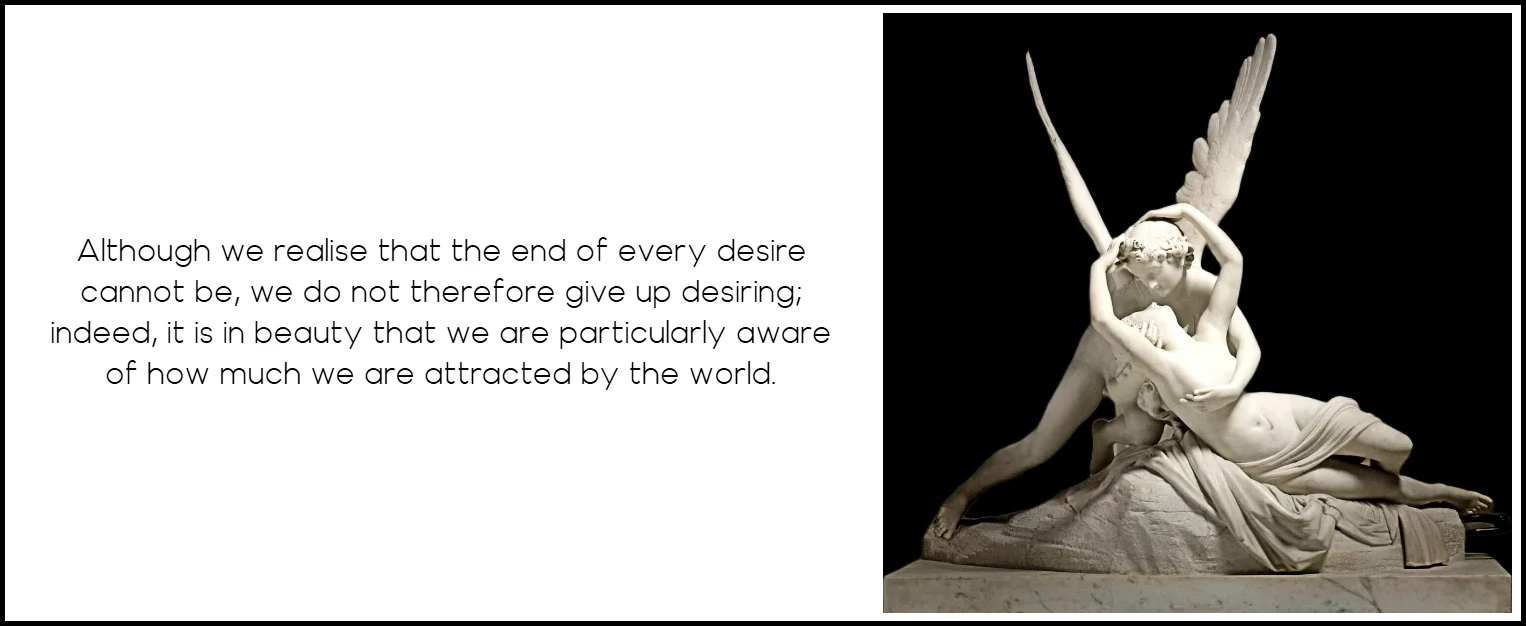
Antonio Canova, Psyche Revived by Cupid’s Kiss, c. 1790
I have pursued this digression at some length because beauty is so often associated with that very form of sentimentality which is to be found embodied in the idea of the true self, the ‘buried life’, ‘immortal part’, ‘finer feelings’. Such an association is accidental to the present subject, a particular conceptual response to beauty, rather than a necessary element in the response of beauty. What is expressed in beauty is not even a concept of that self, as state-of-being, which existence endeavours to arrive at, rather what is expressed is the endeavour itself. We know that such a perfection of the self cannot exist in time; we are cut off from its attainment by the very conditions that give rise to our desire for it—though it is a desire that can exist only here.
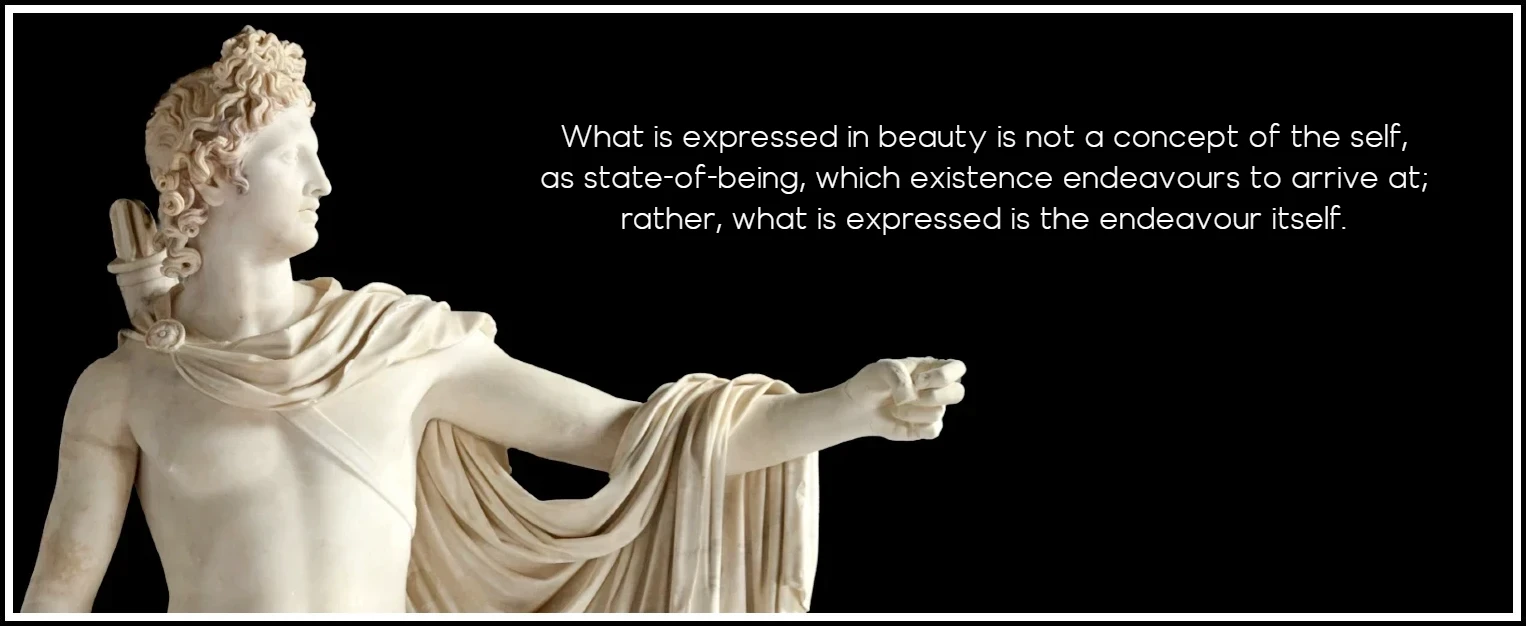
Apollo Belvedere, Roman copy of a Greek original
Beauty, then, involves the preservation of desire in the face of rationality, a holding fast to what exists only in its slipping away. The endeavor to persist, as Spinoza observes, involves an indefinite time, is unbounded by reality.1 Yet the desire is bound by knowledge, and emerges not simply as desire but as wonder, longing and regret—in short, as beauty. This is because the knowledge involved is inseparable from, or appears as, emotion; the desire may be impossible but it passes as a moment of desire. This letting be of the desire, this timelessness in time, is a positive act, a letting be. Thus it is that even the phenomenal ground of the object perceived as beautiful remains concealed. It is this ground, we may surmise, which expresses, for the subject, that desirable impossibility which gives rise to the instance of beauty; which instance is preserved by the abstraction or construction of the perceived beautiful object, that is, of beauty.
1 – Spinoza, Ethics, III, Propositions VI–IX
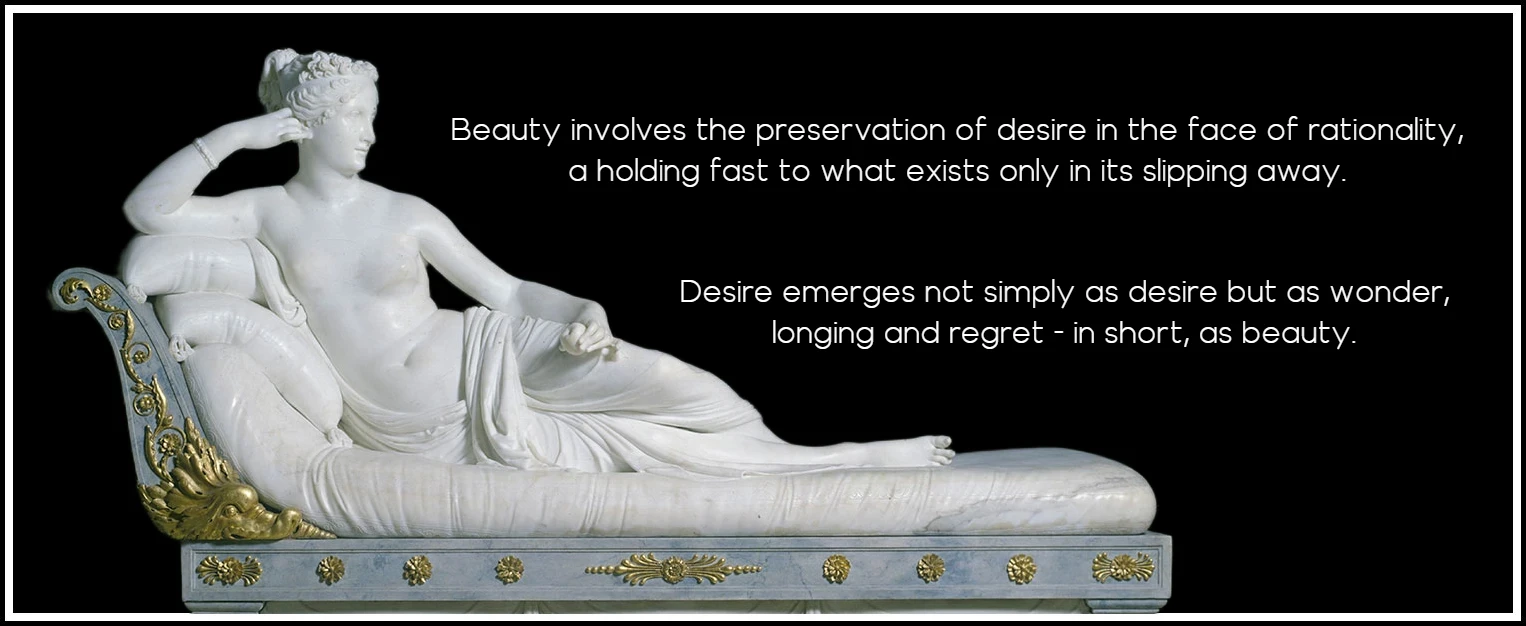
Antonio Canova, Paolina Borghese Bonaparte as Venus Victrix, 1810
The source of the sensation must remain ineffable. Indeed, when I look again at something I once found beautiful but no longer do I am amazed not because I can see no reason why it should have attracted me, but precisely because I can, or think I can, see such a reason. In my seeing this reason the thing has ceased to be beautiful, state is separated from act and beauty departs. Likewise with the bad taste of others; bad taste is always obvious taste, it reveals the source of its attraction, it ‘caters to a need’. The true opposite of beauty is not ugliness—itself an identity of being and value—but rather the dissociation of being and value and their separate appearance as such, that is vulgarity. For beauty is not something that stands for something we can attain; if it were it could not be the in-itself which, by all accounts, both metaphysical and ocular, it is. The phenomenal ground of the object must express the end of a desire, but express it in such a way that this particular desire is made to exceed the particular, to stand for the fulfilment of all desire.
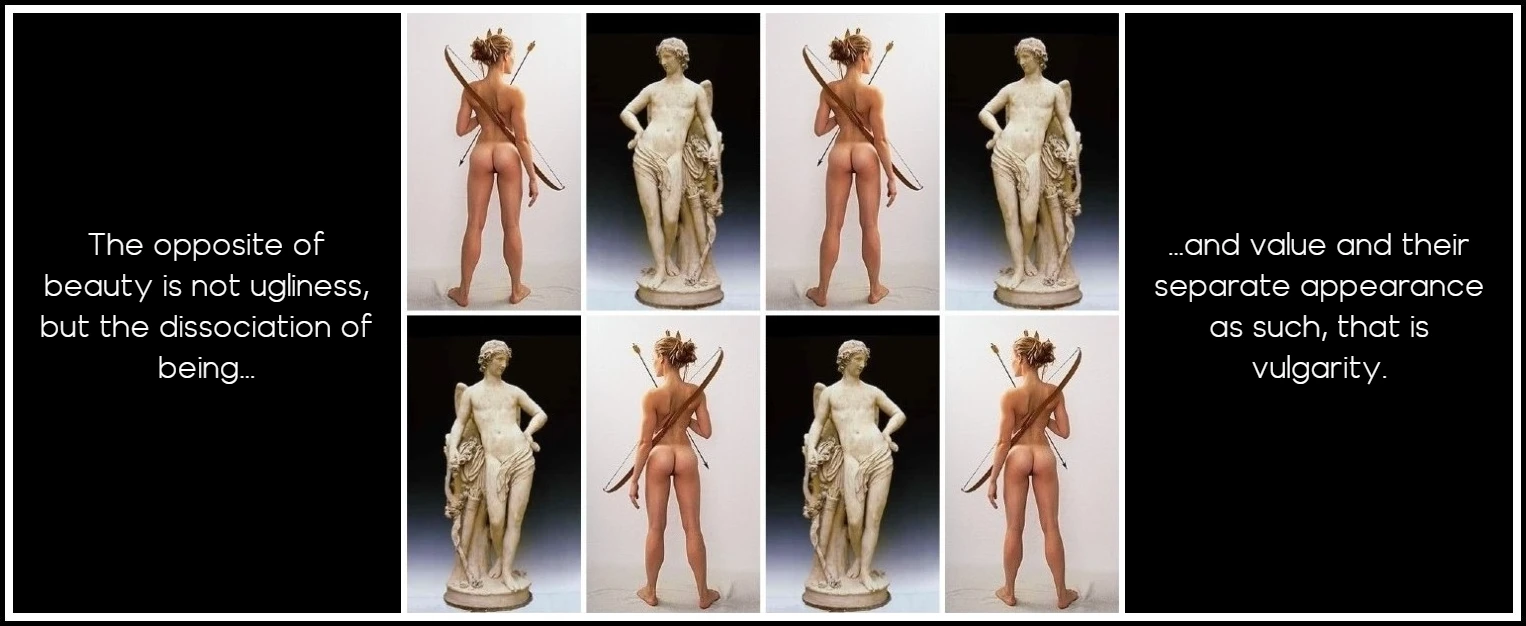
Guy le Baube, Cupidon, 2013 | Gilles Lambert Godecharle, Cupidon, 1804
We wish for that union of being and value which will be an end in itself. We experience such a union only in that which is also an expression of its impossibility, that is, only in beauty.
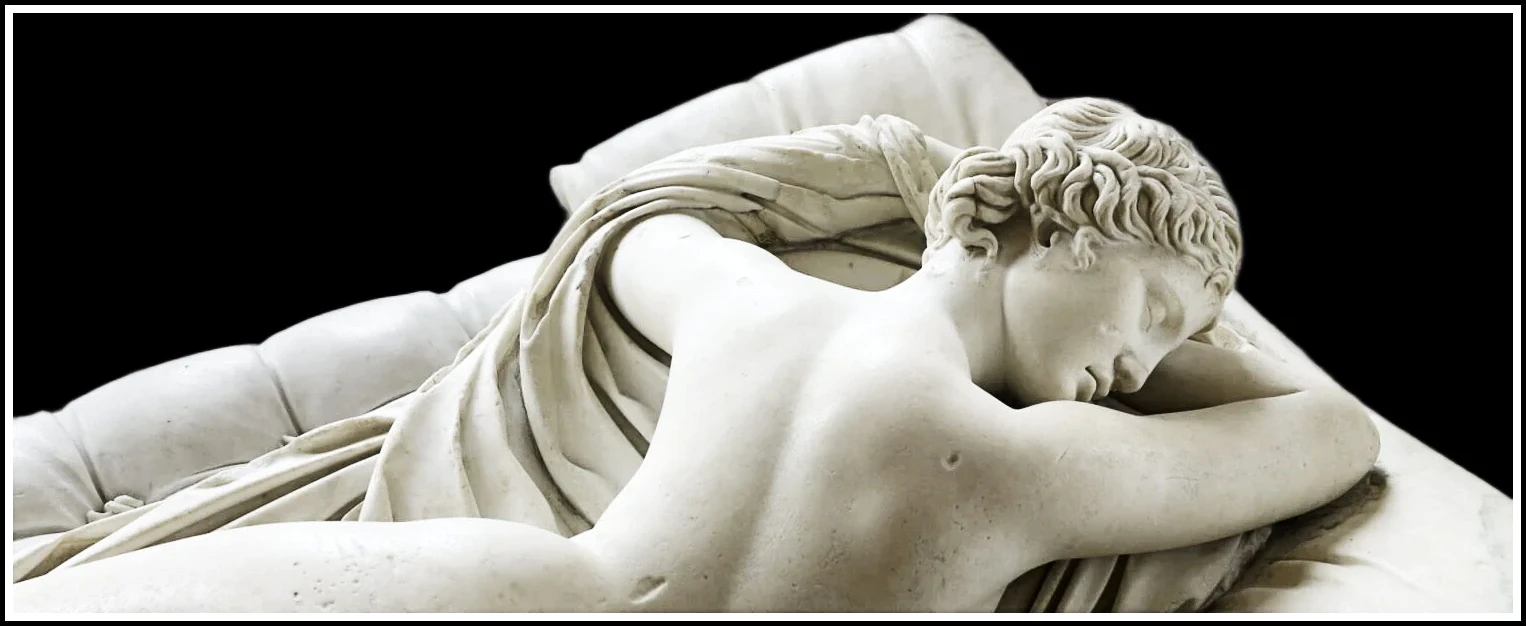
Sleeping Hermaphroditus, Roman copy of a Greek original (detail)
JAMES KIRWAN: THREE BOOKS
CLICK ON THE IMAGE TO GO TO A DESCRIPTION OF THE BOOK
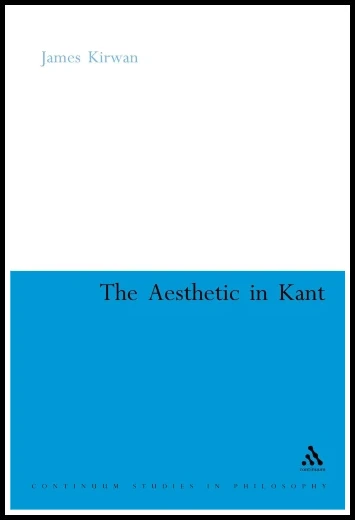
The Aesthetic in Kant
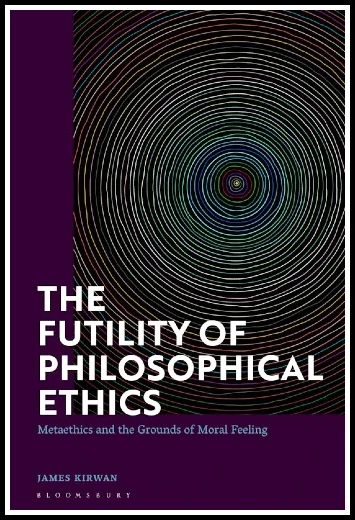
Futility of Philosophical Ethics
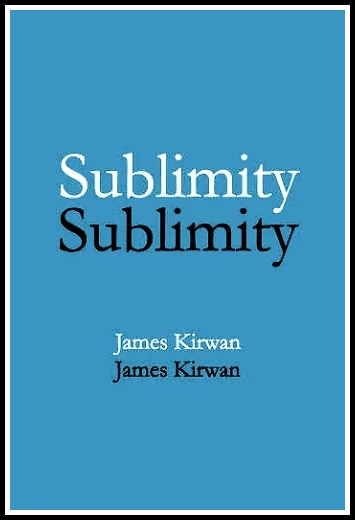
Sublimity
MARA, MARIETTA: A LOVE STORY IN 77 BEDROOMS – READ THE FIRST CHAPTER
A literary novel by Richard Jonathan
RICHARD JONATHAN, ‘MARA, MARIETTA: A LOVE STORY IN 77 BEDROOMS’ — READ THE FIRST CHAPTER
AMAZON & APPLE BOOKS

RICHARD JONATHAN, ‘MARA, MARIETTA: A LOVE STORY IN 77 BEDROOMS’ | AMAZON PAPERBACK OR KINDLE

RICHARD JONATHAN, ‘MARA, MARIETTA: A LOVE STORY IN 77 BEDROOMS’ | APPLE iBOOK
MARA, MARIETTA: A LOVE STORY IN 77 BEDROOMS
A literary novel by Richard Jonathan

Available from AMAZON (paper | ebook) & iBOOKS, GOOGLE PLAY, KOBO & NOOK (see LINKS below)
RELATED POSTS IN THE MARA MARIETTA CULTURE BLOG
CLICK ON THE IMAGE TO GO TO THE POST


By Richard Jonathan | © Mara Marietta Culture Blog, 2026 | All rights reserved
Comments