Classical Beauty and Characteristic Beauty
FEMININE BEAUTY IN WESTERN ART: A SURVEY – PART 3
Kenneth Clark
From Kenneth Clark, Feminine Beauty (London: Book Club Associates / Weidenfeld & Nicholson, 1980) pp. 19-24
THIS IS PART 3 OF THE ESSAY. READ PART 1 FIRST.
While Correggio and Michelangelo were at their zenith, and partly as a result of their work, there grew up that alternative to classical perfection known as Mannerism. It was to some extent a negative movement. The great heroes of Renaissance art had gained their ends too completely and left their successors with nothing fresh to say. But in its pursuit of feminine beauty Mannerism was creative, and it introduced the element of strangeness that Francis Bacon (1561-1626) had rightly seen as a first condition of beauty. For some reason all Mannerism involves elongation, and never was this defiance of natural proportion carried out with happier effect than in the work of Parmigianino. His Madonna and Child with Angels (‘Madonna with the Long Neck’) shows the style perfectly assimilated, and his new concept of feminine beauty is harmonious and consistent.
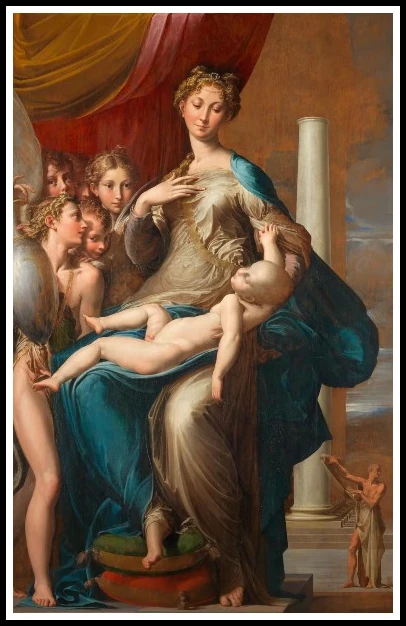
Parmigianino, Madonna and Child with Angels, 1535
He could extend his ideal to portraiture without any loss of truth.
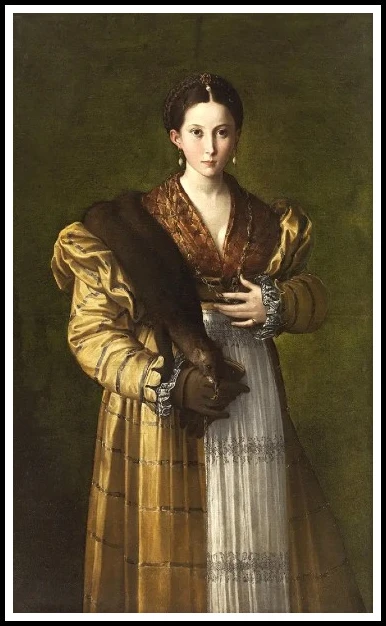
Parmigianino, Portrait of a Young Woman (‘Antea’), 1535
Mannerism gave artists a better opportunity to exploit feminine beauty than classical perfection had done, as we can see in Bronzino’s Venus…
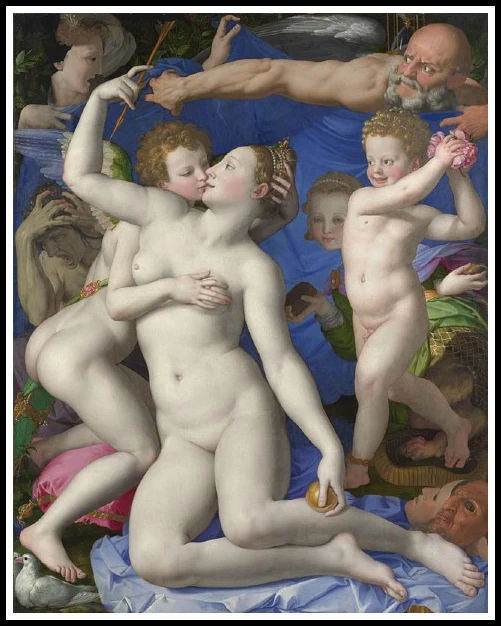
Bronzino, Venus, Cupid, Time and Folly, 1550
…and the Diane d’Anet, whose elegance and latent eroticism make her the perfect objet d’art for a civilized court.
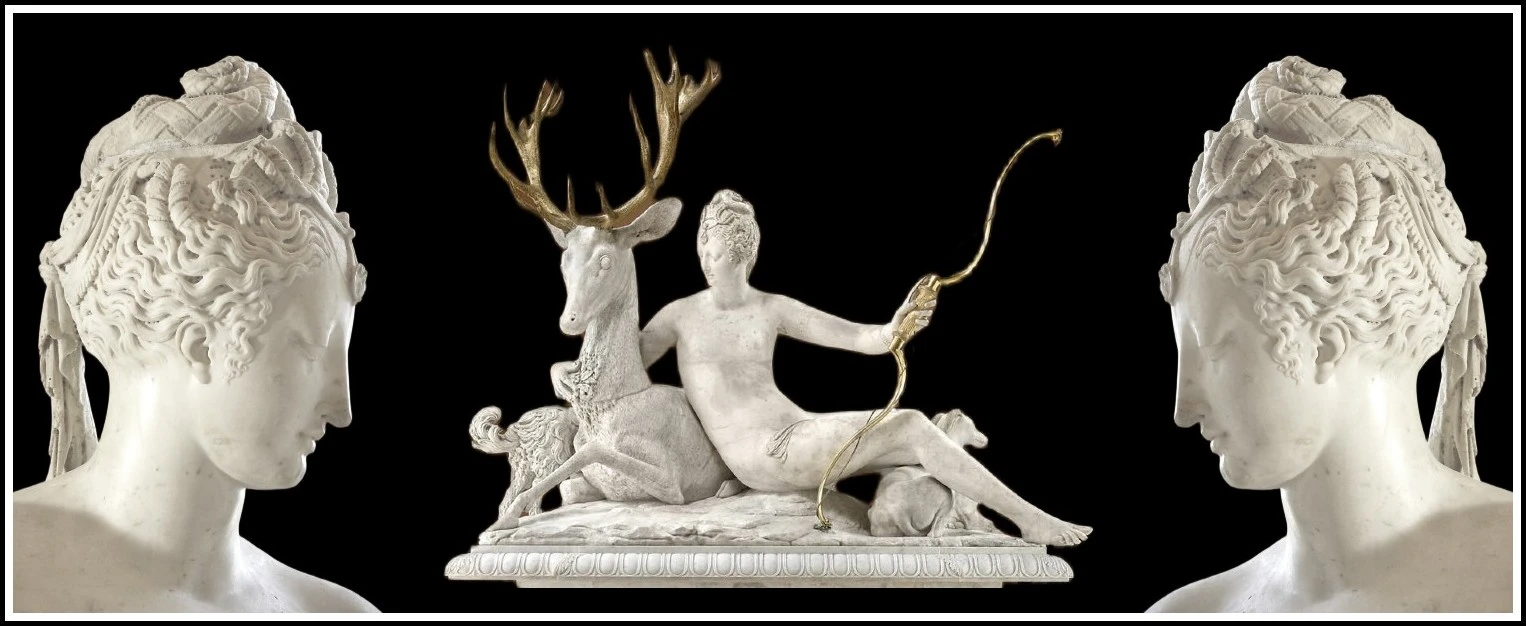
School of Fontainebleau, Diane d’Anet, 1555
Indeed in the mid-sixteenth century French and German artists carried Mannerism into a realm of fantasy that it rarely approached in Italy, then in a state of fragmentation, although occasional examples of it there were delightfully extravagant.
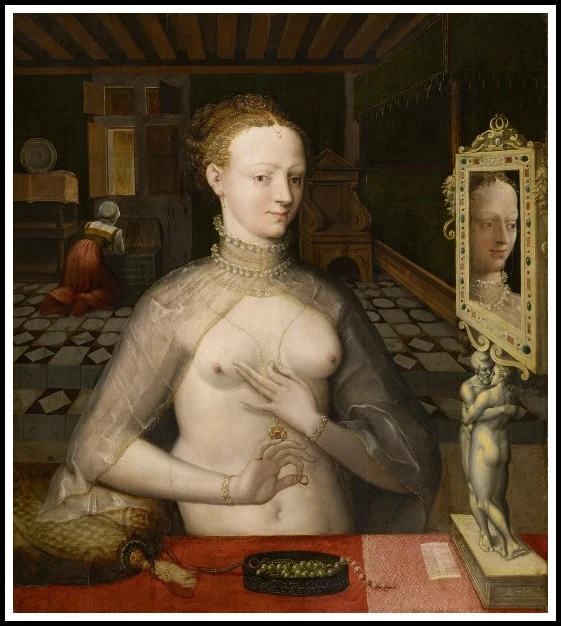
School of Fontainebleau, Portrait of a Lady (‘Diane de Poitiers’), 1550
Many of the results were trivial or frequently impudent.
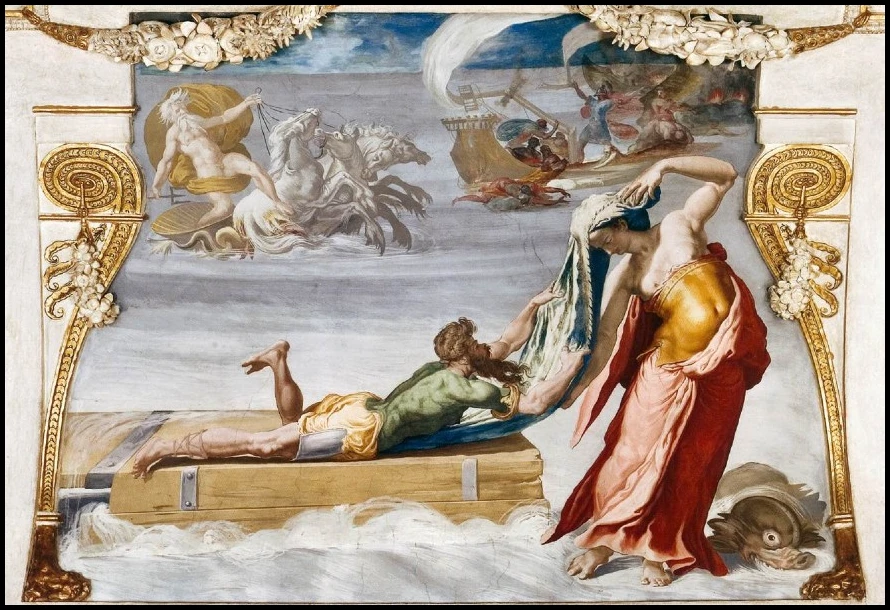
Pellegrino Tibaldi, Ulysses Shipwrecked, 1535 (ceiling decoration fresco)
By one of those paradoxes that save the history of art from monotony, the period of Mannerist extravagance also saw the career of the sanest of all great painters, Paolo Veronese. To be in his company for a few days, as is possible in Venice and Vicenza, is to restore one’s faith in humanity. His women are beautiful because they are healthy and unselfconscious.
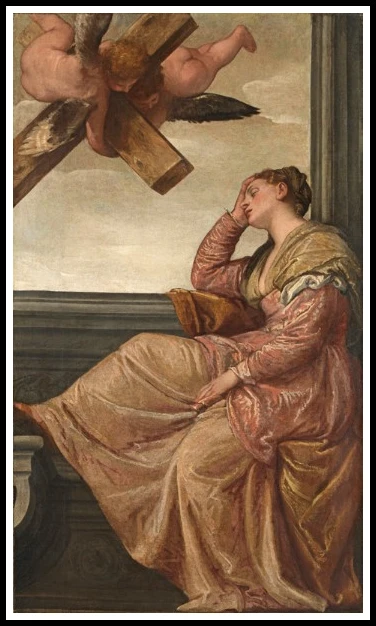
Paolo Veronese, The Dream of Saint Helena, 1570
We can see that they have never had a mean or malicious thought.
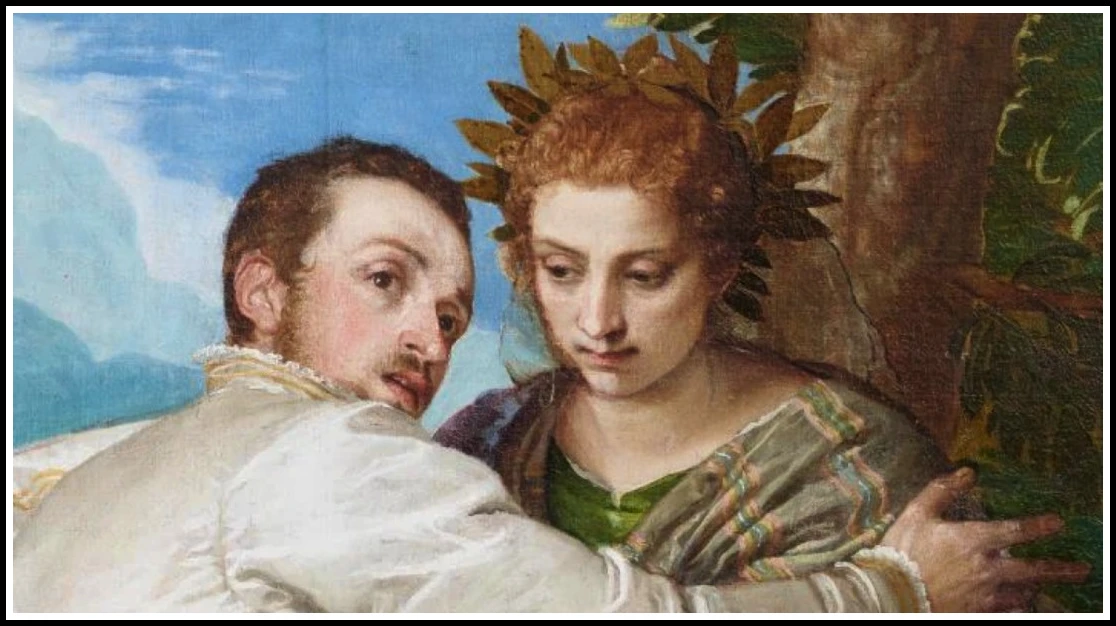
Paolo Veronese, The Choice Between Virtue and Vice, 1565 (detail)
It was exactly this unselfconscious candour that was lacking in the earnest and industrious Bolognese painters who, although they almost overlapped in time with the last works of Paolo Veronese, seem to belong to a different world.
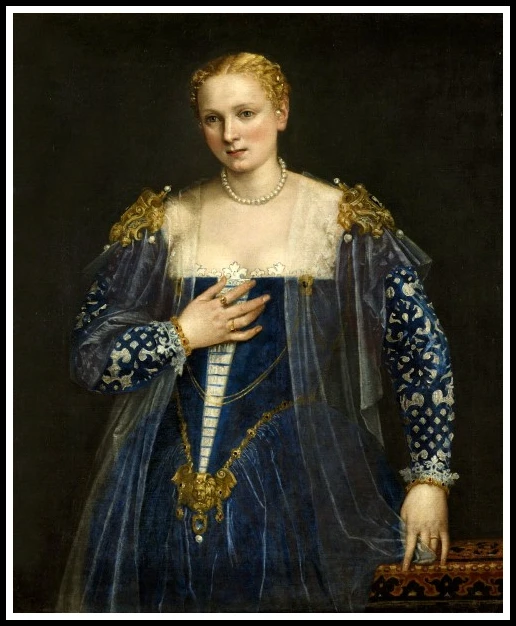
Paolo Veronese, A Patrician Woman from Venice (‘La Belle Nani’), 1560
They were the first academics. Before their time it had been assumed that art would simply continue, with slight ups and downs due to the genius of certain individuals. With the Carracci came the notion, which has appeared so often since their time, that art had declined but could be revived by following certain formulae. Academies had existed in the Renaissance only in the sense that eminent artists opened their studios to would-be learners. But from the Carracci onwards an academy was a self-regarding institution with its own dogmas and ambitions. It is not surprising that in such an atmosphere feminine beauty lost its freshness.
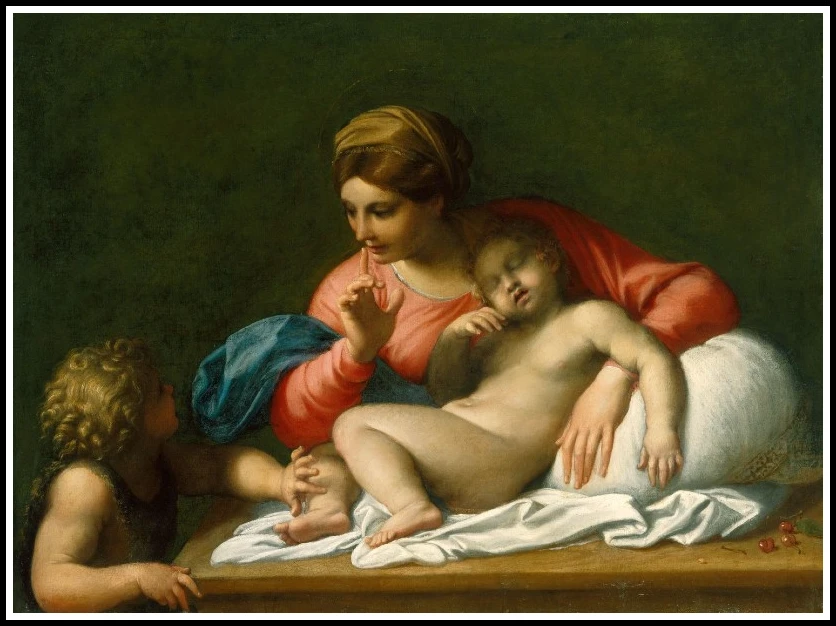
Annibale Carracci, Madonna and Sleeping Child with the Infant St John the Baptist, 1600
But among the academic Bolognese was an artist to whom that kind of discipline was unnatural—the painter universally known for two hundred years as ‘dear Guido’. His feeling for feminine beauty is present in all his work, but his fame—one may say his popularity—rests on the way he was able to combine this feeling with sincere piety.
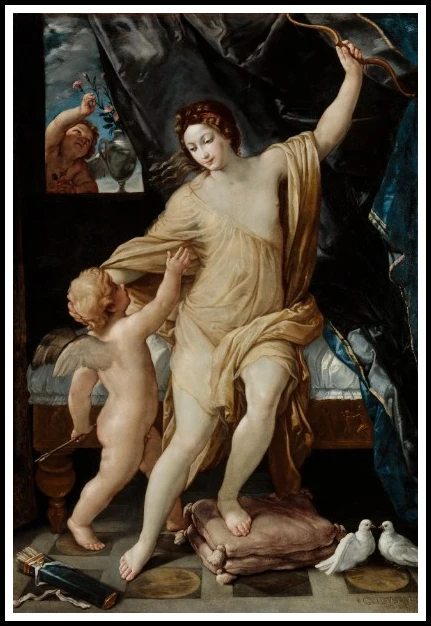
Guido Reni, Venus and Cupid, 1626
Rather the same is true of his rival in popular fame, Sassoferrato. He, even more than Guido, had a beautiful simplicity of heart, and his Madonna is painted with a sort of innocence that will always give pleasure in an uncorrupted society.
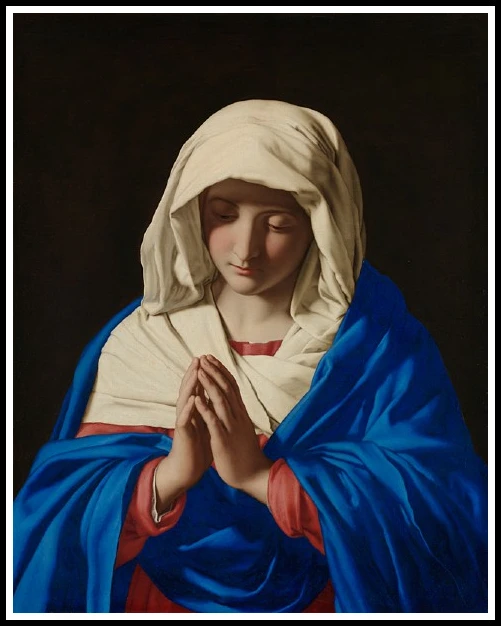
Sassoferrato, The Virgin in Prayer, 1645
The Bolognese artist who gave most thought to the concept of feminine beauty was the serious, industrious Domenichino. As a sideline from his admirable frescoes, he did a series of figures of women which were once amongst the most sought-after pictures of the period. They are designated as sibyls and prophetesses, but their chief function was to perpetuate what he thought most admirable in women. They are not seductive, but quite handsome enough, in an impersonal way, to come into any survey of feminine beauty.
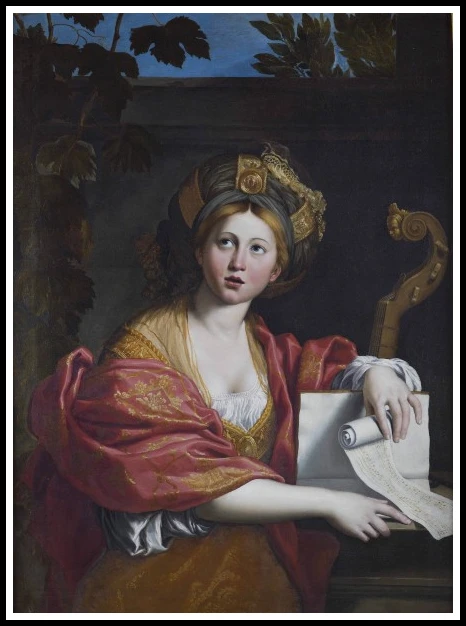
Domenichino, Sibyl, 1617
Between the High Renaissance and the great painters of the seventeenth century there emerged one considerable artist who was, in fact, the last and greatest of the Mannerists, El Greco. He was much concerned with feminine beauty; and in his representations of the Virgin and Child in the Museum of San Vincente in Toledo he creates a type of beauty—a long face, with large eyes, tapering to a tiny chin—which is entirely his own.
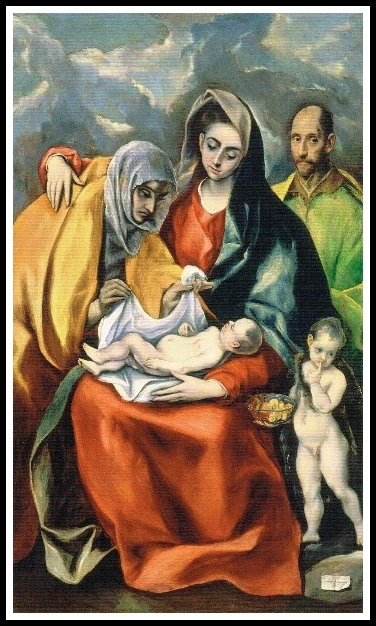
El Greco, Holy Family with Saint Anne, 1587
El Greco also painted one of the most convincing of all portraits of a beautiful woman, that in the Stirling Maxwell collection. But Greco is an isolated figure. No one was aware of his ideal of beauty till late in the nineteenth century. Instead they turned for inspiration to four great artists, who represented the taste of the time—Rubens, Bernini, Rembrandt and Velazquez—who looked at women with new eyes.
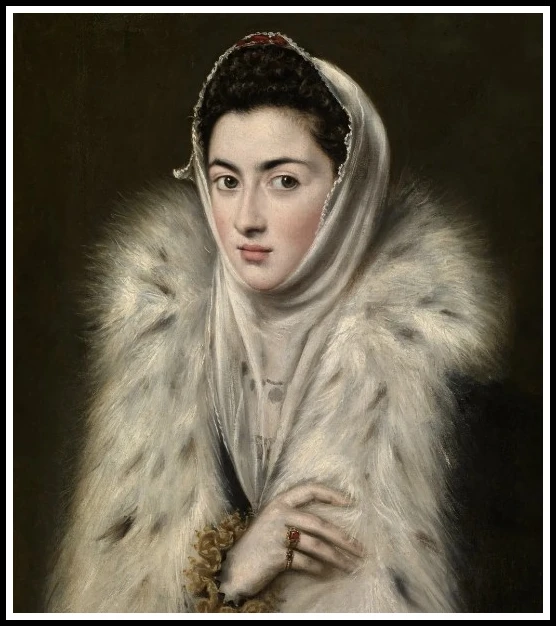
Alonso Sánchez Coello (formerly attributed to El Greco), Lady in a Fur Wrap, 1578
Rubens, the oldest of the group by almost twenty years, is the one whose discovery, or creation, of an ideal feminine beauty is most generally remembered, although not always in adequate terms. To the philistine he is simply the painter of fat women, and is thought of as rather a joke. It is true that in his mature work he rejected the convention of classical nudity which had spread from Rome all over Europe, and gave his women the carefree plumpness which, as we know from his two wives, was his own ideal of beauty. But this was always subordinate to a sense of style and a feeling of decorum. In all the vast accumulation of naked women in Rubens’s pictures there is not one who could be described as indecent. His devotion to feminine beauty led him to invent subjects in which groups of women could be assembled for our delight—The Garden of Love in the Prado is one example.
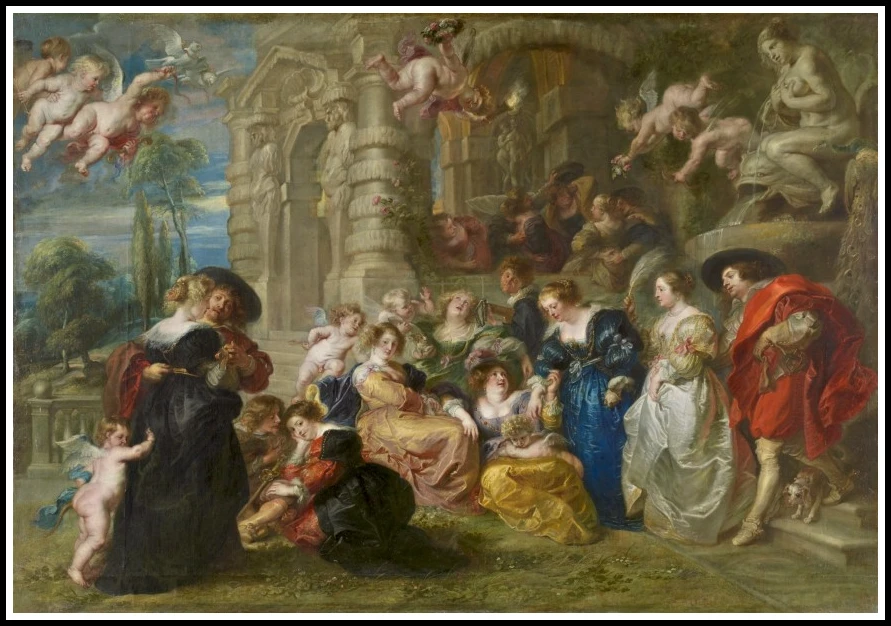
Peter Paul Rubens, The Garden Love, 1635
The Rape of the Sabine Women in the National Gallery (London) is another.
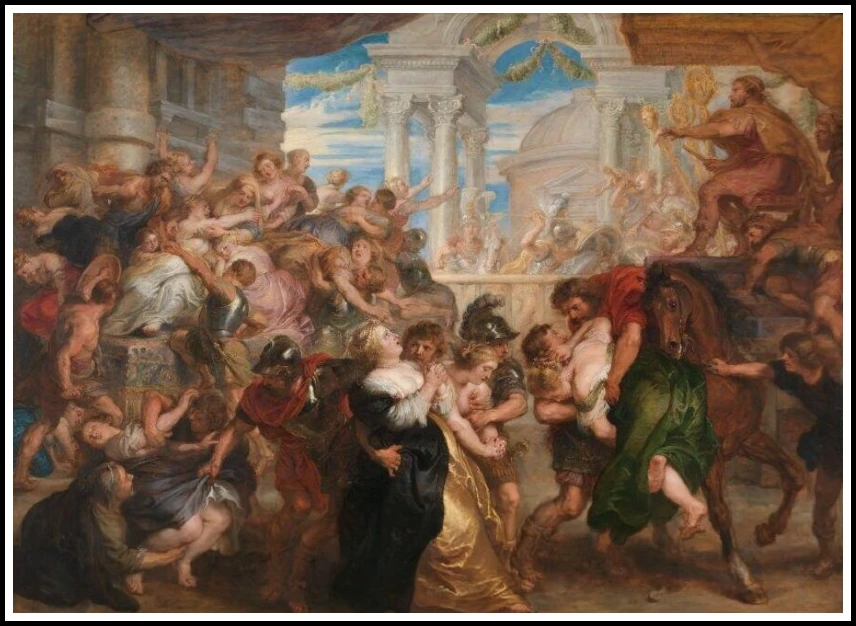
Peter Paul Rubens, The Rape of the Sabine Women, 1637
And of course Rubens did many single figures of women in which fleshly beauty controlled by art is the whole theme. The Andromeda in Berlin is a shining example, eclipsing by its brilliance every picture that surrounds it.
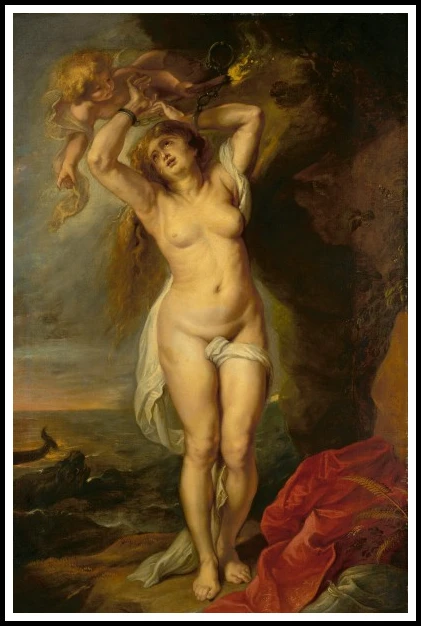
Peter Paul Rubens, Andromeda, 1645
Yet we must not make the common error of implying that Rubens represented women solely as objects of sensual delight. Such masterpieces as the Ildefonso Triptych contain figures of women as beautiful as any in his pagan fantasies, but devoted and adoring.
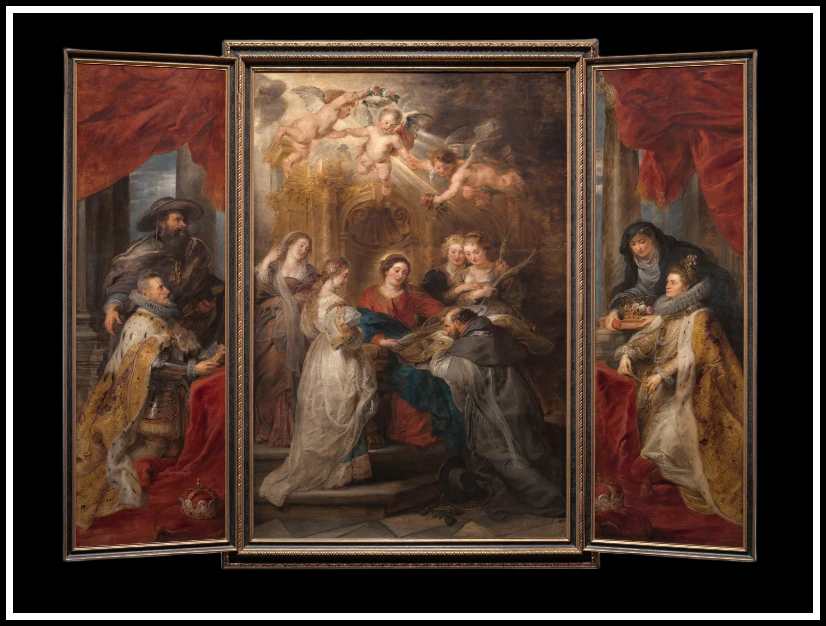
Peter Paul Rubens, Ildefonso Triptych, 1632
The female figures on Bernini’s tombs are of the same family as those of Rubens, seeming to be less fleshy simply because they are rendered in marble rather than in paint. They are a joy to the eye. But the finest of his sculptured women goes a little further: The Blessed Ludovica Albertoni, whom he has shown swooning in the ecstatic happiness of martyrdom. She is the descendant of Correggio’s St Flavia, and is equally the work of a sincere believer, which no amount of repetition (and the pose was repeated ad infinitum) can cheapen.
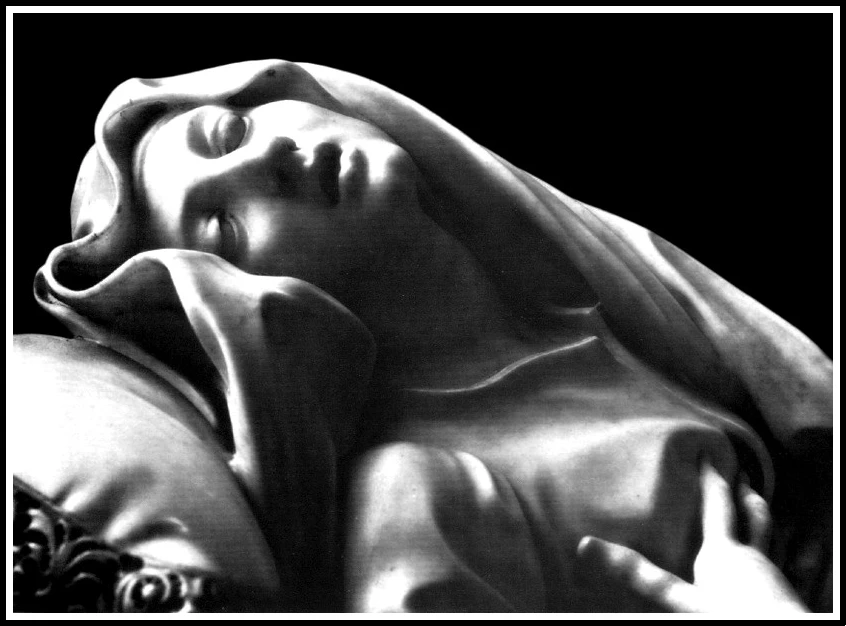
Bernini, The Blessed Ludovica Albertoni, 1674 (detail)
Rembrandt’s response to feminine beauty is a far more complex question. For one thing he was never seriously influenced by the Italian ideal; and for another his own individual taste affected him so strongly that his ideals of feminine beauty simply took the form of the women he loved. We might consider the gap-toothed Saskia as she is usually depicted by her husband—a plain and somewhat commonplace young woman—and Hendrickje’s adorable appearance cannot be called beautiful in the conventional sense.
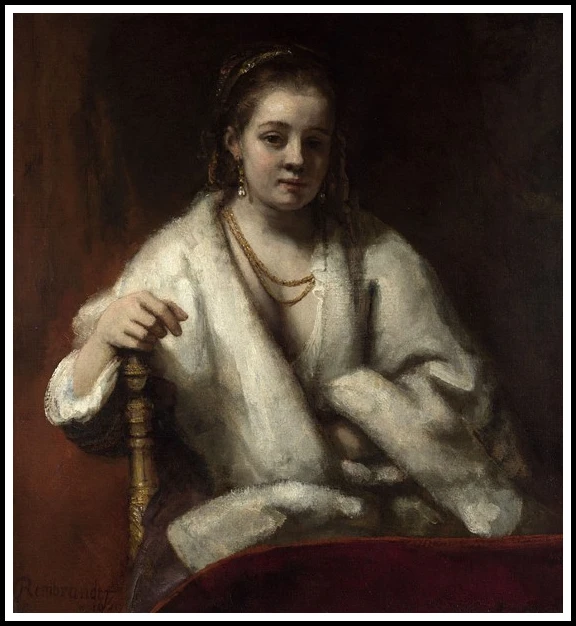
Rembrandt, Hendrickje Stoffels, 1655
The closest Rembrandt came to a statement of his ideal was the Danae in the Hermitage, where he certainly wished to make the figure as beautiful as he could. But his love of truth got the better of him. She is sensuous and desirable, but beautiful is not the word that comes to one’s mind.
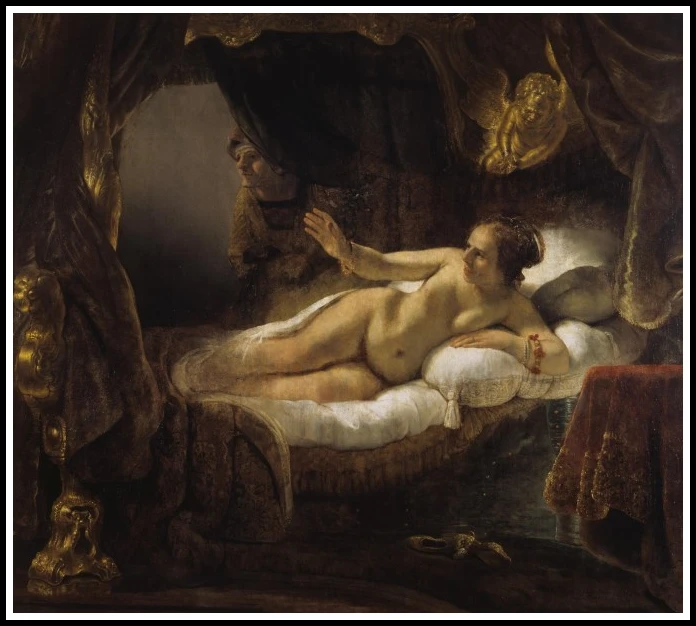
Rembrandt, Danae, 1636
And yet when Rembrandt depicts the emotion shining through Bathsheba’s face as she ponders over King David’s letter he achieves a kind of beauty which is dependent on inner life and not on physical form.
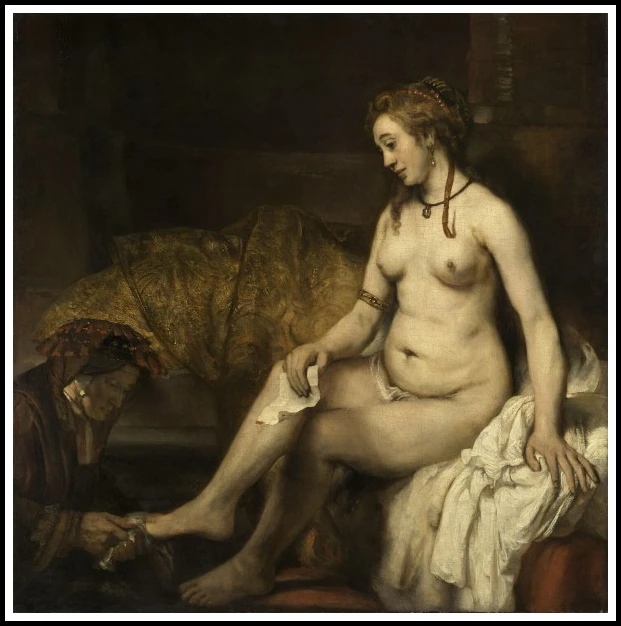
Rembrandt, Bathsheba, 1654
In his last years he painted two women who are beautiful by any standards, both of them representing Lucretia in the act of taking her life; indeed the 1664 Lucretia is one of the most appealingly beautiful women in art. What led him to treat this subject with such intensity? The Rembrandt mystery deepens at every step.
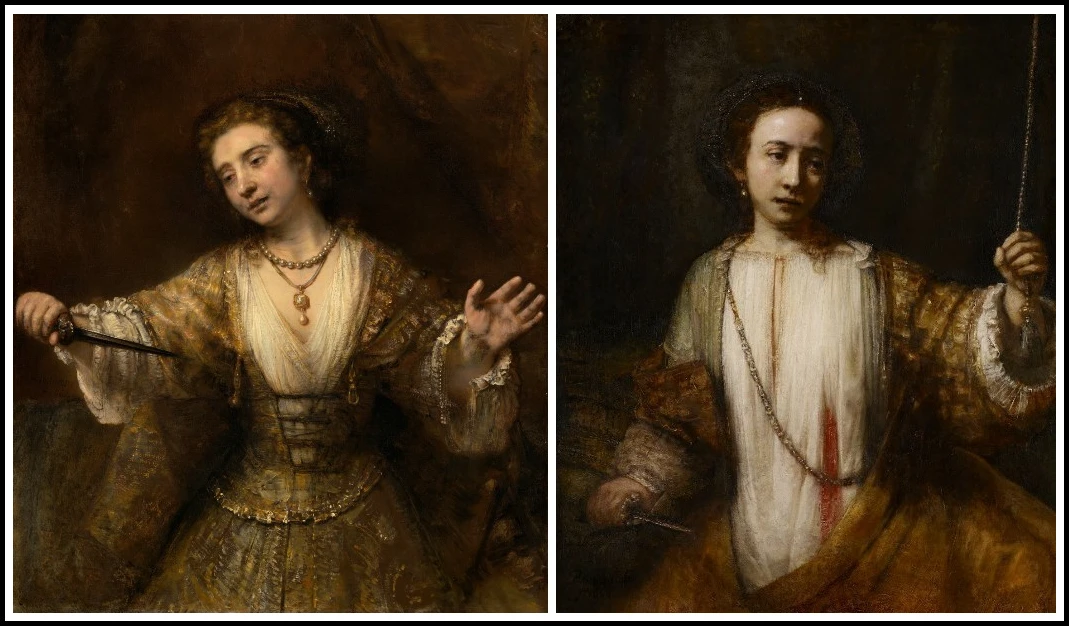
REMBRANDT
Lucretia, 1664 | Lucretia, 1666
The missing piece in our survey of feminine beauty is Velazquez. We know that he painted a number of nudes to please his master, but only one of them has survived, the so-called Rokeby Venus. It is a work of extraordinary detachment. The model and the pose would normally have inspired feelings of physical desire, but the Rokeby Venus arouses no emotions except an admiration for the skill and truthfulness with which it is painted. Can Velazquez have maintained the same detachment in all his nudes? Probably he did, for none of them suggest the kind of engagement that feminine beauty normally inspires.
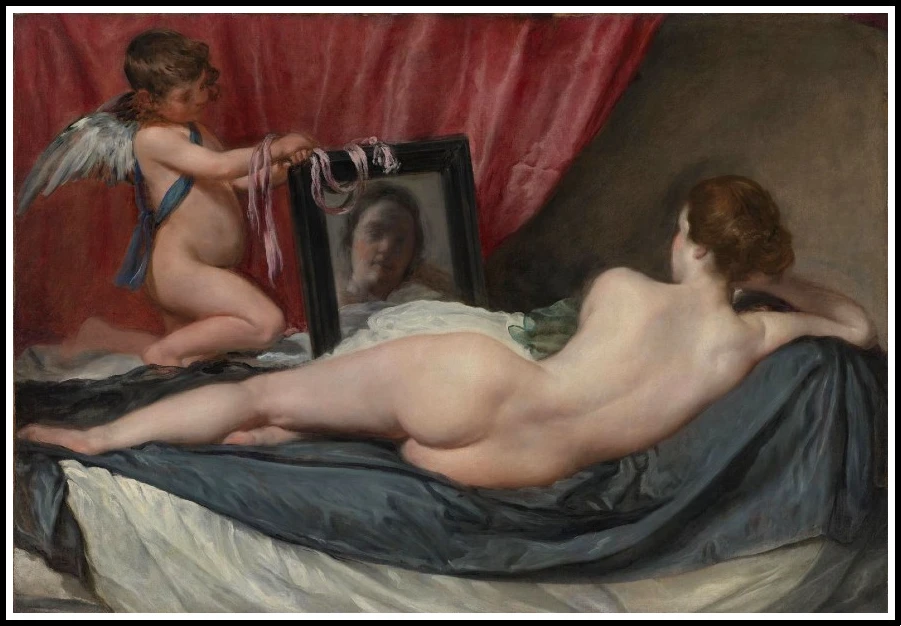
Velazquez, The Toilet of Venus (‘The Rokeby Venus’), 1649
But he was engaged by the sweet and serious expression of the unknown woman in The Lady with a Fan, and has made her one of the most real and lovable women of the seventeenth century.
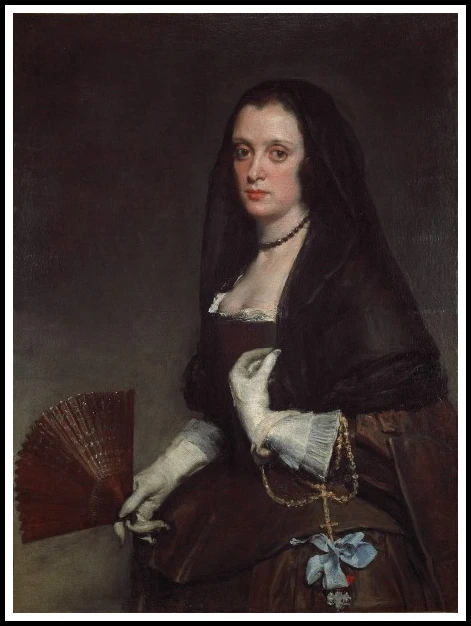
Velazquez, The Lady with a Fan, 1640
The range of feminine beauty in the early seventeenth century is shown by the fact that almost contemporary with Velazquez’s Rokeby Venus were Van Dyck’s ravishing portraits of Queen Henrietta Maria. They are celebrations of femininity, and no doubt are slightly idealized. Other portraits of Henrietta by Van Dyck show that he knew exactly what she looked like and how far he could go in enhancing her beauty. But the official portraits still give us the feeling of a real person, and we are grateful that he was available to the court when such an enchanting person was Queen.
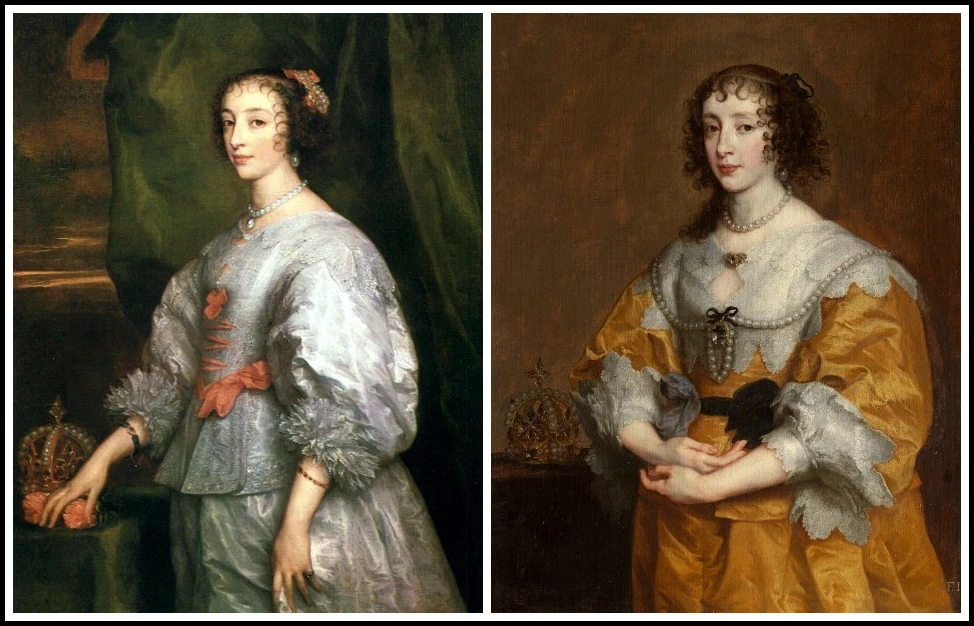
Anthony Van Dyke, Queen Henrietta Maria, 1632 & 1636
His successor, Sir Peter Lely, was a much less considerable artist, but he too produced a work of sensitive beauty in his portrait of an unknown lady.
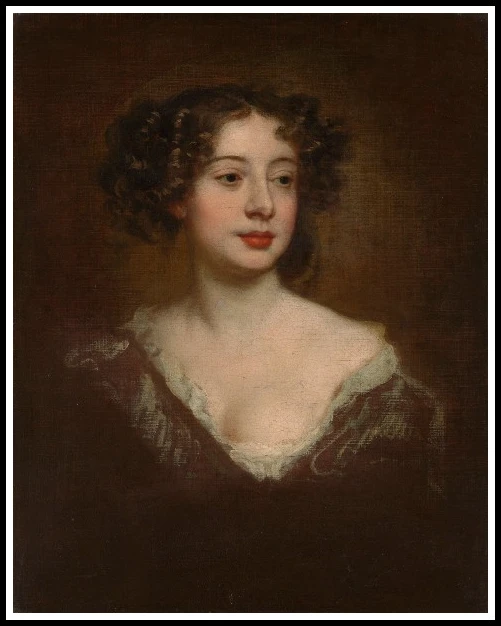
Peter Lely, Study for a Portrait of a Woman, 1675
Mythological subjects, which had been so often the setting for feminine beauty, had lost their hold on the pictorial imagination in the last decade of the seventeenth century. But there remained one glorious exception—Giambattista Tiepolo. He is the heir to all the glorious hedonism of the High Renaissance, and he seems, in some moods, to be an uninhibited follower of Paolo Veronese. He is also the last artist to paint on the heroic scale before the arrival of the mighty machine of Neo-Classicism.
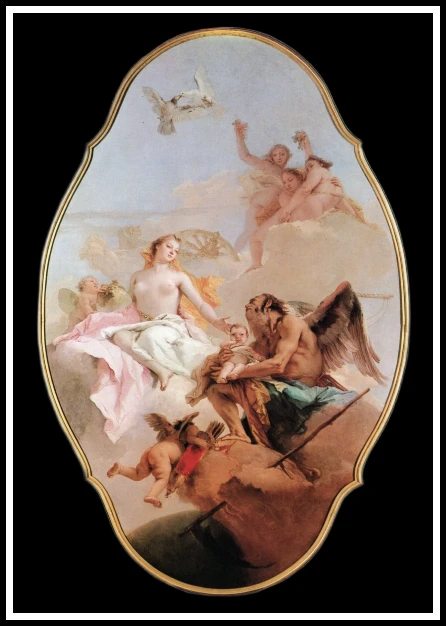
Giovanni Battista Tiepolo, Venus and Time, 1754
CONTINUED IN FEMININE BEAUTY IN WESTERN ART: A SURVEY – PART 4
MARA, MARIETTA: A LOVE STORY IN 77 BEDROOMS – READ THE FIRST CHAPTER
A literary novel by Richard Jonathan
RICHARD JONATHAN, ‘MARA, MARIETTA: A LOVE STORY IN 77 BEDROOMS’ — READ THE FIRST CHAPTER
AMAZON & APPLE BOOKS

RICHARD JONATHAN, ‘MARA, MARIETTA: A LOVE STORY IN 77 BEDROOMS’ | AMAZON PAPERBACK OR KINDLE

RICHARD JONATHAN, ‘MARA, MARIETTA: A LOVE STORY IN 77 BEDROOMS’ | APPLE iBOOK
MARA, MARIETTA: A LOVE STORY IN 77 BEDROOMS
A literary novel by Richard Jonathan

Available from AMAZON (paper | ebook) & iBOOKS, GOOGLE PLAY, KOBO & NOOK (see LINKS below)
RELATED POSTS IN THE MARA MARIETTA CULTURE BLOG
CLICK ON THE IMAGE TO GO TO THE POST


By Richard Jonathan | © Mara Marietta Culture Blog, 2026 | All rights reserved
Comments