Classical Beauty and Characteristic Beauty
FEMININE BEAUTY IN WESTERN ART: A SURVEY – PART 4
Kenneth Clark
From Kenneth Clark, Feminine Beauty (London: Book Club Associates / Weidenfeld & Nicholson, 1980) pp. 24-29
THIS IS PART 4 OF THE ESSAY. READ PART 1 FIRST.
For the greatest artist of the early eighteenth century was above all the master of a very small scale, who treated feminine beauty with a preciosity that seems perfectly to express its value, and who would seem to be at the very centre of our concept : this was Antoine Watteau. He extended our feeling for feminine beauty from the whole figure to the slightest movements—the gesture of a gloved hand or a glance of acquiescence. He used these movements to create a flow of delicate relationships which make our concept of feminine beauty more varied and more complete. His women come very close to us. They are animated and responsive: we cannot look at them with detachment. The most enchanting are to be found in his drawings, in which he seems to be telling us about the innumerable possibilities of feminine beauty, discovered in a gesture or the turn of a head, which never reach the point of a worked out picture. Watteau’s beauties are rarely seen in isolation. They are usually part of a group of equally beautiful girls, celebrating, by their harmonious gaiety, their consciousness of youth. And yet, as critics have often observed, they are touched with melancholy, as if Watteau could never forget the transience of what he saw.
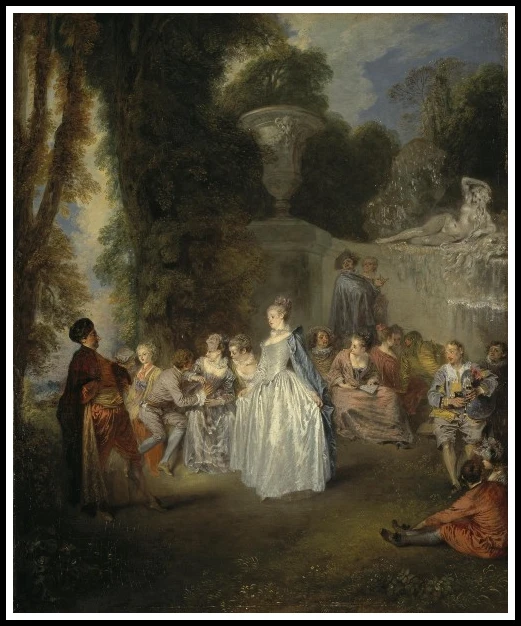
Jean-Antoine Watteau, Fêtes Vénitiennes, 1719
This is what separates him so decisively from his followers, Lancret and Pater, and indeed from other eighteenth-century painters such as François Boucher…
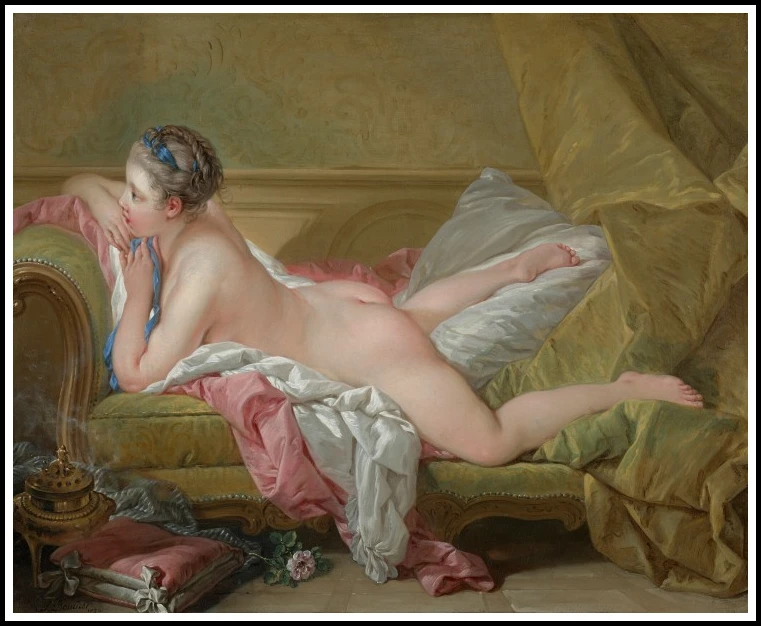
François Boucher, Mademoiselle O’Murphy (‘Resting Girl’), 1752
…Fragonard and Greuze, whose preoccupation with feminine beauty was as great as his, but was limited to an enjoyment of its form and its influence on the senses.
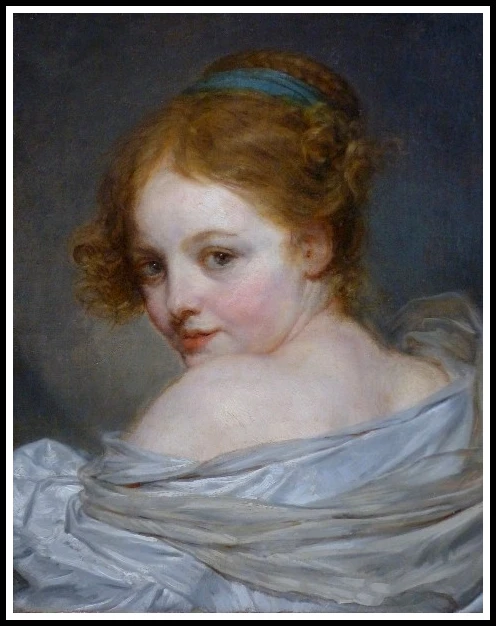
Jean-Baptiste Greuze (1725-1805), Portrait de jeune fille vue de dos
No account of feminine beauty can omit Goya’s moving portrait of the Condesa de Chinchón. Instead of the formalized prettiness of the eighteenth century, she has a delicate and slightly disturbing humanity that we think of as belonging to our own time.
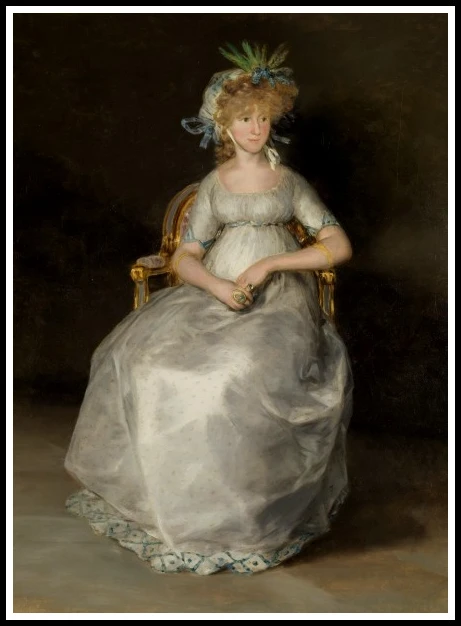
Goya, La Condesa de Chinchón, 1800
Goya has also left us in his Maja Desnuda one of the rare instances in which a great artist has recognised the sexual instinct; and yet she is painted so coolly that she awakens no feelings of desire.
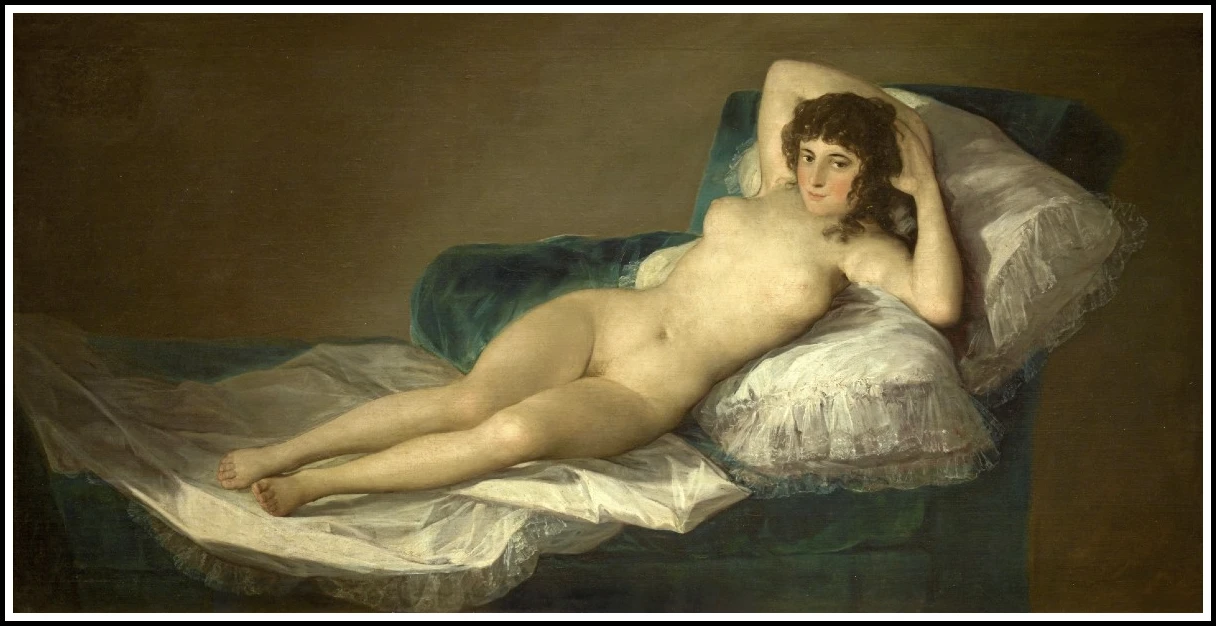
Goya, La maja desnuda, 1800
In eighteenth-century England feminine beauty took on a more social character. Gainsborough saw it very much as a visible sign of good breeding, one might almost say of good manners, and up to a point he was correct, for a face with all the obvious attributes of beauty, but which lacks entirely the graces of responsiveness, does not, after a first glance, strike us as beautiful. Moreover Gainsborough, being primarily a portrait painter (unlike Fragonard and Greuze), took his point of departure from a likeness, and was much dependent on the appearance of his favourite sitters, like Perdita Robinson. He did not even disguise her squint.
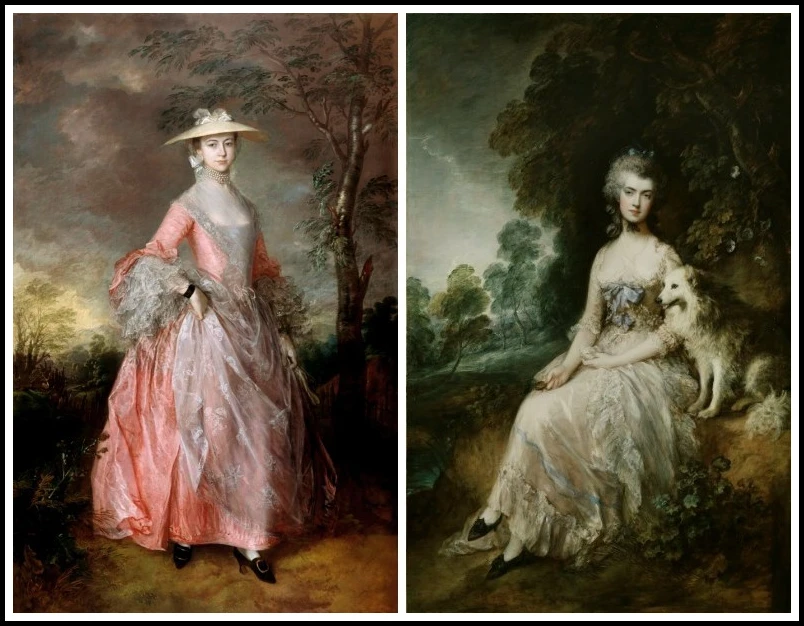
THOMAS GAINSBOROUGH
Mary, Countess Howe, 1764 | Mrs Mary Robinson (‘Perdita’), 1781
No painter was more dependent on a single sitter than George Romney, and we can hardly think of him without seeing in the mind’s eye the shadowy likeness of Lady Hamilton. It is arguable that this addiction did him no good as an artist: it certainly limited his considerable talent. But at his best he created an image of feminine beauty which has an almost universal appeal.
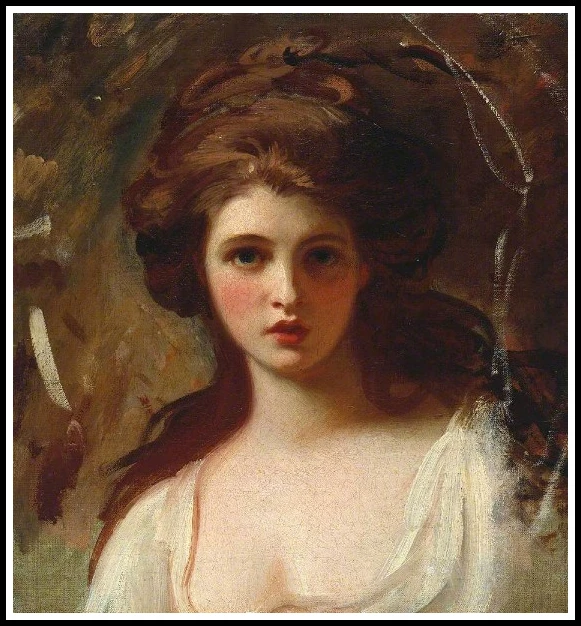
George Romney, Lady Hamilton as Circe, 1782
I have mentioned Boucher in the context of Watteau, but he must appear again, for his love of feminine beauty overflowed into many subjects. He was a master of genre, depicting his beauties playing with their children or choosing ribbon…
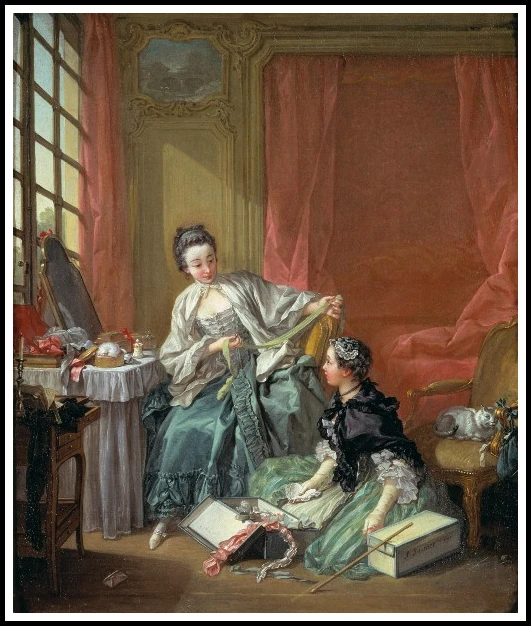
François Boucher, The Milliner, 1746
…and he made them the staffage of large fancy pieces like the Triumph of Venus in Stockholm, a banquet of feminine beauty which is almost too much for us to digest.
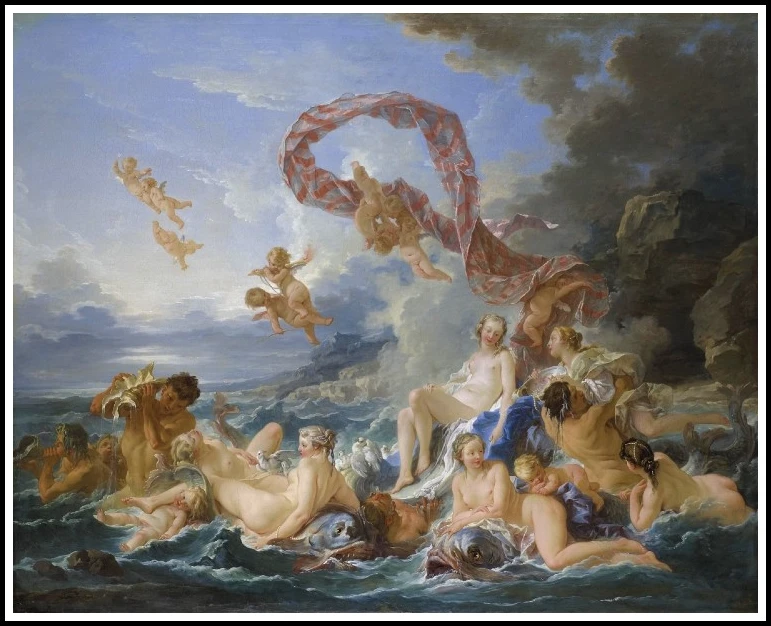
François Boucher, The Triumph of Venus, 1740
Boucher is a remarkably consistent artist, faithful to his style and his type. In contrast, his brilliant successor Fragonard passes from style to style, from type to type, with a delight which makes him the great wanton of art. But we cannot complain of his diversity because at almost every turn he discovers something enchanting, and in the end bridges the gap between the dix-huitième and Neo-Classicism.
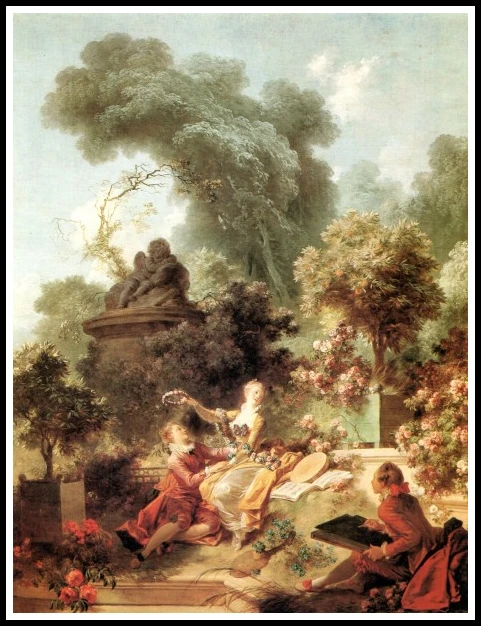
Fragonard, The Lover Crowned, 1772
In the fifty years that are covered by the term Neo-Classicism, say from 1770 to 1820, feminine beauty achieved a position in art greater than at any time since late antiquity. The cult was diffused from France and, in so far as any movement derives from an individual, was initiated by Jacques-Louis David. He thought of himself, quite justifiably, as the master of serious themes, but even in his first considerable piece of historical painting, The Sabine Women, the central figure is a ravishing young woman who is using her beauty to separate the rival antagonists. The real subject of the picture is the triumph of feminine beauty.
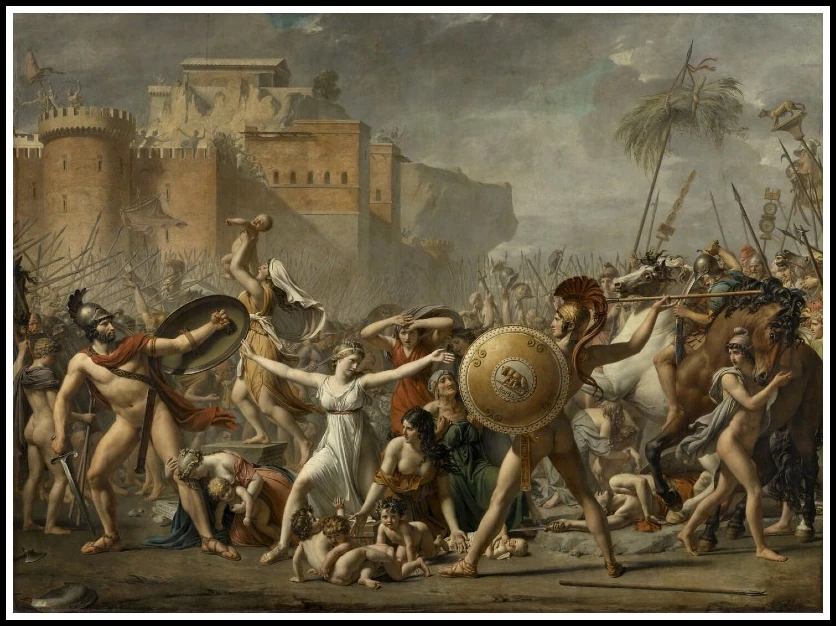
Jacques-Louis David, The Sabine Women, 1799
It is therefore appropriate that David is most frequently remembered as the painter of the leading beauty of the time, Madame Recamier. Whether or not the tradition is well founded that Ingres, as David’s pupil, worked on the picture, it is certainly the foundation of Ingres’s style.
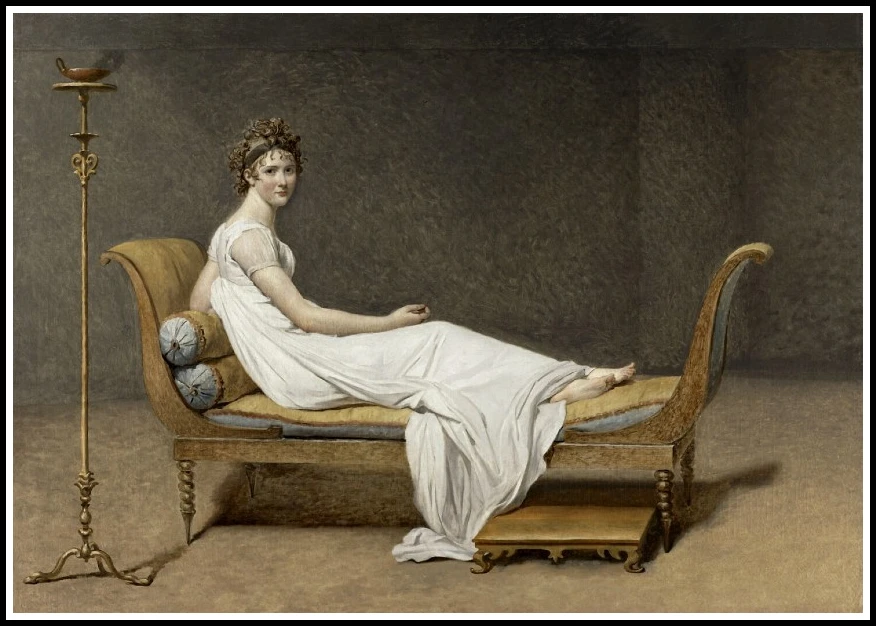
Jacques-Louis David, Portrait of Juliette Récamier, 1800
In any survey of feminine beauty Ingres must take a central place. When he was in Rome, from about 1806 to 1812, he was inspired, and in almost every instance women were the source of his inspiration. Some of his greatest images of femininity—for example La Grande Odalisque…
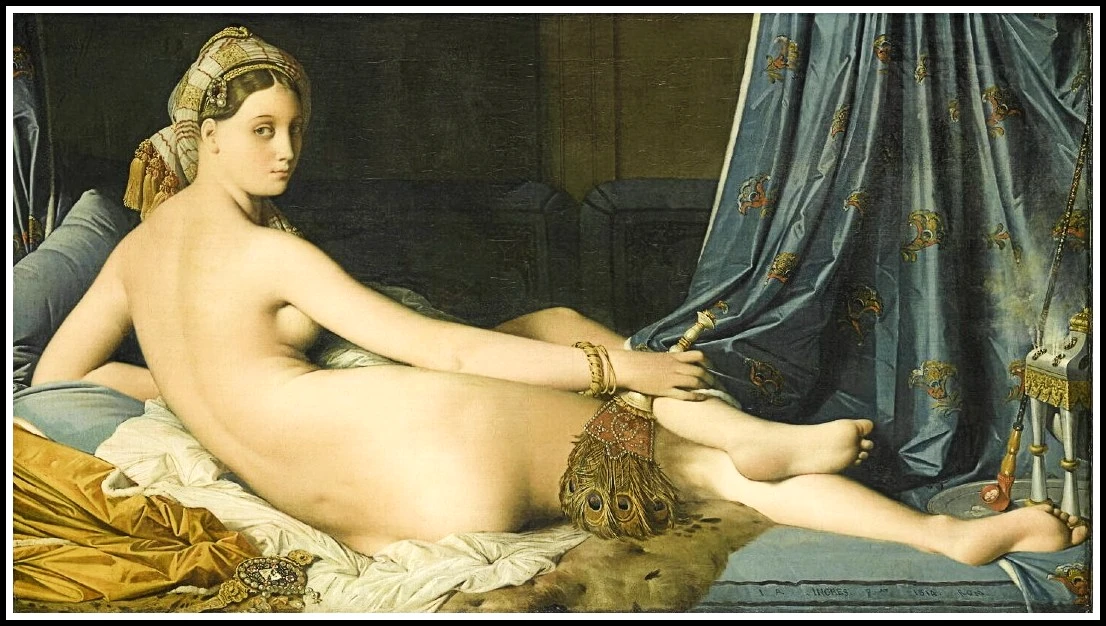
Ingres, La Grande Odalisque, 1814
…and La Source—were realized as paintings much later, but we know from drawings that the ideas came to him in his Roman years.
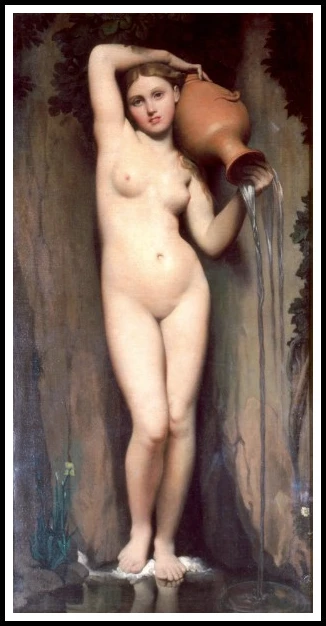
Ingres, La Source, 1856
They remained at the back of his mind for the fifty years after he had returned to France, and those to which he had not been able to give an independent existence were united in that fantastic work Le Bain Turc, which he brought to its final form at the age of eighty-three. It is the most densely populated tribute to the obsessive power of feminine beauty in the whole of art.
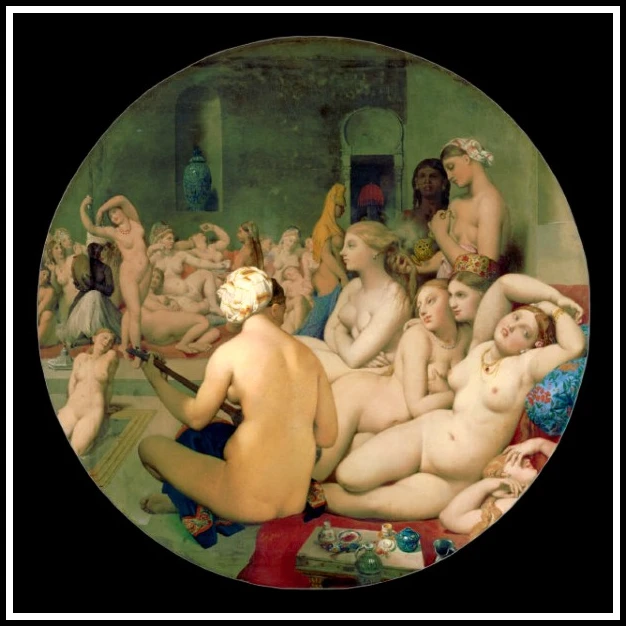
Ingres, Le bain turc, 1856
Ingres’s admiration of the female form was not confined to these compositions. It was realized in a series of portraits of which the most enchanting is Madame Devauçay…
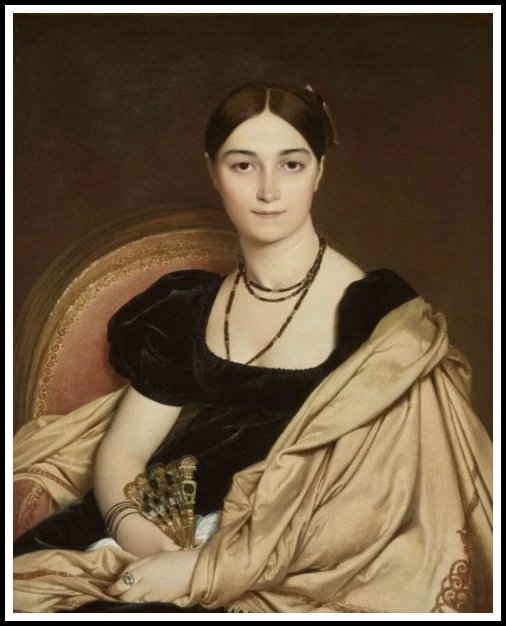
Ingres, Portrait de Madame Devaucey, 1807
…and the most masterly Comtesse d’Haussonville. Monsieur Ingres used to say that, compared to Raphael, he was ‘so high’, bending down till he nearly touched the floor. In front of these two marvellous portraits we may feel that his humble posture was exaggerated.
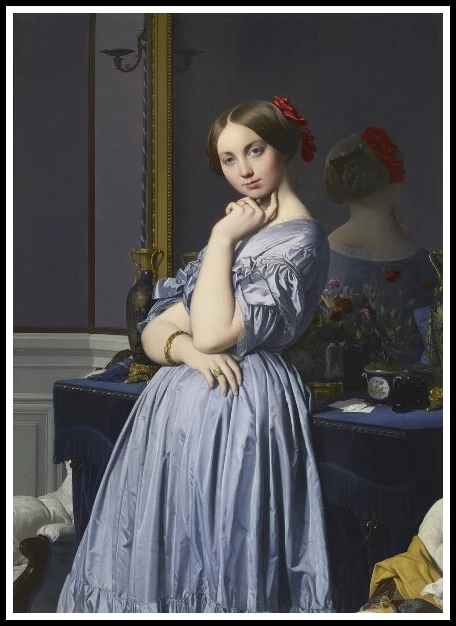
Ingres, Portrait of the Comtesse d’Haussonville, 1845
The Neo-Classical style was the ideal medium for the realization of feminine beauty. Let me give two examples, Prud’hon’s Josephine…
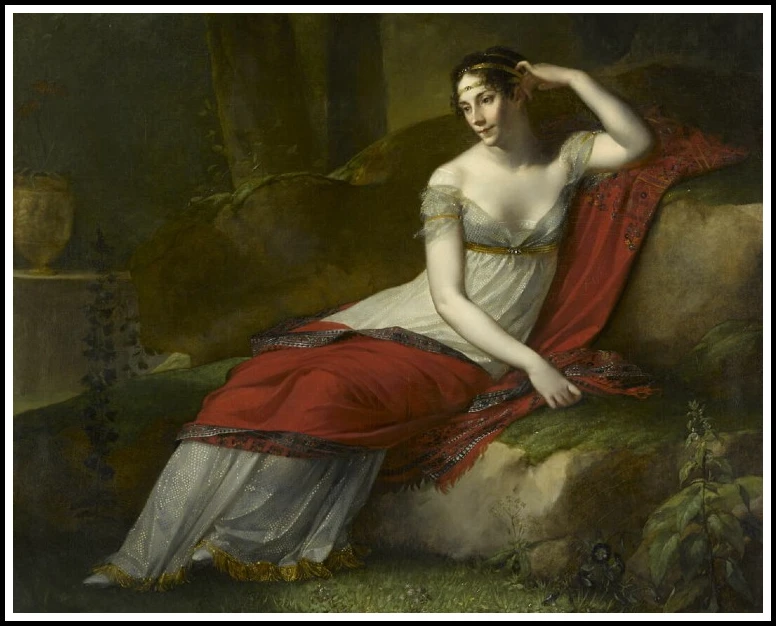
Pierre-Paul Prud’hon, The Empress Joséphine, 1805 (detail)
…and Canova’s Paolina Borghese. They have a grace and humanity that appeals to our own time more than the self-conscious charm of the dix-huitième. We notice that post-revolutionary freedom has been extended to dress. The body is no longer hidden by frills or controlled by corsets, but is displayed in its natural lineaments with pride. That the Emperor’s sister should be represented by Canova wearing nothing more than a cast of drapery over her legs was in fact the subject of scandalized comment when the sculpture was first exhibited, but the unquestioned supremacy of the classical convention silenced all criticism.
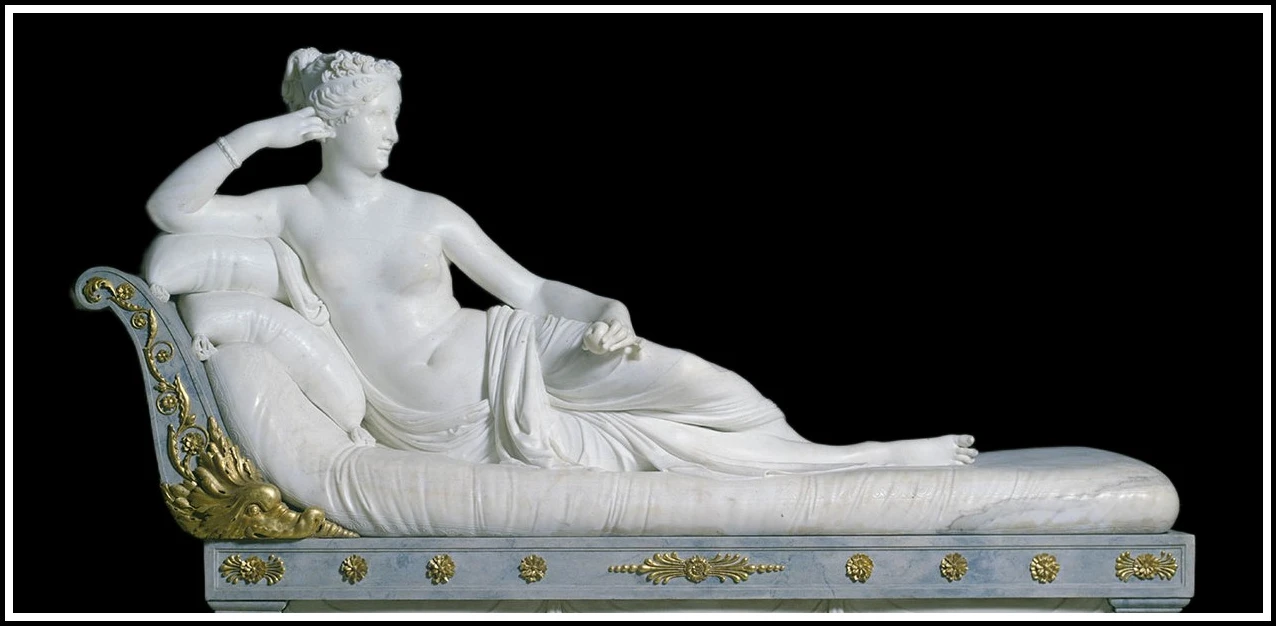
Antonio Canova, Paolina Borghese Bonaparte as Venus Victrix, 1810
Inevitably there was a widespread reaction, made elaborately clear in Winterhalter’s sumptuous picture The Empress Eugenie Accompanied by her Ladies-in-Waiting.
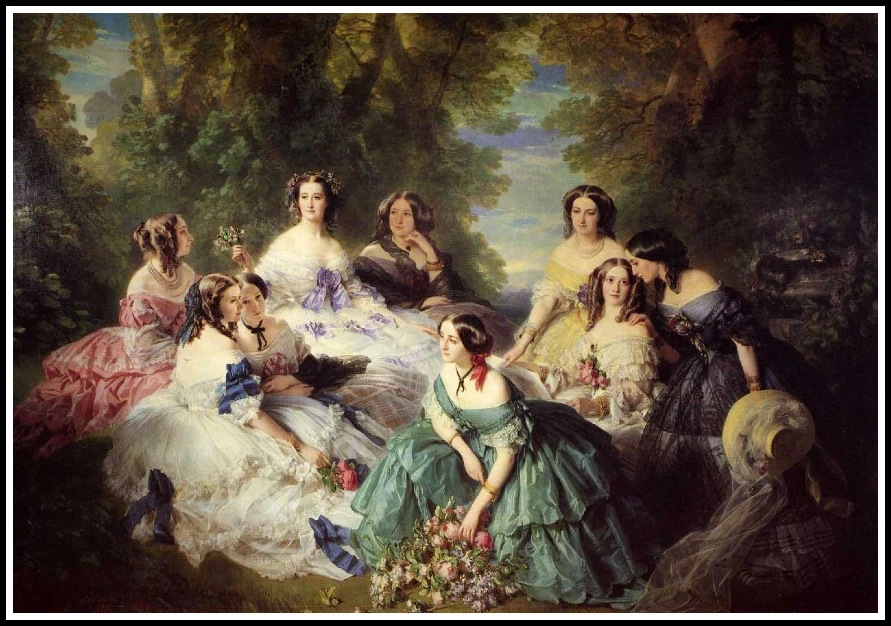
Franz Xavier Wnterhalter, The Empress Eugenie Accompanied by her Ladies-in-Waiting, 1855
In the early nineteenth century the nude was felt to have some hierarchic quality. The nudes of Ingres are thought of as goddesses, and one of the worshipful images of the time is Chassériau’s Esther.
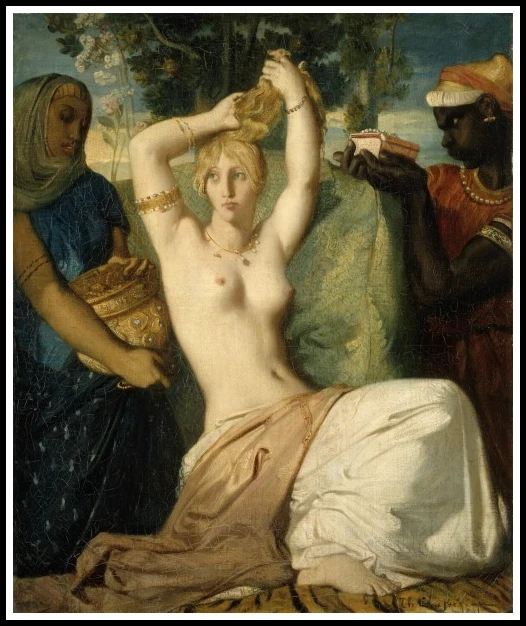
Théodore Chassériau, Esther Braiding her Hair, 1841
CONTINUED IN FEMININE BEAUTY IN WESTERN ART: A SURVEY – PART 5
MARA, MARIETTA: A LOVE STORY IN 77 BEDROOMS – READ THE FIRST CHAPTER
A literary novel by Richard Jonathan
RICHARD JONATHAN, ‘MARA, MARIETTA: A LOVE STORY IN 77 BEDROOMS’ — READ THE FIRST CHAPTER
AMAZON & APPLE BOOKS

RICHARD JONATHAN, ‘MARA, MARIETTA: A LOVE STORY IN 77 BEDROOMS’ | AMAZON PAPERBACK OR KINDLE

RICHARD JONATHAN, ‘MARA, MARIETTA: A LOVE STORY IN 77 BEDROOMS’ | APPLE iBOOK
MARA, MARIETTA: A LOVE STORY IN 77 BEDROOMS
A literary novel by Richard Jonathan

Available from AMAZON (paper | ebook) & iBOOKS, GOOGLE PLAY, KOBO & NOOK (see LINKS below)
RELATED POSTS IN THE MARA MARIETTA CULTURE BLOG
CLICK ON THE IMAGE TO GO TO THE POST


By Richard Jonathan | © Mara Marietta Culture Blog, 2026 | All rights reserved
Comments