EMILY BRONTË
‘Wuthering Heights’ as a Lesbian Text
EMILY BRONTË AND LESBIANISM
Jean Kennard
Abridged from Jean Kennard, Lesbianism and the Censoring of ‘Wuthering Heights’, NWSA Journal Vol. 8, No. 2 (Summer, 1996), pp. 17-36.
Jean Kennard (1937-2016) was Professor Emerita of English, University of New Hampshire.
My reading of Wuthering Heights as a lesbian text is an argument based on probability. I interpret the doubling of Heathcliff and Catherine Earnshaw as a projection of Emily Brontë’s ambivalence about her sexual inversion and the narrative patterns of sameness and difference in the novel as a conflict between homo- and heterosexuality. My reading takes its point of departure from the well-established view that Catherine Earnshaw and Heathcliff are doubles, a split character. Androgyny, which is stated or implied in most discussions of Heathcliff and Catherine as one character, does not eliminate difference but rather combines or balances opposites. It remains, then, firmly within the heterosexual paradigm. Catherine and Heathcliff may be two halves of one person, but they are not an androgynous whole. Identity and complementarity are not synonymous. Rather than representing a balance, a complement to Heathcliff’s masculinity, Catherine asserts her identity as Heathcliff. Catherine disrupts the heterosexual, in Lacanian terms, by refusing to ‘be’ the phallus and claiming to ‘have’ the phallus. ‘I am Heathcliff’, she says.
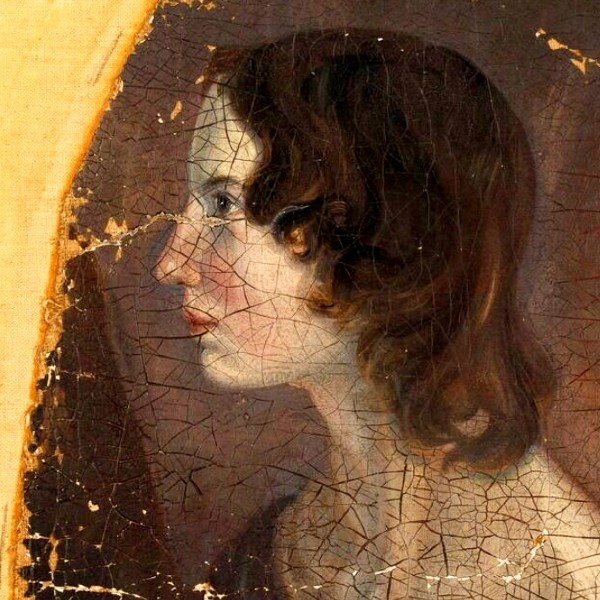
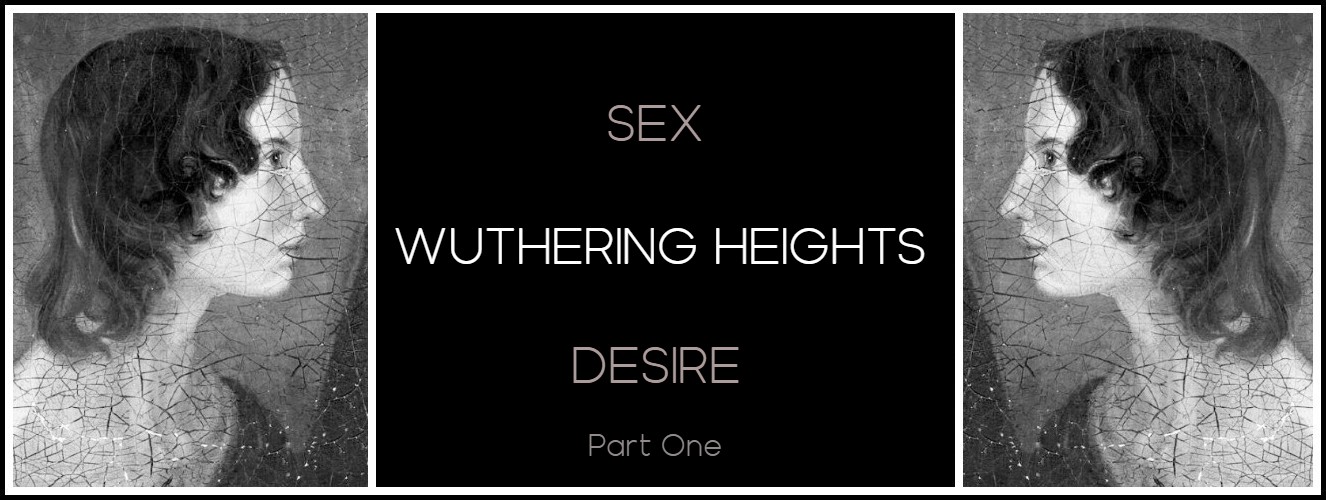
Branwell Brontë, The ‘Profile Portrait’ of Emily, 1835
It would clearly be possible to argue that Wuthering Heights is a lesbian text simply by discussing the characters, reading Catherine Earnshaw as the Emily Brontë figure who encodes her sexual inversion in Heathcliff. Heathcliff, unacceptable, alien in race and social standing, emotionally powerful, an inseparable part of herself, is an appropriate embodiment of Brontë’s sexual identity. When Catherine and Heathcliff are separated, the violence that ensues suggests the intense pain of losing a part of oneself. The violence Heathcliff demonstrates after his return is the power of emotion denied, of taboo violated, of ‘the welling up of the forbidden’.
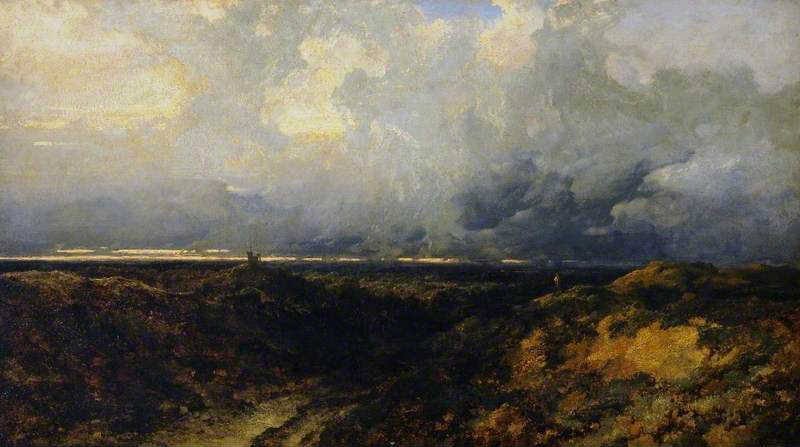
Edmund John Niemann (1813–1876), A Storm on the Moors
But the doubling that is Catherine-Heathcliff is echoed throughout the novel in other forms of repetition and merging. One of the frequently identified patterns of Wuthering Heights is the movement toward sameness and the obliteration of difference. Furthermore, it is sameness in difference that evokes passion in the novel, reflecting homosexual rather than heterosexual intensity. Wuthering Heights both expresses and contains Brontë’s ambivalence about her sexual identity through the interactions of Catherine Earnshaw and Heathcliff. The novel is a violent battle between sameness and difference at all levels, in the relationship between the characters, in the descriptions of place, particularly those involving the natural and the supernatural worlds, in the plot structure itself. As sameness and difference collide, barriers are often forcibly shattered, suggesting a parallel battle between freedom-escape and imprisonment. Imprisonment in turn is related to the implications of containment, which, like the closet, constitutes both comfortable hiding place and suffocating limitation.
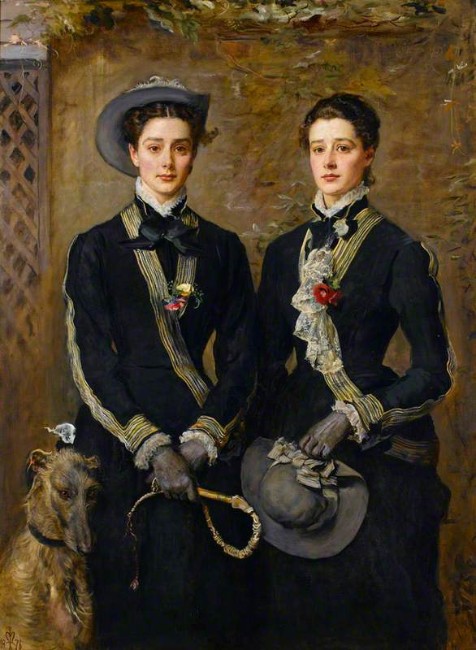
John Everett Millais, The Twins, Kate and Grace Hoare, 1876
Heathcliff is in one sense a gift to Catherine, a substitute for the whip she had asked her father to bring her from Liverpool. He lost the whip in adopting Heathcliff, who thus takes its place. The whip is a symbol not so much of ‘a powerless young daughter’s yearning for power’ as of the sexual inversion that is later projected into Heathcliff. Nelly says Catherine ‘could ride any horse in the stable, and she chose a whip’. Doubles abound in this section: Heathcliff is given the same name as a son who had died; he takes the remaining son Hindley’s place twice, once when he is the preferred child of Mr. Earnshaw and again when he takes Hindley’s pony. He will do so again later of course, when he wins Wuthering Heights from him.
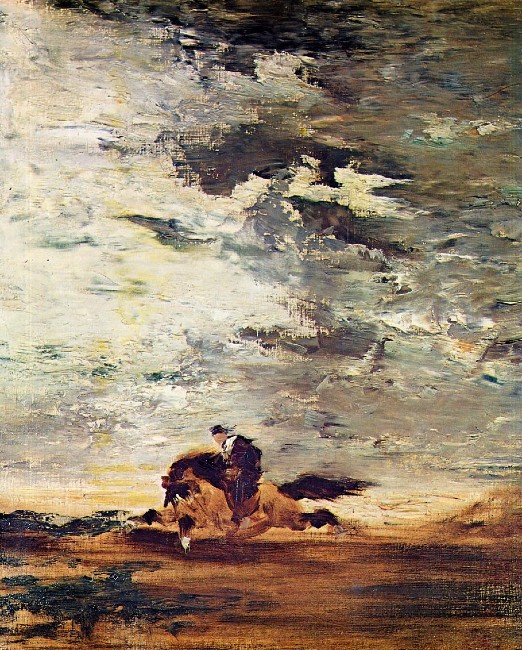
Gustave Moreau, Scottish Horseman, 1854
Sameness is challenged by difference, however, when the Lintons enter the children’s lives. Edgar Linton, who is to provide Catherine’s introduction to acceptable heterosexual love, is from the beginning associated with separation and difference. Heathcliff and Catherine watch the young Lintons quarrel in the living room of Thrushcross Grange through the barrier of a window, a window Heathcliff imagines shattering. Here Catherine is bitten by a dog in a scene replete with sexual imagery. Catherine stays several weeks at Thrushcross Grange, where she is transformed into a typical young lady. This is the beginning of Catherine’s denial of Heathcliff, of Emily Brontë’s attempt to deny her sexual identity. When Catherine returns to the Heights, Heathcliff sees ‘a bright, graceful damsel enter the house, instead of the rough-headed counterpart of himself, as he had expected’. Difference appears to have prevailed over sameness, cultural conformity over rebellion, heterosexuality over homosexuality. Heathcliff sickens in proportion to Catherine’s growing friendship with Edgar Linton and their separation is marked by increasing violence. Heathcliff hurls a tureen of hot applesauce at Edgar; Catherine strikes both Nelly and Edgar; Hindley drops his son over the banister.
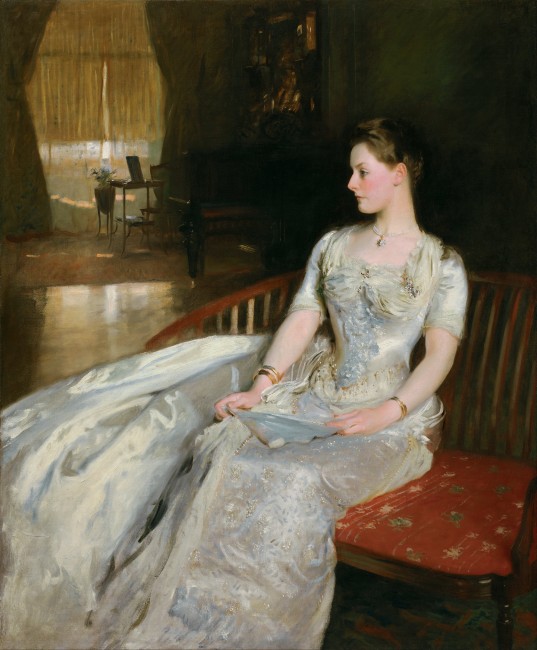
John Singer Sargent, Mrs. Cecil Wade, 1886
Catherine’s move toward difference and heterosexual love, however, serves only to bring about the strongest expression of her bond with Heathcliff and her need for sameness. ‘Catherine and he were constant companions still’, Nelly Dean says, and ‘Heathcliff kept his hold on her affections unalterably’. When Catherine tells Nelly of her intention to marry Edgar, she adds, ‘in my soul, and in my heart, I’m convinced I’m wrong!’. It is her identification with Heathcliff that is troubling her here. What she stresses is her similarity to Heathcliff; she is his double not his complement. Heathcliff is ‘more myself than I am. Whatever our souls are made of, his and mine are the same, and Linton’s is as different as moonbeam from lightning, or frost from fire’. She talks of sharing Heathcliff’s miseries and claims that ‘if all else perished and he remained, I should continue to be; and if all else remained and he were annihilated, the Universe would turn to a mighty stranger. Nelly, I am Heathcliff’.
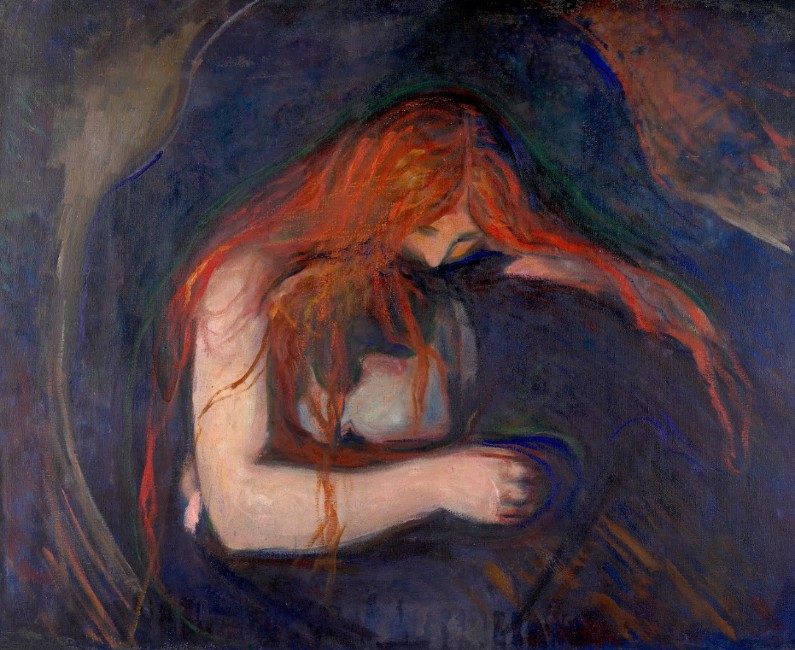
Edvard Munch, Vampire, 1895
The passion of this scene, which has always been the focus of critical interpretations of the Catherine-Heathcliff relationship, surely makes most sense if Heathcliff is seen as a part of Catherine, the homosexual other she is attempting to suppress rather than as the expression of an alternative heterosexual love. Indeed, Heathcliff haunts the scene, concealed for part of it behind the sofa. Having overheard only the beginning of Catherine’s words, Heathcliff runs away from the Heights that day, leaving the gate open. Heathcliff has literally placed himself outside, but invasion of all sorts follows as sameness attempts to reassert itself. The pony enters the cornfield; a violent storm brings down a tree that hits the house, ‘sending a clatter of stones and soot into the kitchen fire’.
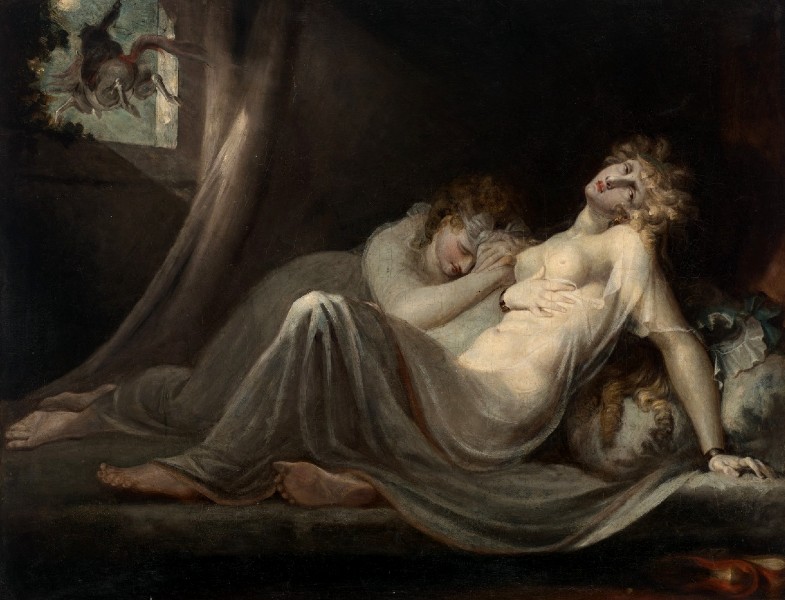
Henry Fuseli, The Incubus Leaving Two Young Women, 1793
The separation of Heathcliff from Catherine makes Catherine ill and banishes Heathcliff from the text. We have no information on his experiences after he has left the Heights. Once the Heathcliff part of her has gone, Catherine marries Edgar; but suppression of emotion is, of course, rarely successful, and Heathcliff returns more powerful than before, educated, wealthy, and set on revenge. The full flowering of the negative side of Brontë’s ambivalence is seen in Heathcliff’s treatment of his wife, Isabella. Heathcliff is at his most sadistic, his most monstrous, in this heterosexual relationship with Isabella. Brontë’s presentation of Heathcliff as monster reflects her effort to repudiate her sexual identity, an indication of the power of internalized homophobia.
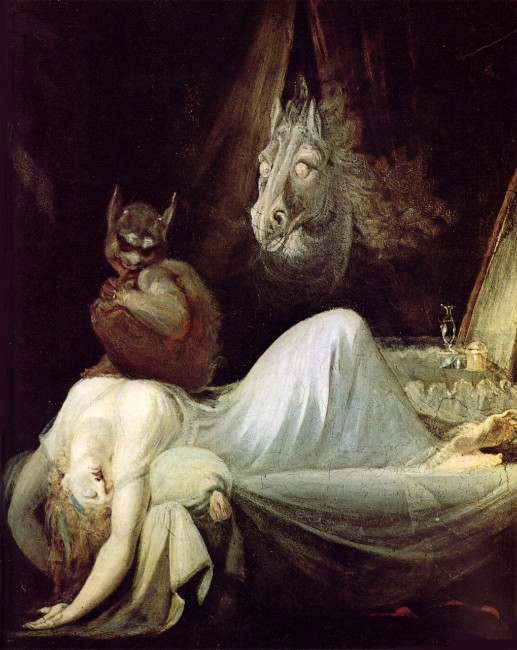
Henry Fuseli, The Nightmare, 1790-1791
When Edgar separates Catherine and Heathcliff again by refusing Heathcliff entrance to his house, Catherine shuts herself in her room. Here she dissolves the terms of the inside-outside binary; shutting herself inside, she places herself outside the heterosexual world represented by Edgar’s house. The scene that follows is the most powerful illustration of the battle within Catherine, a battle that once again is represented by a conflict between sameness and difference, freedom and imprisonment. Catherine’s attempt to suppress her need for Heathcliff is evidenced by the fact that she is responsible for her own containment. Without Heathcliff, however, she has lost all sense of self; she does not recognize herself in that opaque window, the mirror.
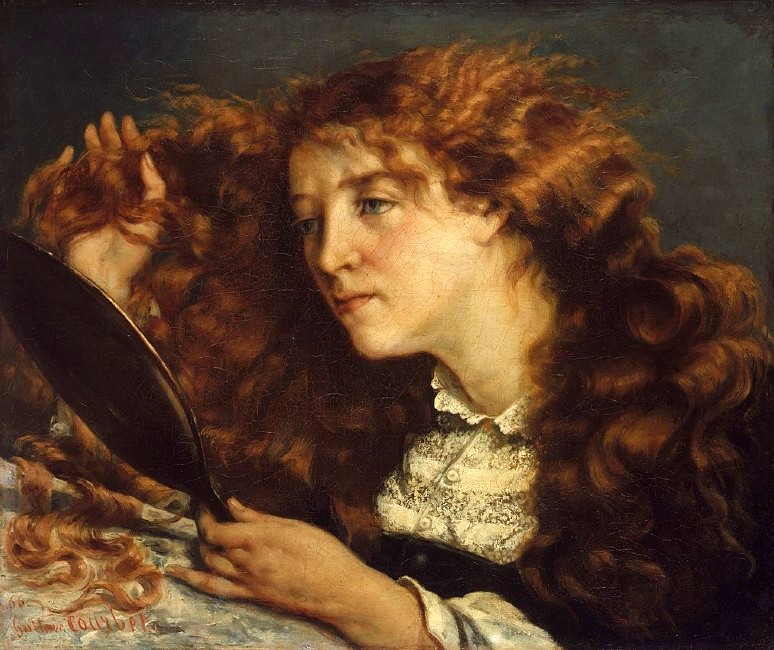
Gustave Courbet, La belle irlandaise, 1865
Her impulse is to escape: she talks of opening the window, and when it is opened, ‘a cold blast rushed through’. The open window, giving onto the outside, is her ‘chance of life’; ‘I’m sure I should be myself were I once among the heather on those hills’, she says. Catherine pulls feathers from a pillow, creating a snowstorm indoors and merging the inner and outer worlds: ‘The down is flying about like snow’, says Nelly. Similarly, Catherine merges Thrushcross Grange with Wuthering Heights through the image of the black press, which she imagines she sees though it is actually in her room at the Heights. Heathcliff threatens to ‘haunt the place, and every day, till I find an opportunity of entering’. When he does get in, Catherine attempts to escape her ‘shattered prison’ through a violent merging with Heathcliff. This time they are separated by Catherine’s death.
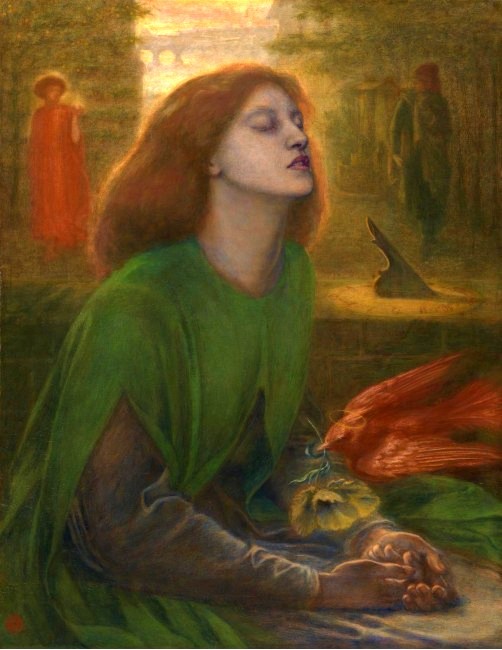
Dante Gabriel Rossetti, Beata Beatrix, c.1864–70
Catherine’s death, however, ends only the first part of Wuthering Heights. There remains the problem of the relationship of the second part of the novel to the first. I would argue that the tension between the anarchic passion of part 1 and the modifications of part 2 remains throughout and is never fully resolved, for even in part 2 apparent differences are constantly undercut by sameness. Brontë attempts once again in part 2 to censor her sexual inversion, but Heathcliff is even more dominant here and cannot in the end be contained. Despite Nelly Dean’s, Lockwood’s, and Emily Brontë’s attempts to close the novel, Wuthering Heights ends ambivalently. Hareton and the second Catherine are to be married and live at the Grange; social convention is appeased, the sameness that encodes homosexuality having been contained within acceptable boundaries. But Heathcliff and Catherine are still seen roaming the moors together, and though Nelly denies the existence of ghosts, Lockwood imagines them haunting the deserted Wuthering Heights.
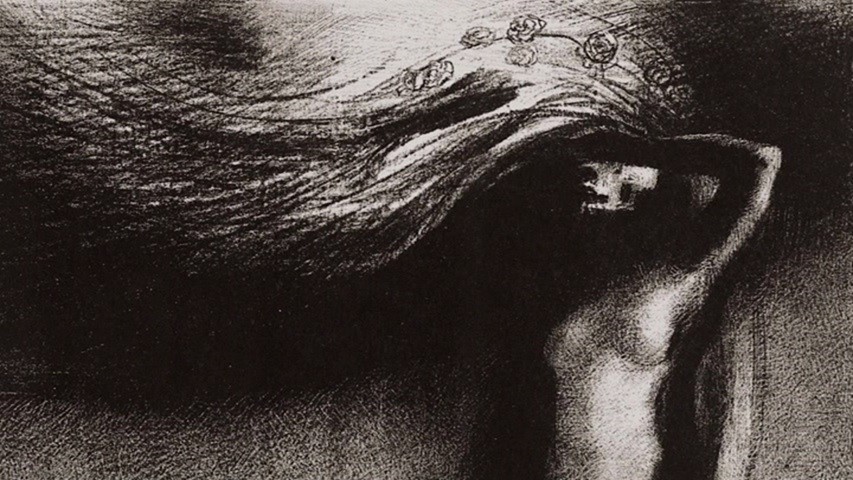
Odilon Redon
Read as an expression of Emily Brontë’s ambivalence about her sexual identity, Wuthering Heights is both a representation of homosexual energy and an attempt to contain or imprison it for fear of its social unacceptability and perhaps also of its sheer power. Brontë’s ambivalence becomes a dialectic between inside and outside, freedom and imprisonment, invasion-escape and containment. Barriers are everywhere but are constantly under attack, either from without or within, and are often in themselves of double significance, windows that both separate outside from inside and unite them, gates that both bar and provide entrance and exit. The dialectic represents Emily Brontë’s ambivalence about her sexual identity.
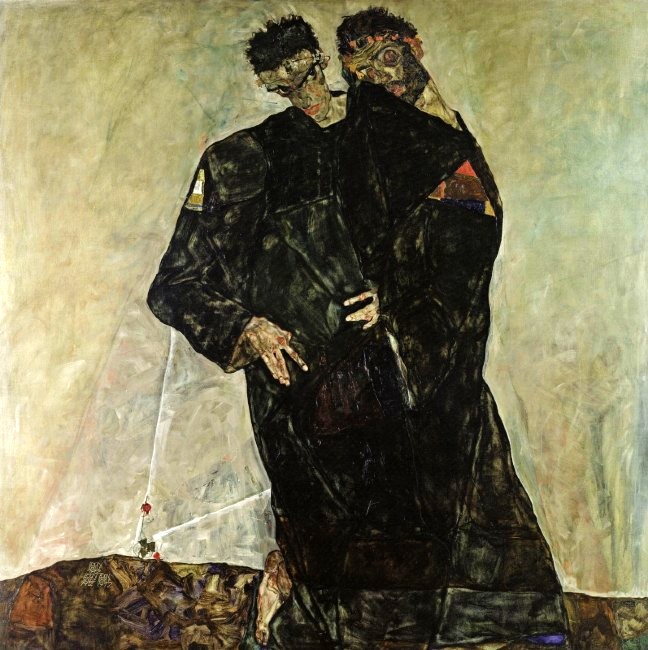
Egon Schiele, The Hermits, 1912
EMILY BRONTË IN ‘MARA, MARIETTA: A LOVE STORY IN 77 BEDROOMS’
The Lesbian Dimension of ‘Wuthering Heights’
FROM ‘MARA, MARIETTA’
Part Seven Chapter 5
I’d been thinking about Emily, about her ravaging love story, ever since Ingrid had told us she’d been commissioned to write the music for a dance version of Wuthering Heights that a Dutch troupe was developing.
̶ I can’t wait to hear what music she’ll come up with!
̶ Whatever it is, it’ll be powerful. She loves Wuthering Heights as much as I do.
A gust of wind rattles the brittle grass; softly, the soughing of the breeze resumes.
̶ Marietta, I am Emily.
̶ Like a million other readers!
̶ You think so?
̶ I’m sure of it.
̶ Yes, I suppose so. It’s amazing, isn’t it, how she bewitches us?
̶ It is. When I was seventeen I was quite in love with her. And that feeling has never really diminished. It’s very subtle, the sexual power she exerts, but no less strong for that.
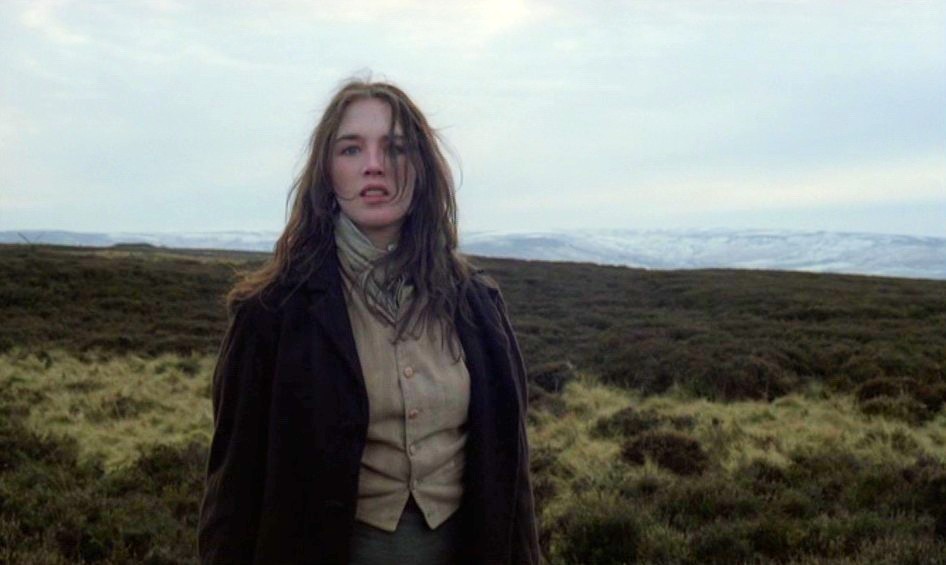
Isabelle Adjani as Emily Brontë, Les Sœurs Brontë, André Téchiné (1979)
̶ How do you explain it?
̶ The book doesn’t flatter the reader, it guards its secrets. And that, as every woman knows, is an aphrodisiac.
̶ And yet she died a virgin. Unknown.
̶ But not unknowing. She may or may not have loved someone at Law Hill School, but what’s certain is that she loved herself. That’s enough to know the essential.
̶ You think so?
̶ Yes.
̶ I don’t.
̶ My view, Sprague, is this: All the mirroring in the book, the mixing of names and genders, suggests a lesbian consciousness. When you understand the role of Heathcliff, it all becomes clear.
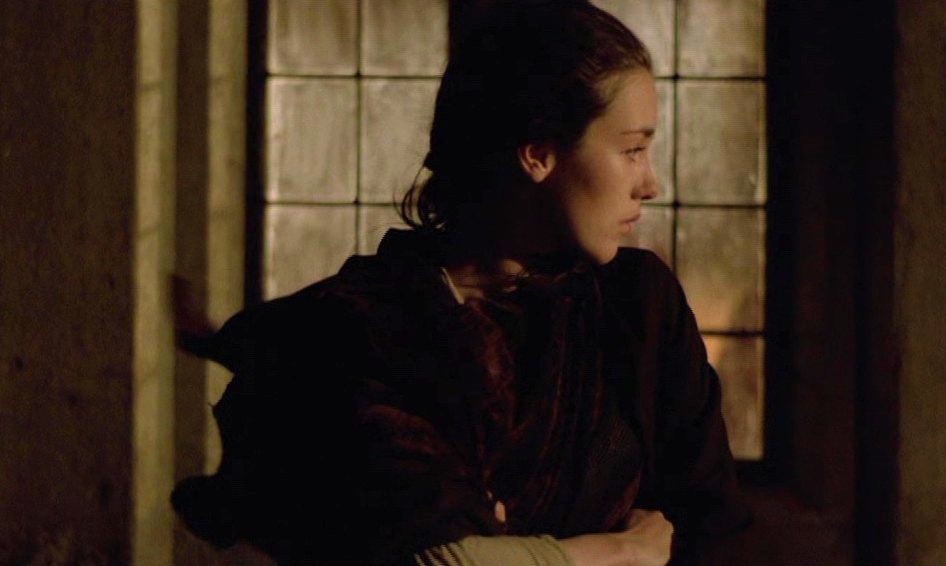
Isabelle Adjani as Emily Brontë, Les Sœurs Brontë, André Téchiné (1979)
̶ So you believe Emily was lesbian?
̶ I’m sure of it.
We cross the border into France.
̶ What makes you so sure?
̶ Wuthering Heights is a book shot through with ambivalence, and driving it all is Emily’s sexuality. She was your age, Sprague—twenty-seven—when she wrote it. And at that age…
Her demonic masterpiece, and my humble haiku.
̶ …all she knew was that she was an oddity. The language didn’t have the resources for her to conceive of herself any other way. ‘Invert’, maybe.
̶ So the tension in the book, it derives from her response to her sexuality?
̶ Yes. It’s an expression of her ambivalence. And all the violence is a sign of her frustration.
̶ At what?
̶ At not being able to affirm herself frankly.
The traffic’s light; you’re pushing one sixty.
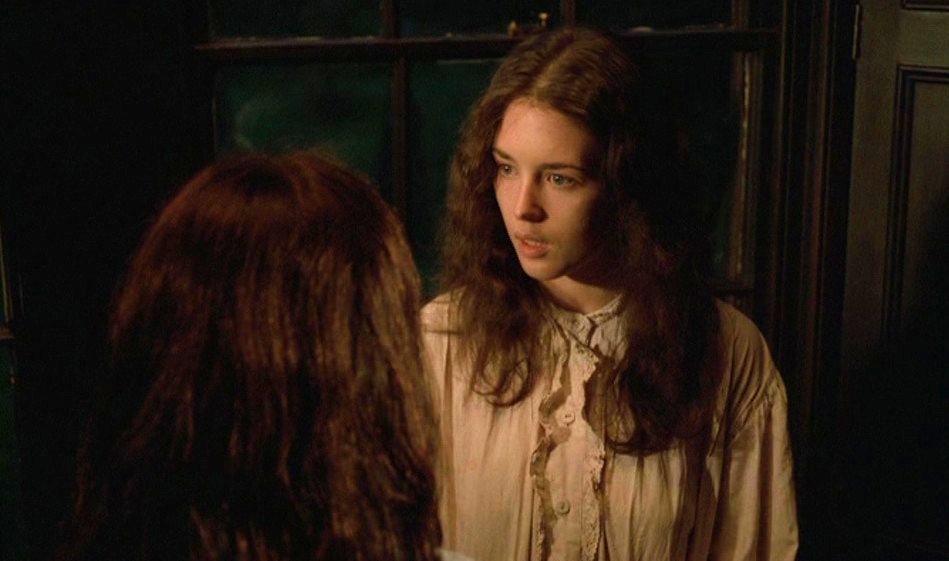
Isabelle Adjani as Emily Brontë, Les Sœurs Brontë, André Téchiné (1979)
̶ ‘I am Heathcliff’: How do you interpret it?
̶ Heathcliff is the cipher of Emily’s homosexuality. The outsider, the alien, the odd one out. He’s Catherine’s double, not her complement.
̶ He embodies her sexuality?
̶ Yes. That strategy of doubling is very lesbian. Catherine and Heathcliff are one and the same.
̶ So when she has to choose between Heathcliff and Edgar Linton…
̶ She has to choose to affirm or deny her homosexuality. She chooses Linton and her world falls apart. The pain of abandoning such a fundamental part of herself kills her.
Staring at the stubbled fields, I suddenly imagine them as golden wheat.
̶ Yes, I see that now. It all makes sense!
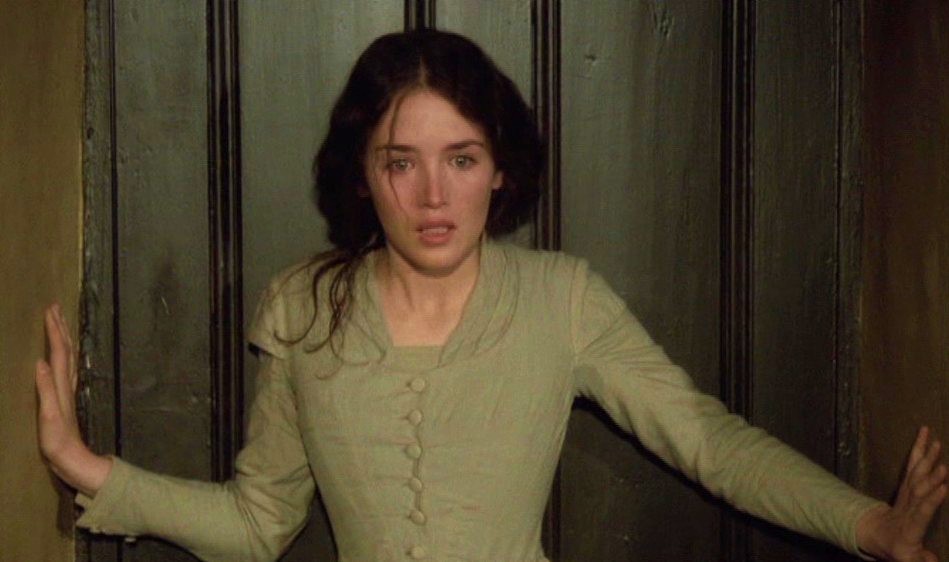
Isabelle Adjani as Emily Brontë, Les Sœurs Brontë, André Téchiné (1979)
I open the Evian.
̶ How could I have missed it before?
I pass you the bottle. When you give it back, I drink a mouthful and find myself savouring it: So this is the taste of transparency.
̶ Did you really see that scene as Catherine confessing to Nelly her dilemma in choosing marriage partners?
̶ Yes, I suppose I did.
̶ You are sentimental, Sprague.
̶ I told you, when I give up haiku, I’m going to write a Harlequin Romance.
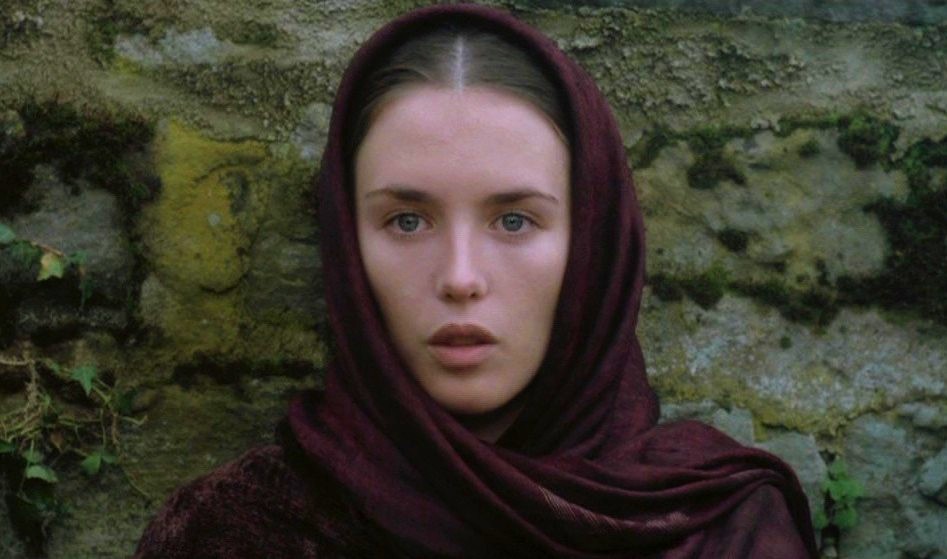
Isabelle Adjani as Emily Brontë, Les Sœurs Brontë, André Téchiné (1979)
In your sly smile I see my future: I don’t have Emily’s genius, I cannot write a novel as vicious as hers. Instead, I will write one that walks the knife-edge of tenderness, and when I’m done something more will remain than the sheen of my blood on the blade.
̶ For every lesbian, that scene with Nelly is perfectly transparent. Catherine is confessing that she’s going to deny her homosexuality, and she’s aware that it’s a fatal mistake. Remember, she says, ‘If all else remained and he were annihilated, the universe would turn to a mighty stranger’.
̶ And in rejecting the stranger, she becomes a stranger to herself.
̶ Yes. Without Heathcliff, she loses all sense of who she is. She didn’t die after giving birth to Cathy, she died when she turned her back on Heathcliff.
You’re pushing one-seventy. I caress your cheek with the back of my fingers; you kiss my fingertips.
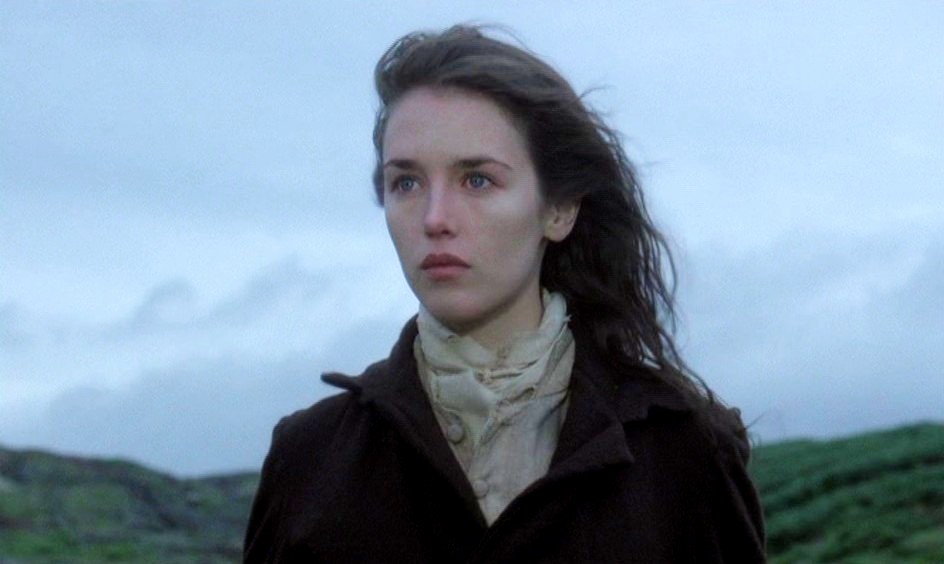
Isabelle Adjani as Emily Brontë, Les Sœurs Brontë, André Téchiné (1979)
MARA, MARIETTA: A LOVE STORY IN 77 BEDROOMS – READ THE FIRST CHAPTER
A literary novel by Richard Jonathan
RICHARD JONATHAN, ‘MARA, MARIETTA: A LOVE STORY IN 77 BEDROOMS’ — READ THE FIRST CHAPTER
AMAZON & APPLE BOOKS

RICHARD JONATHAN, ‘MARA, MARIETTA: A LOVE STORY IN 77 BEDROOMS’ | AMAZON PAPERBACK OR KINDLE

RICHARD JONATHAN, ‘MARA, MARIETTA: A LOVE STORY IN 77 BEDROOMS’ | APPLE iBOOK
MARA, MARIETTA: A LOVE STORY IN 77 BEDROOMS
A literary novel by Richard Jonathan

Available from AMAZON (paper | ebook) & iBOOKS, GOOGLE PLAY, KOBO & NOOK (see LINKS below)
RELATED POSTS IN THE MARA MARIETTA CULTURE BLOG
CLICK ON THE IMAGE TO GO TO THE POST

FICTION IN ‘MARA, MARIETTA’
CLICK OR TAP ON THE IMAGE TO GO TO THE CORRESPONDING PAGE
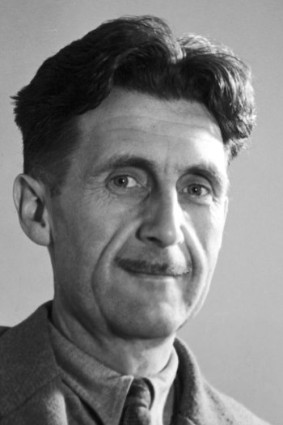
George Orwell
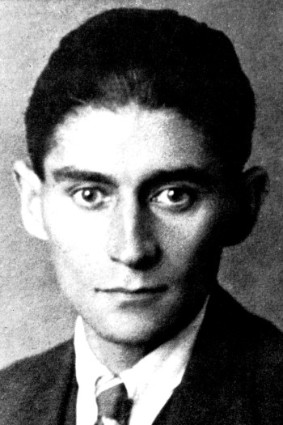
Franz Kafka
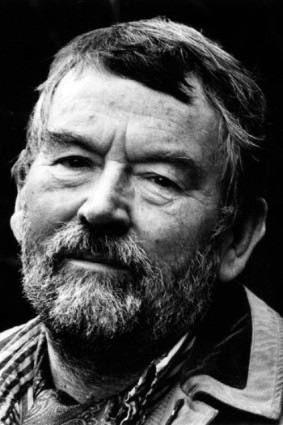
John Fowles
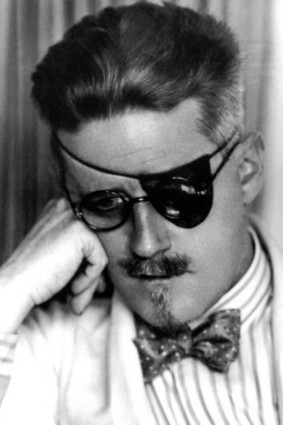
James Joyce
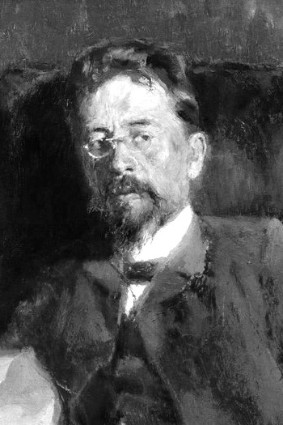
Anton Chekhov
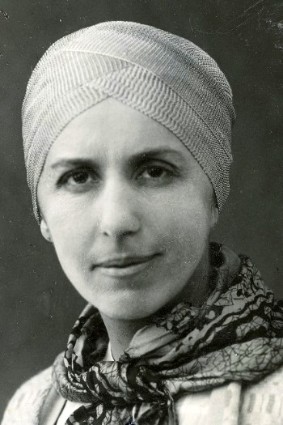
Isak Dinesen
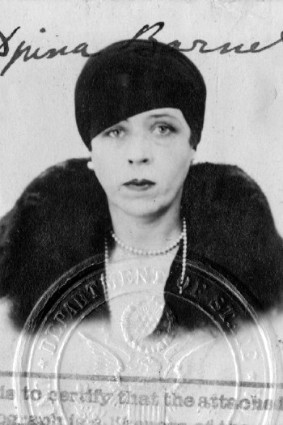
Djuna Barnes
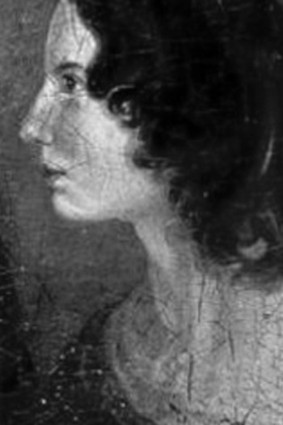
Emily Brontë

Sprague’s Favourite Novels
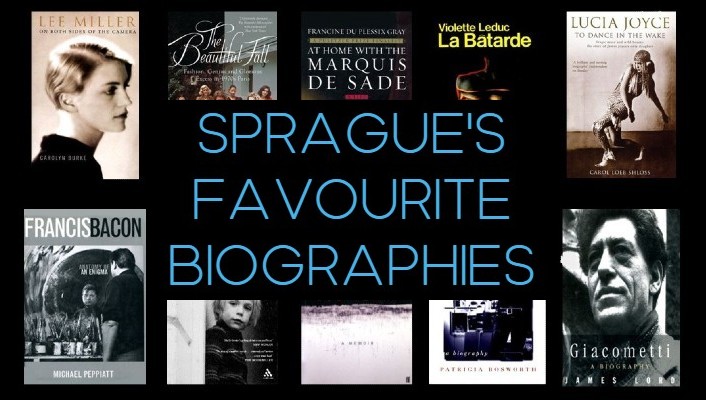
Sprague’s Favourite Biographies and Memoirs